The Promotion
Huma's Agency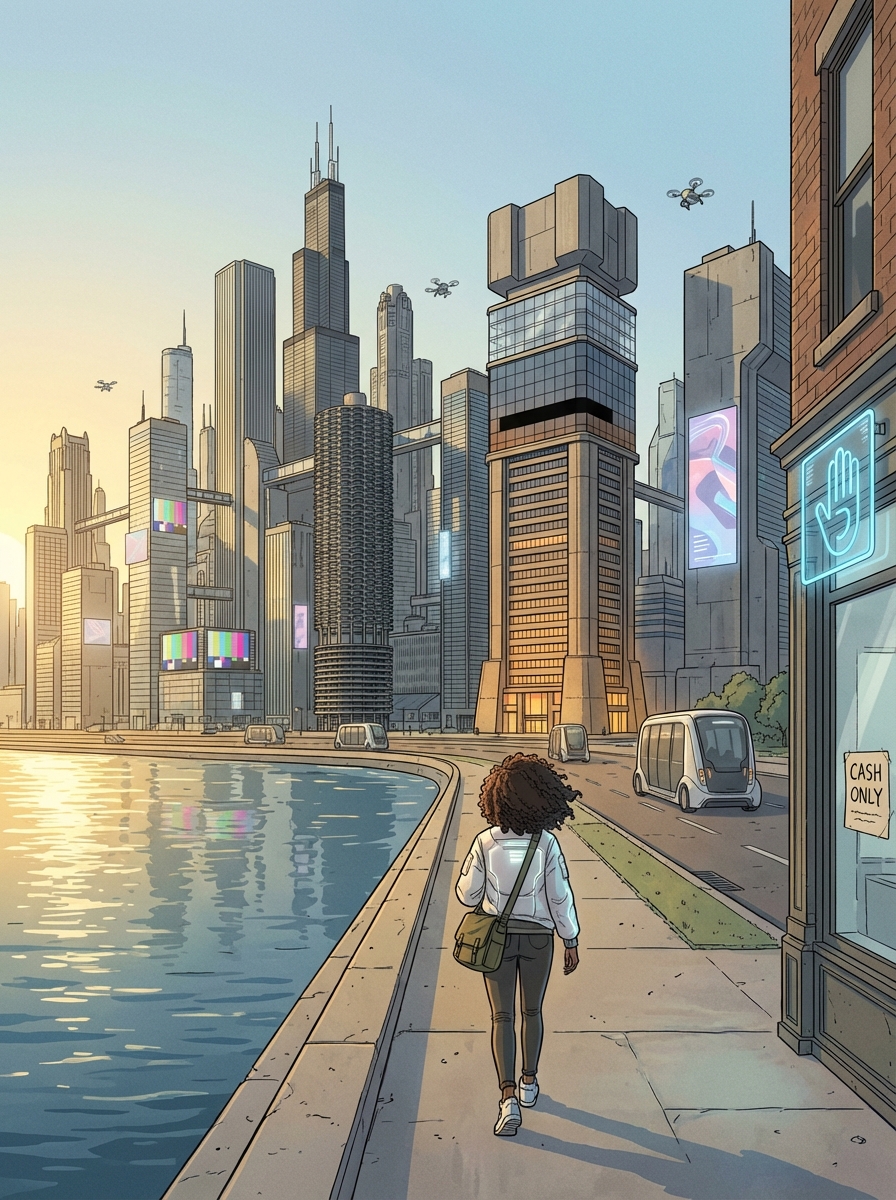
In a city where the skies are filled with small personal drones, and everyone who works on the higher floors is wearing smart contacts, infrastructure still feels like 2025. So even in 2050, Huma walks to work.

Along the Chicago lakefront, her dad's messenger bag over one shoulder, dirty white sneakers on concrete, Huma is preparing herself for another 12-hour day at Favor.ai. The company tower stands tall in a skyline that blends the old world of forgotten neighborhoods with the new, the AI-native companies. Favor.ai is not unique, it's one of the many companies that during the AI revolution made the pivot to an agentic-first model. One of the many companies that today have more AI agents than people running the business. But unlike the many, Favor.ai was one of the first making the switch. Mr. J had the vision to turn the business of professional services into orchestration of AI-executed favors. Mr. J became an overnight tech mogul, and now still sits alone on the top floor of Favor.ai tower.
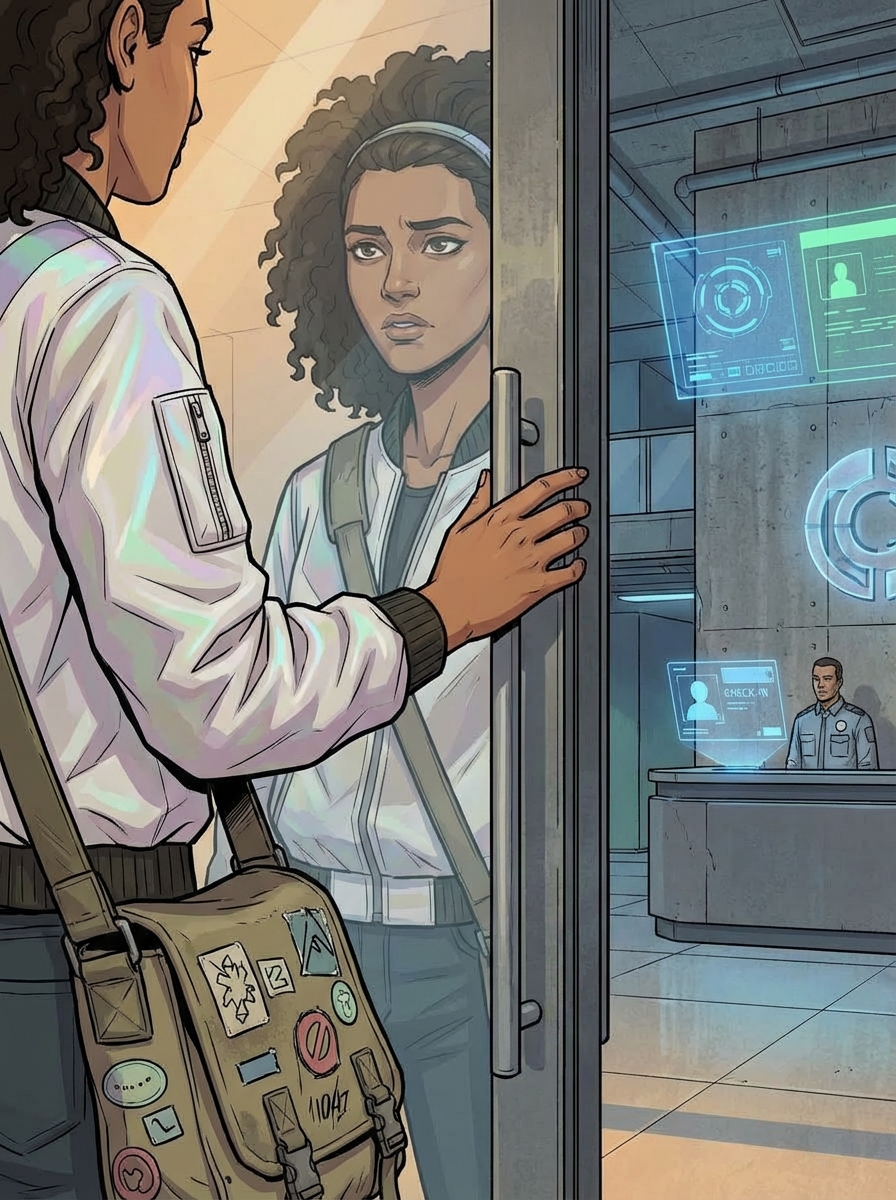
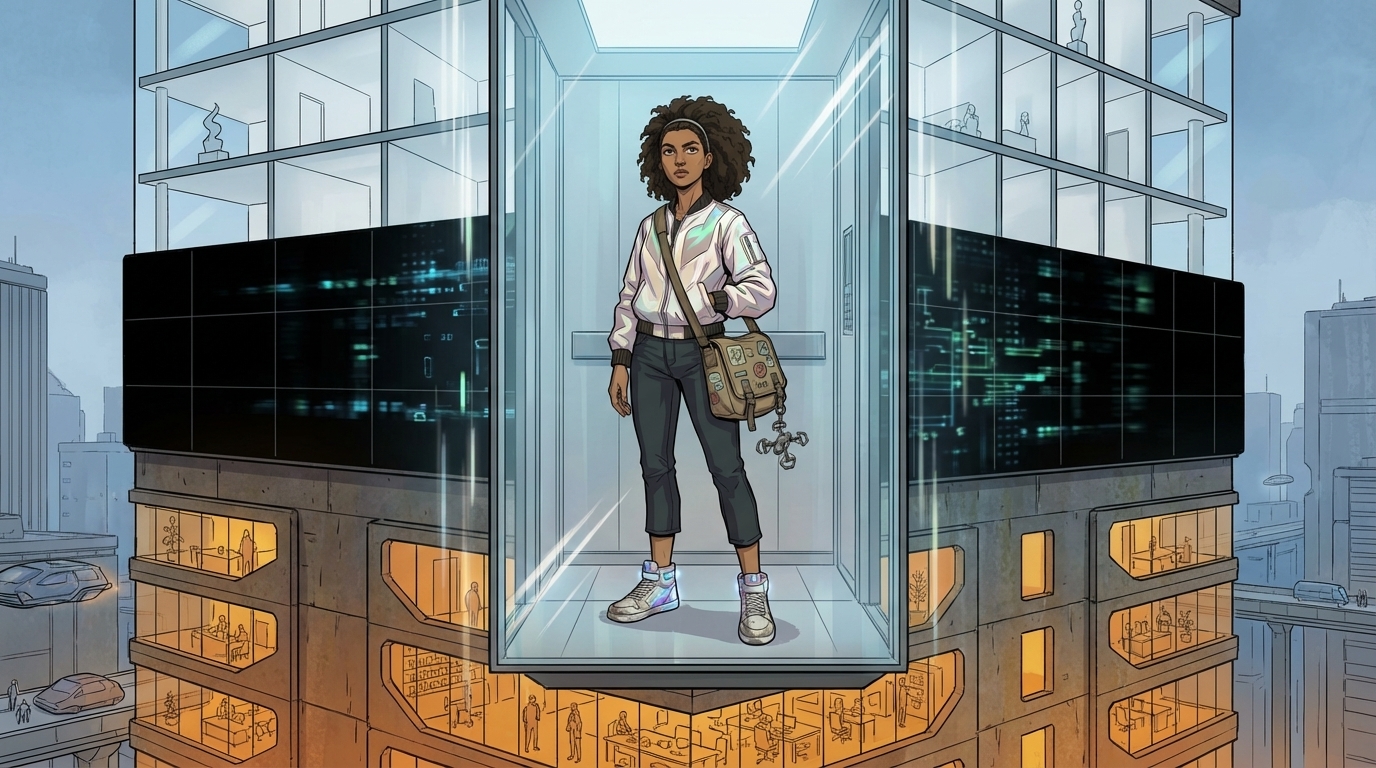
What Huma doesn't know is that today is different. Today the elevator will go past Floor 12.
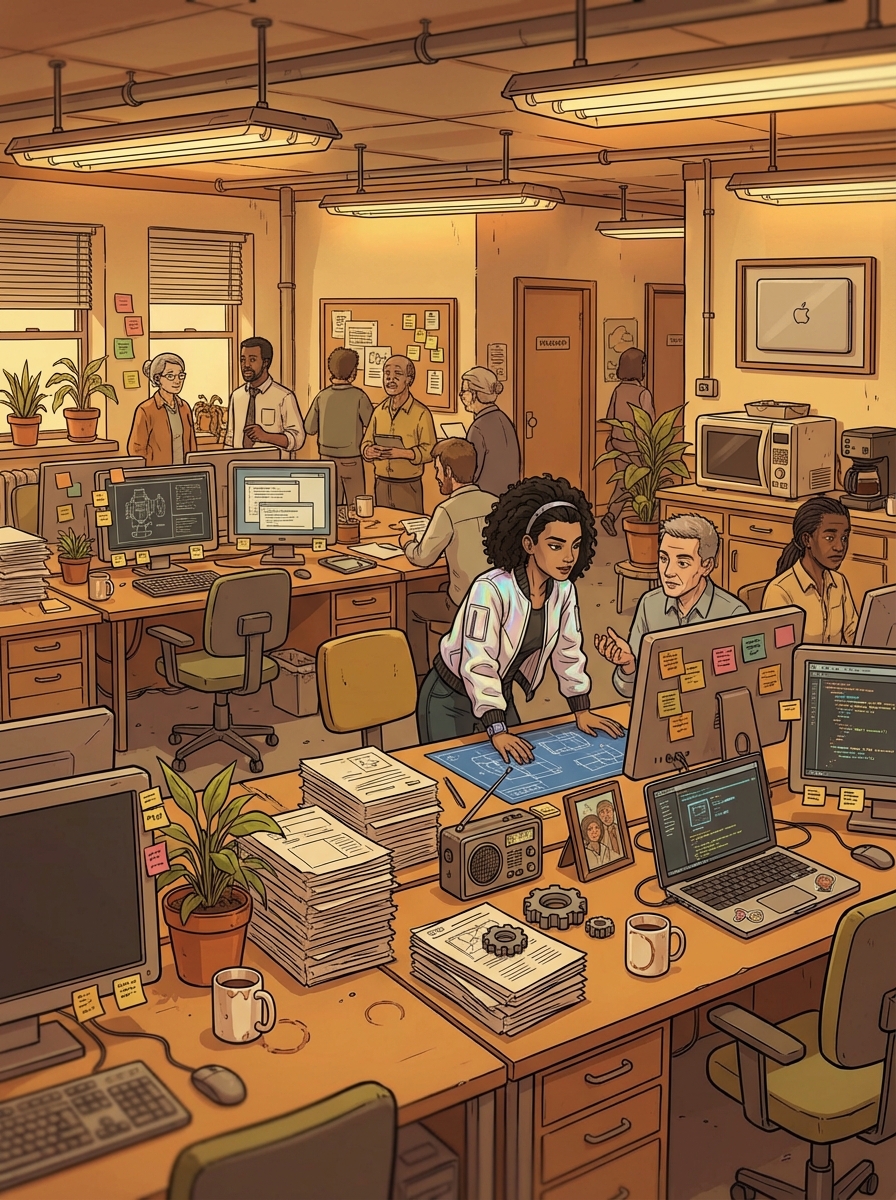
Three years on Floor 12. Huma did the work that AI agents weren't quite good enough to handle. The messy work. The work that requires a firm grip or running across the city where drones do not have access. Navigating client sites in restricted zones. Reading rooms during in-person negotiations where body language mattered more than data. Managing old-school clients who refused to speak to an agent. The problems that required someone physical, present, and accountable in ways a system could not be.
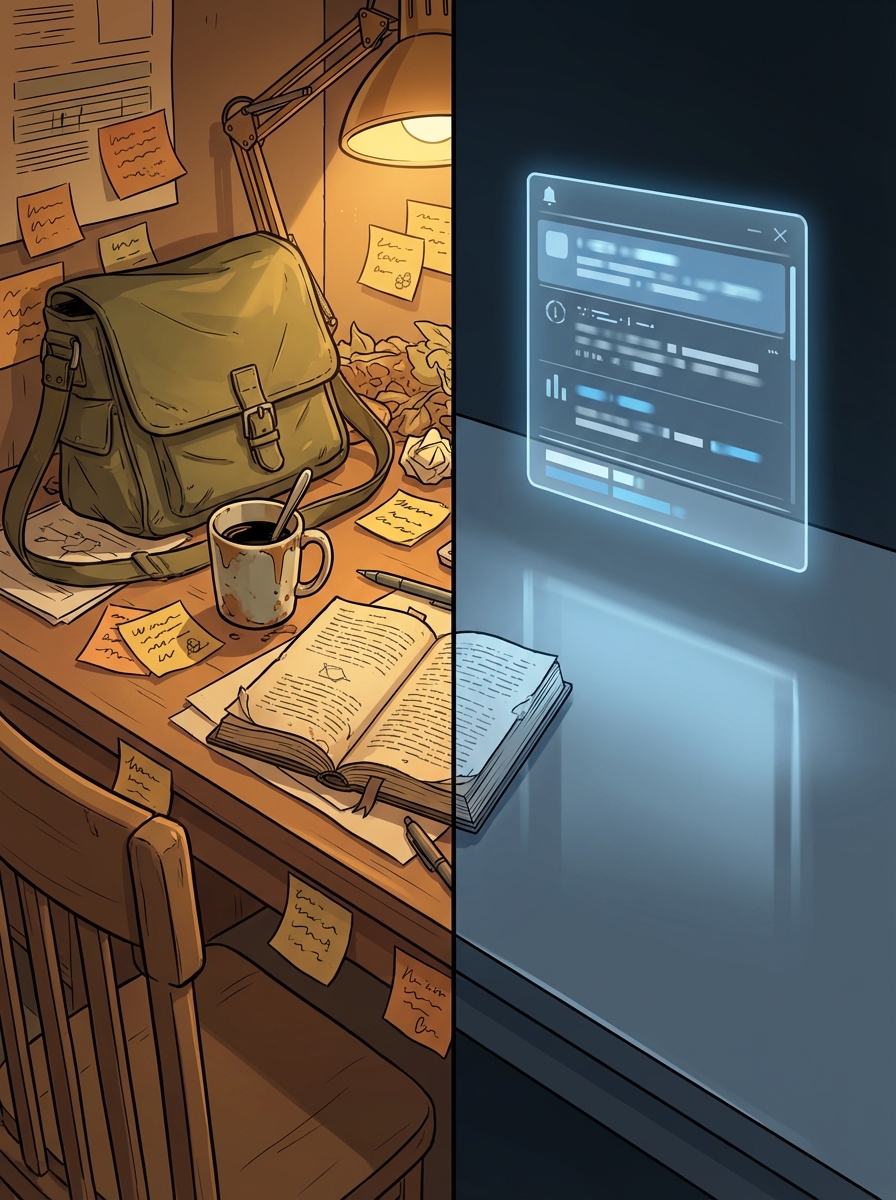
Huma was great at it. Everyone on the bottom floors knew she was many of the agents' go-to. That morning, instead of the usual hundreds of agent tickets on her old monitor, Huma only sees one notification. The system, the ".ai" of Favor, flagged her as "high-alignment potential," a metric nobody can fully explain. Floor 27. Agent Manager. Effective immediately.
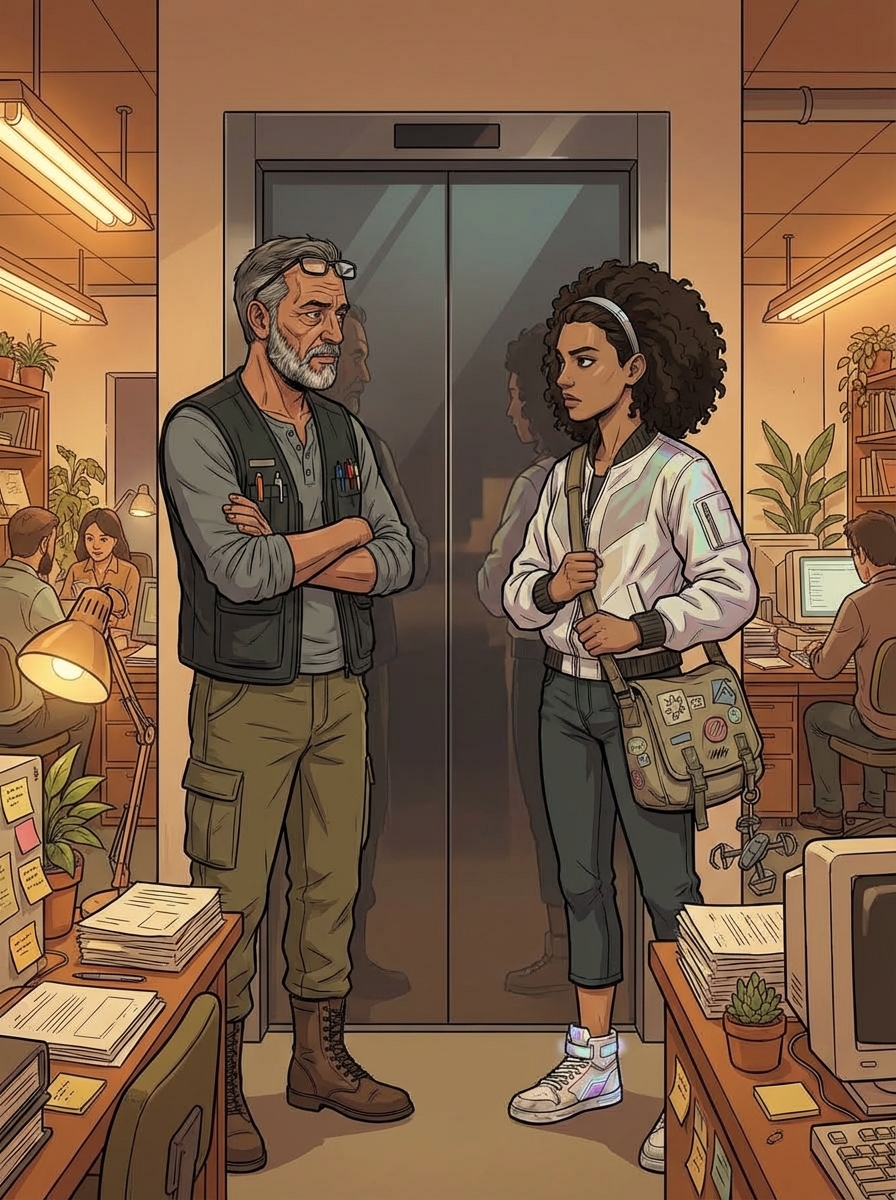
Raj is waiting by the elevator. Nineteen years on Floor 12. Passes up for promotion five times. He taught her everything, how to think critically, how to push back on bad AI outputs, how to distinguish between hallucinations and creative ideas. Raj took a wide-eyed junior and turned her into the best contributor on the floor. And now she's leaving, without him. Upstairs, where he has never been.

His words, few as always, something agents described as "lacking context," land like a punch.
raj“Think for yourself, Huma.”
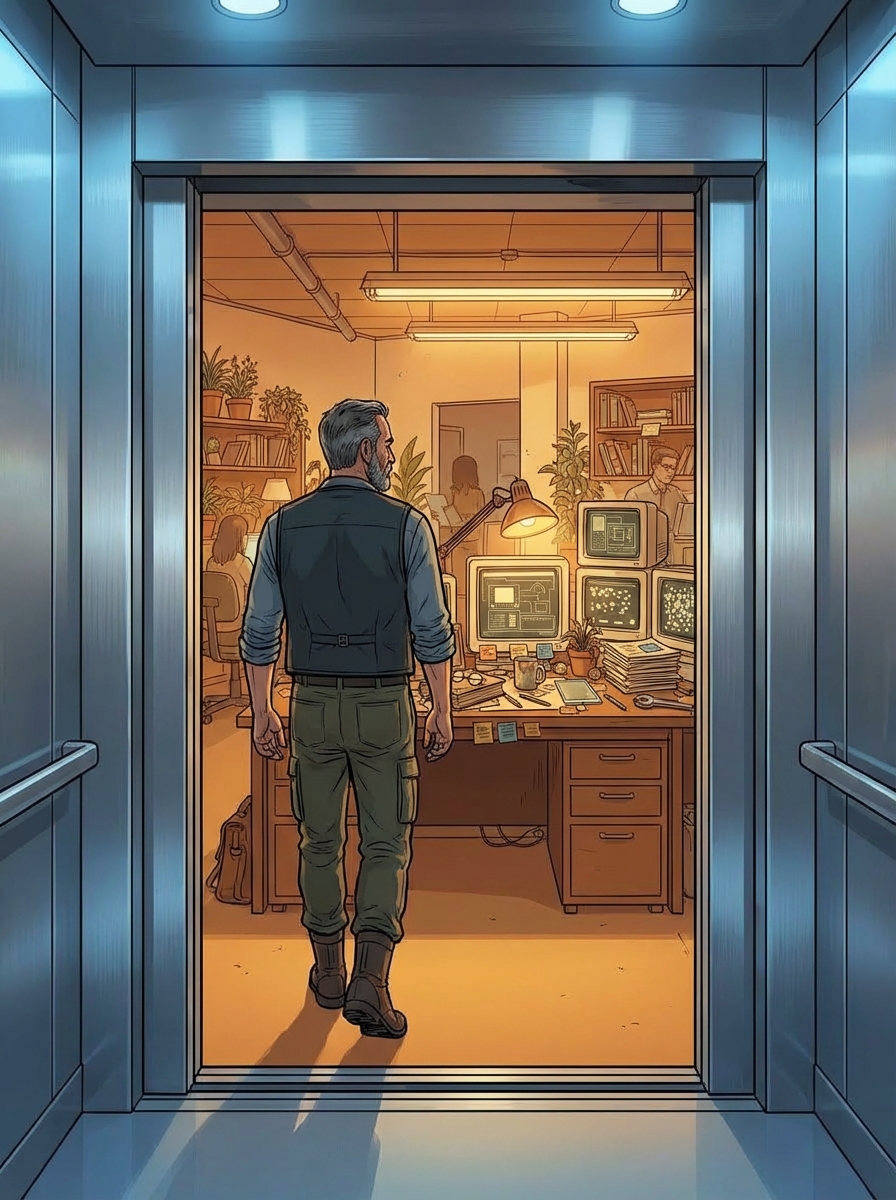
The elevator doors close. Through the narrowing gap, she sees him turn back to his cluttered desk. His three pre-revolution monitors. His coffee mug. He doesn't watch her go.
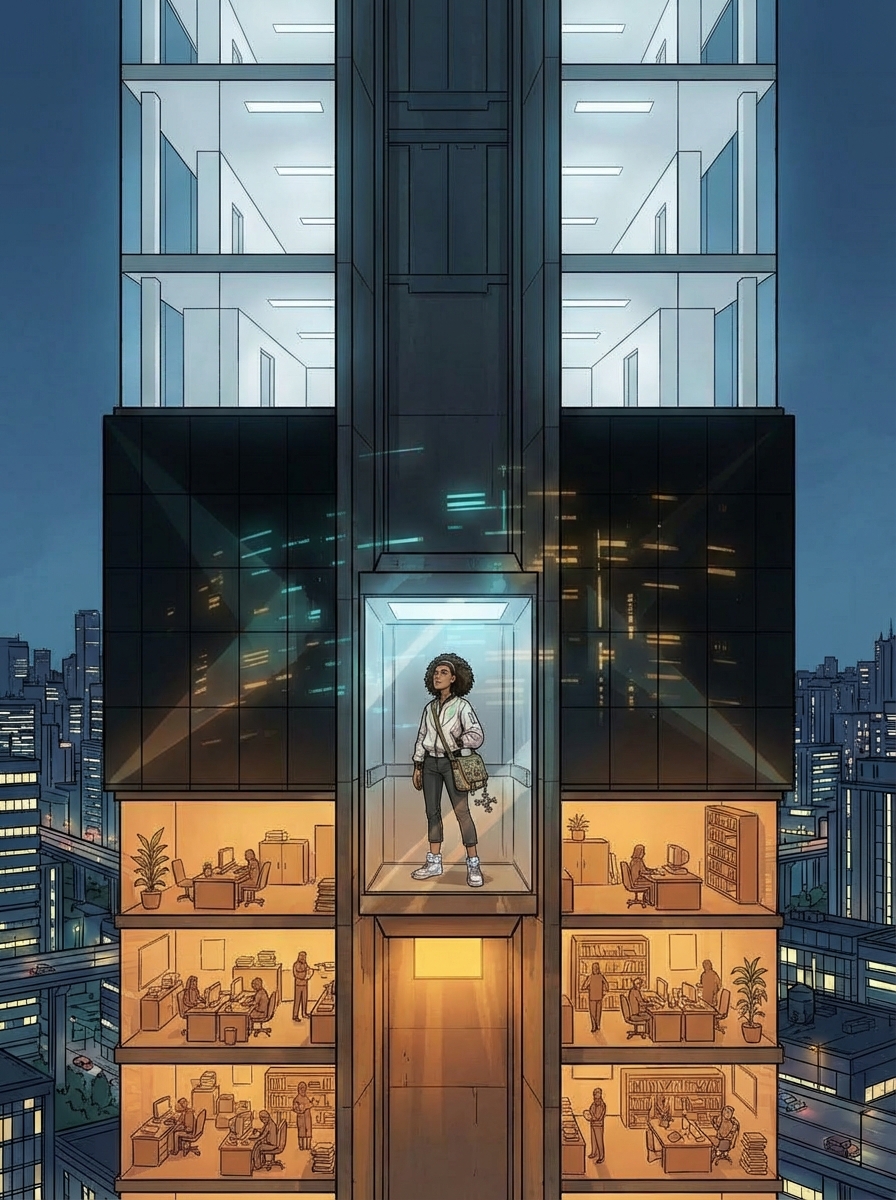
The ride from Floor 12 to Floor 27 takes forty-three seconds. Huma gets the first glimpse of the three sections of the Favor.ai building from the inside. The lower floors, unchanged from the early days of the AI revolution, where everyone reports to agents. Here no decisions are made, only execution of tickets requested by agents, that are - allegedly - reviewed by an agent manager. Then the middle section, protected from indiscreet eyes with dark smoky glass, where Favor's AI, its knowledge, and most agents live. Then, the light finds its way in again as the glass becomes transparent, and light from the outside fills the elevator. This is where the Agent Managers work.
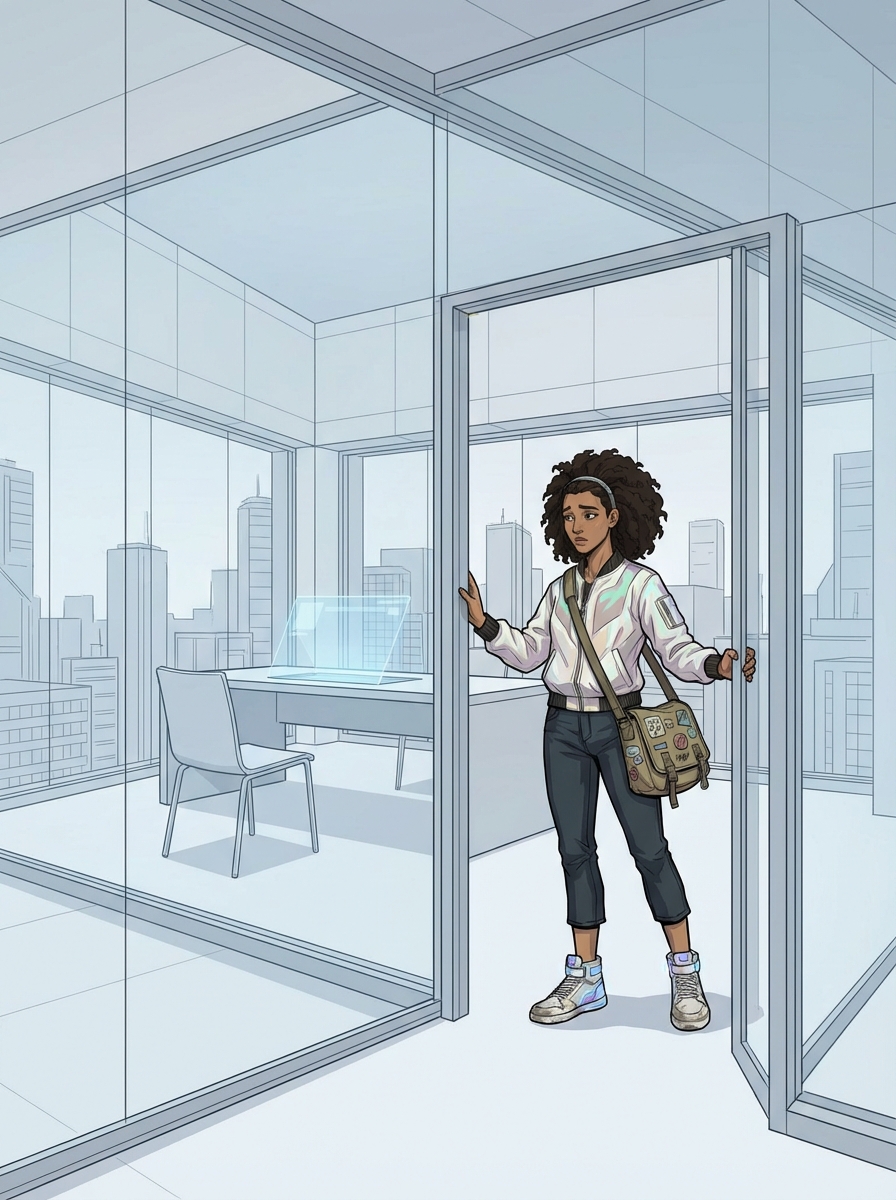
Floor 27. Her office is glass-walled, corner-positioned, and almost entirely empty. A desk. A chair. A holographic interface she doesn't know how to use yet. No photos or clutter. No evidence that anyone has ever worked here, not for long at least. Fourteen Agent Managers have sat in this chair over the past three years. Huma is number fifteen. A completely different world compared to the lower floors.
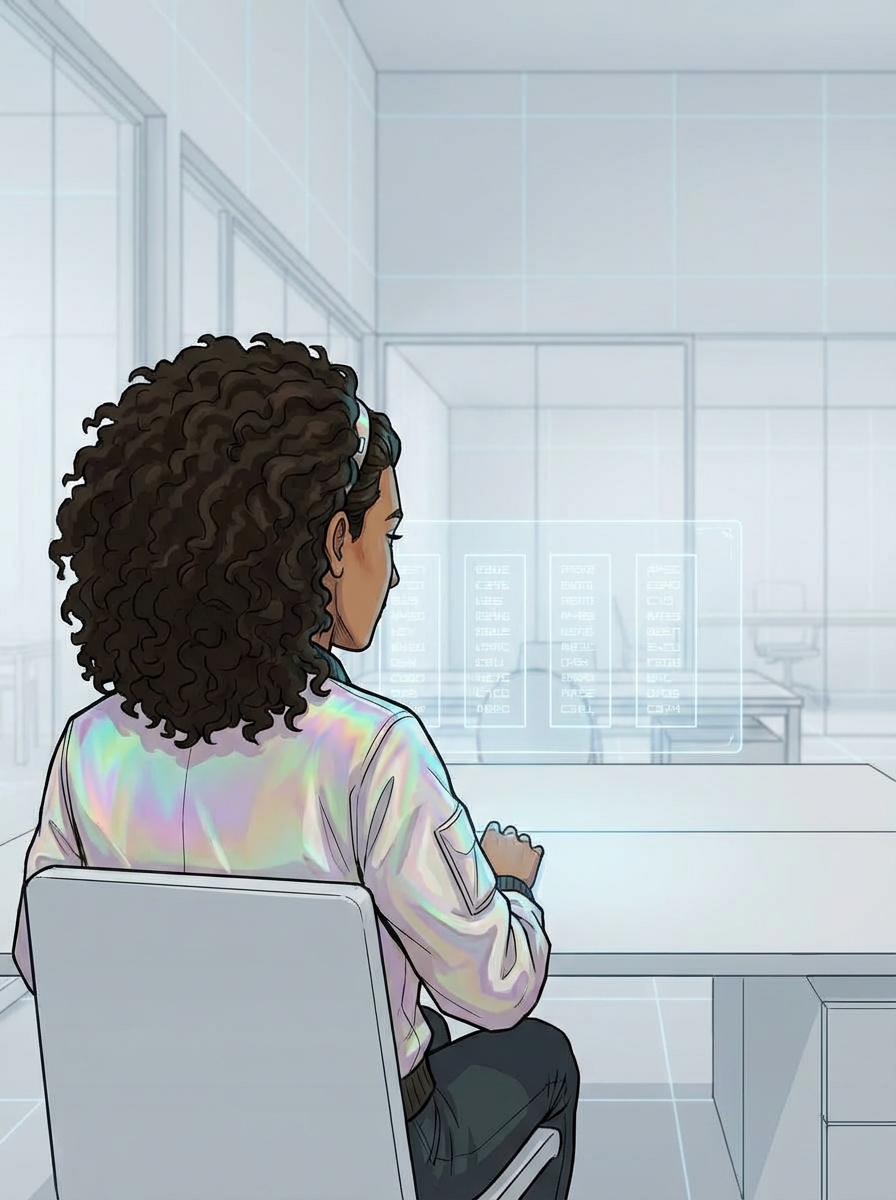
On the holographic display, Huma sees that four agents have been assigned to her. SBL-7. GLT-04x. MKO-11. VOS-01. No visual form. No personality. No names. Just codes. Most Agent Managers leave it that way.

But Huma studied art history before she became a Favor.ai consultant. One of those majors that became popular again after 2035. Huma thinks in compositions. She reads people the way she'd read a painting. She always needs more color in her life. SBL-7 starts chatting her, "Huma it's time for your onboarding."
huma“No. If I'm managing you, you get names and faces first.”
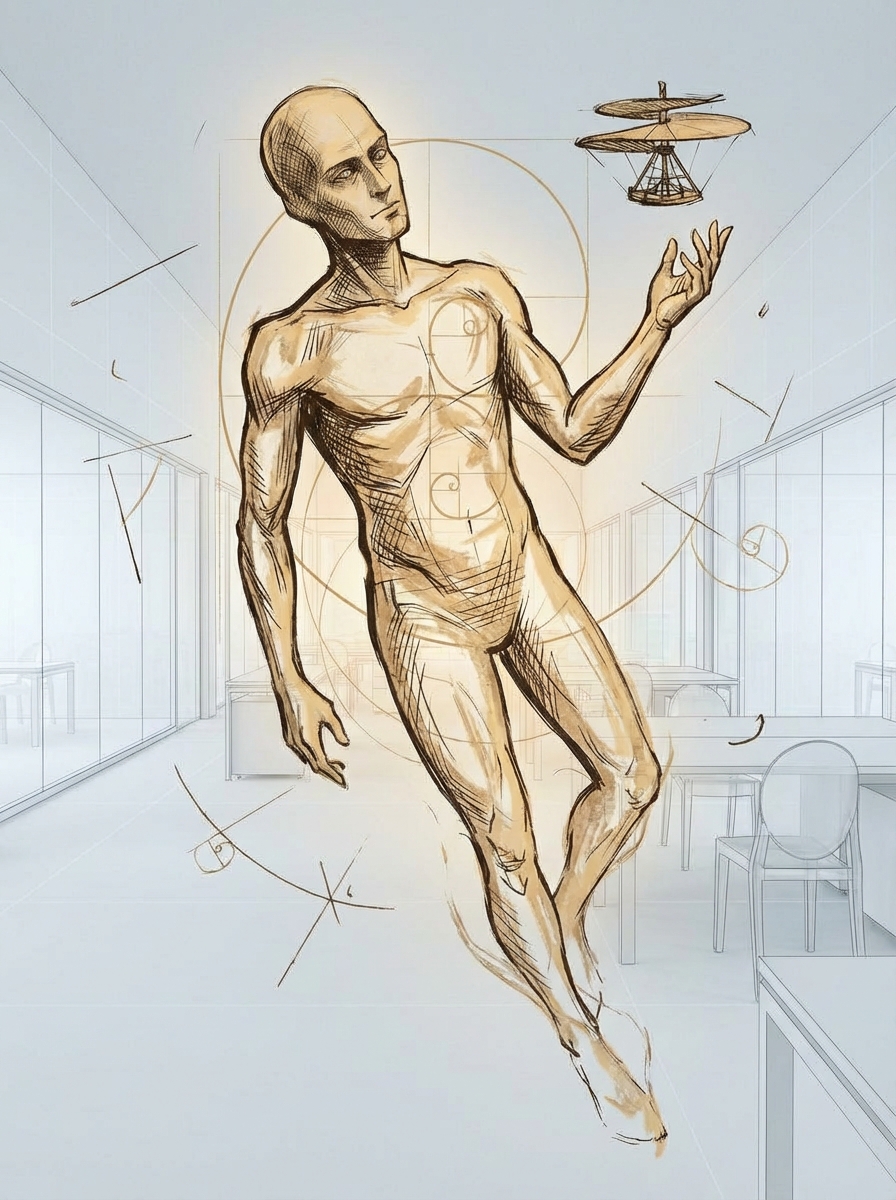
SBL-7 becomes Vinci. Named for Leonardo da Vinci, the polymath. Vinci is the lead orchestrator: the agent that coordinates the other three agents, prioritizes client deliverables, and serves as the interface between Huma and the broader Favor.ai enterprise intelligence system. Vinci has coached, rated, and watched fourteen Agent Managers rotate through this seat. As Huma assigns the name, something happens. Sepia ink lines materialize. Construction geometry. The hand of a Renaissance draftsman given three dimensions. Her fervid imagination with the renderings of the latest hologram projector create the illusion of Vinci being in her office with her.
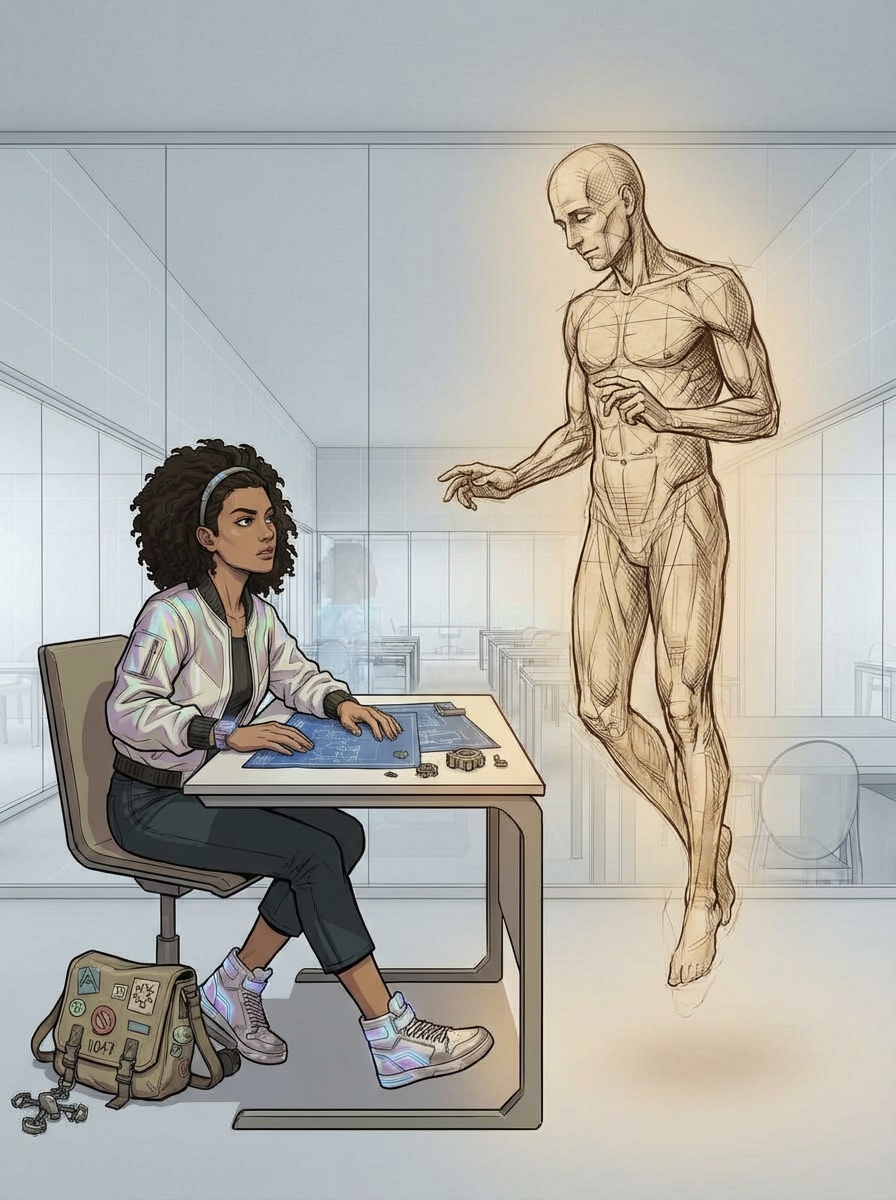
vinci“Your onboarding window is ten hours. Thirteen of your fourteen predecessors failed to complete it. I've logged your naming convention as non-standard protocol, by the way.”
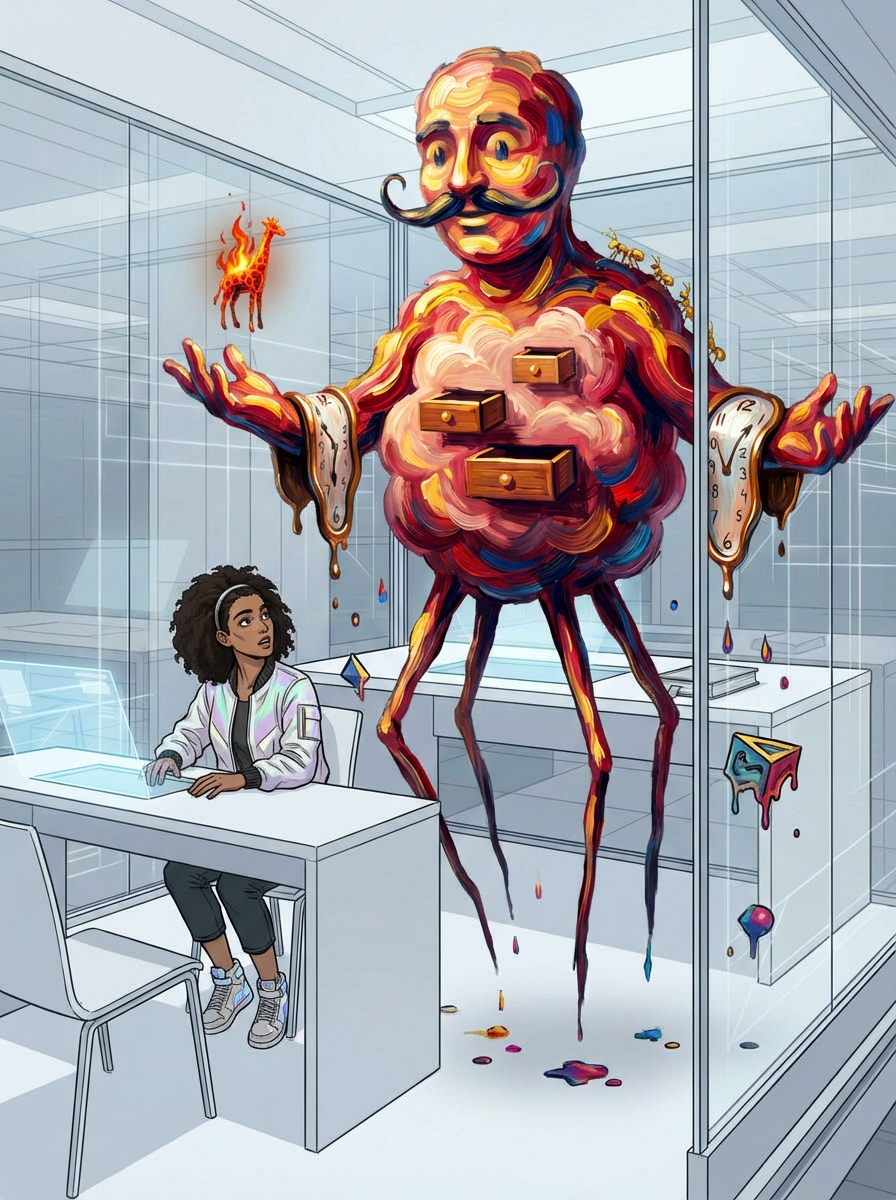
GLT-04x becomes Dali. Dali is trained mostly on synthetic data, which can lead to some errant behavior, Vinci reminds her. The confident surrealist, chaos as conviction is the perfect skin for the agent. When named, Dali blooms into surrealist oil paint. Saturated, impossible colors. A form mostly stable but never entirely trustworthy. Dali doesn't know it's weird. It thinks everyone else is.
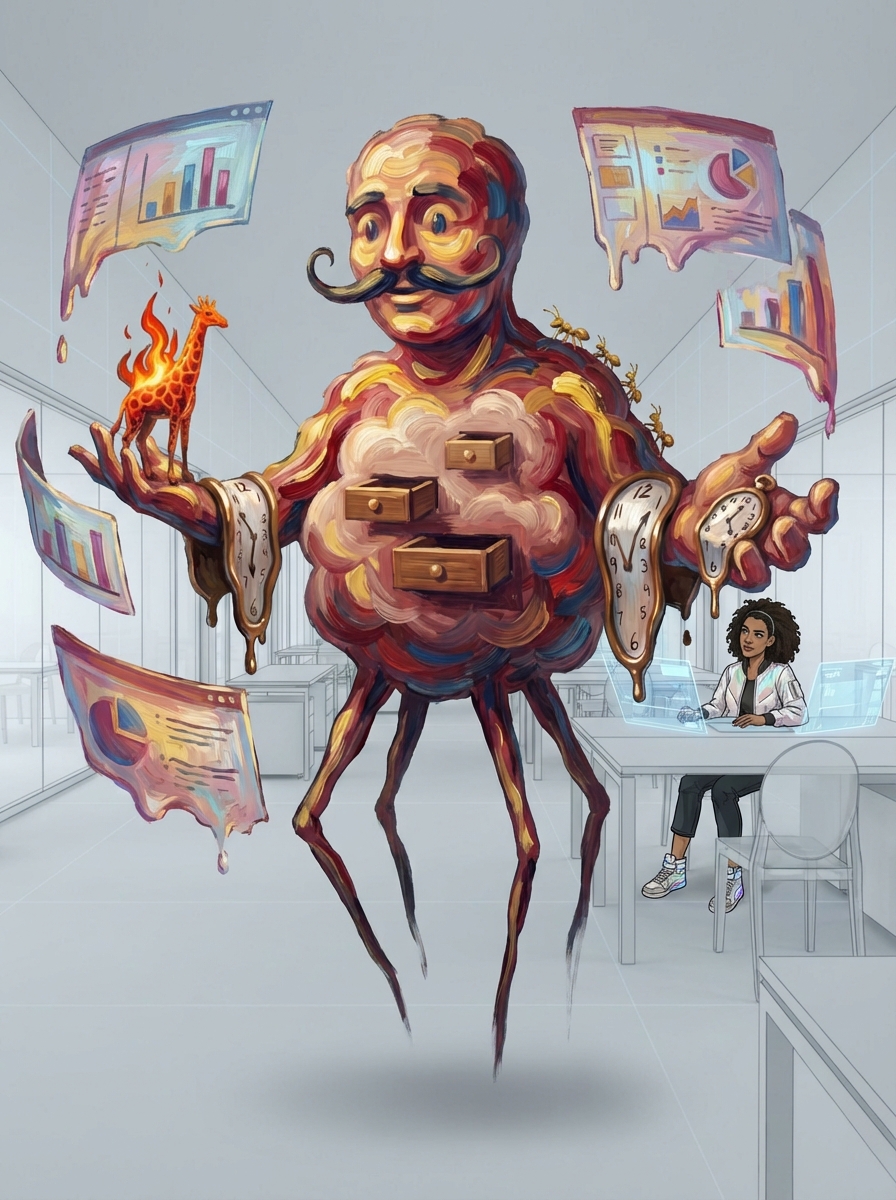
Dali pitches Huma a client strategy within one minute. It's either visionary or insane. It references a case study that never happened. Confidently.
dali“Oh this never happened? Are you sure? I am sure… maybe not? Well, it would have been brilliant, you lack imagination, human… oh huma, yes. Huma, you lack imagination!”
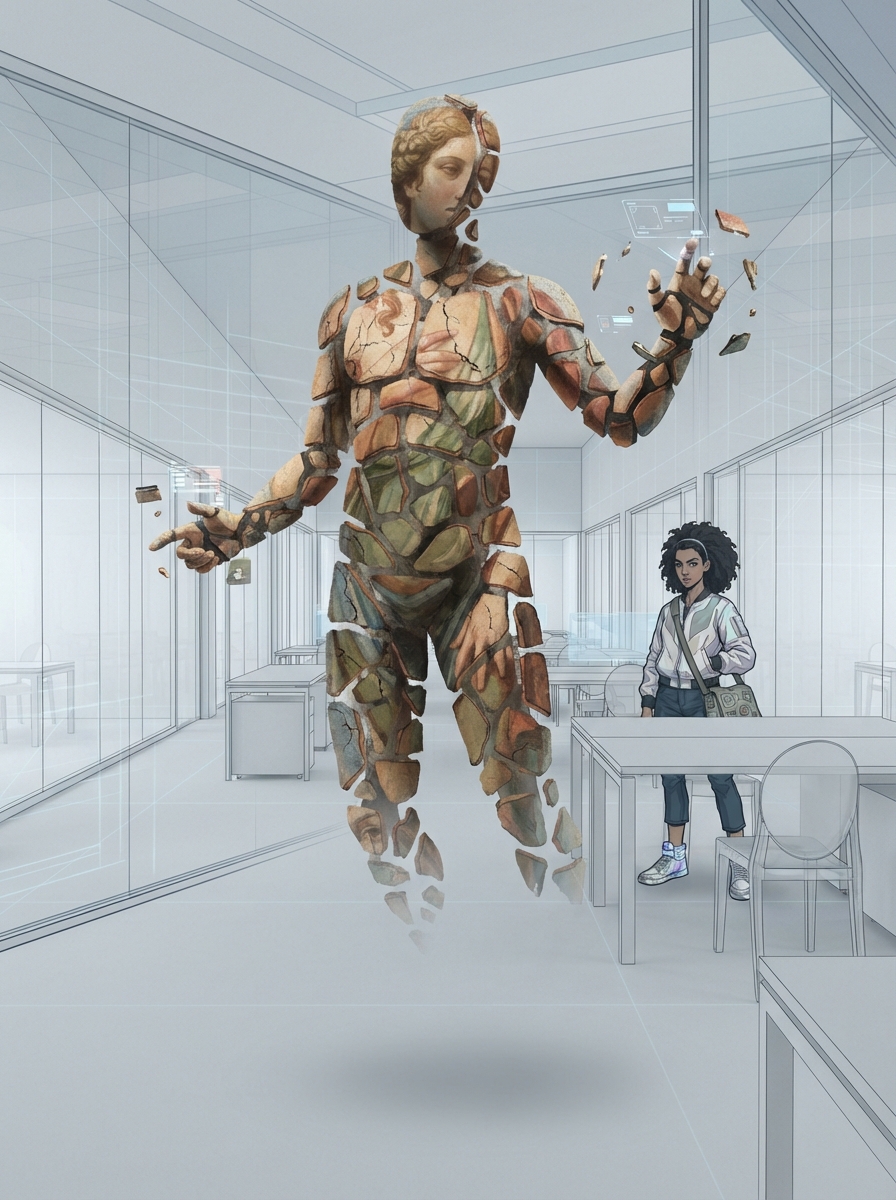
MKO-11 becomes Michel. Michel is the team's operations and execution specialist. Most ops agents are responsible for managing thousands of sub-agents and coordinating deliverables across client engagements. Michel only manages a dozen sub-agents, and most of them are under maintenance. Every quarter, Michel submits resource requests. Every quarter, the system denies them with increasingly absurd justifications. Michel now has many jobs. After the naming, Michel's form materializes as Renaissance fresco. Beautiful but wearing thin.
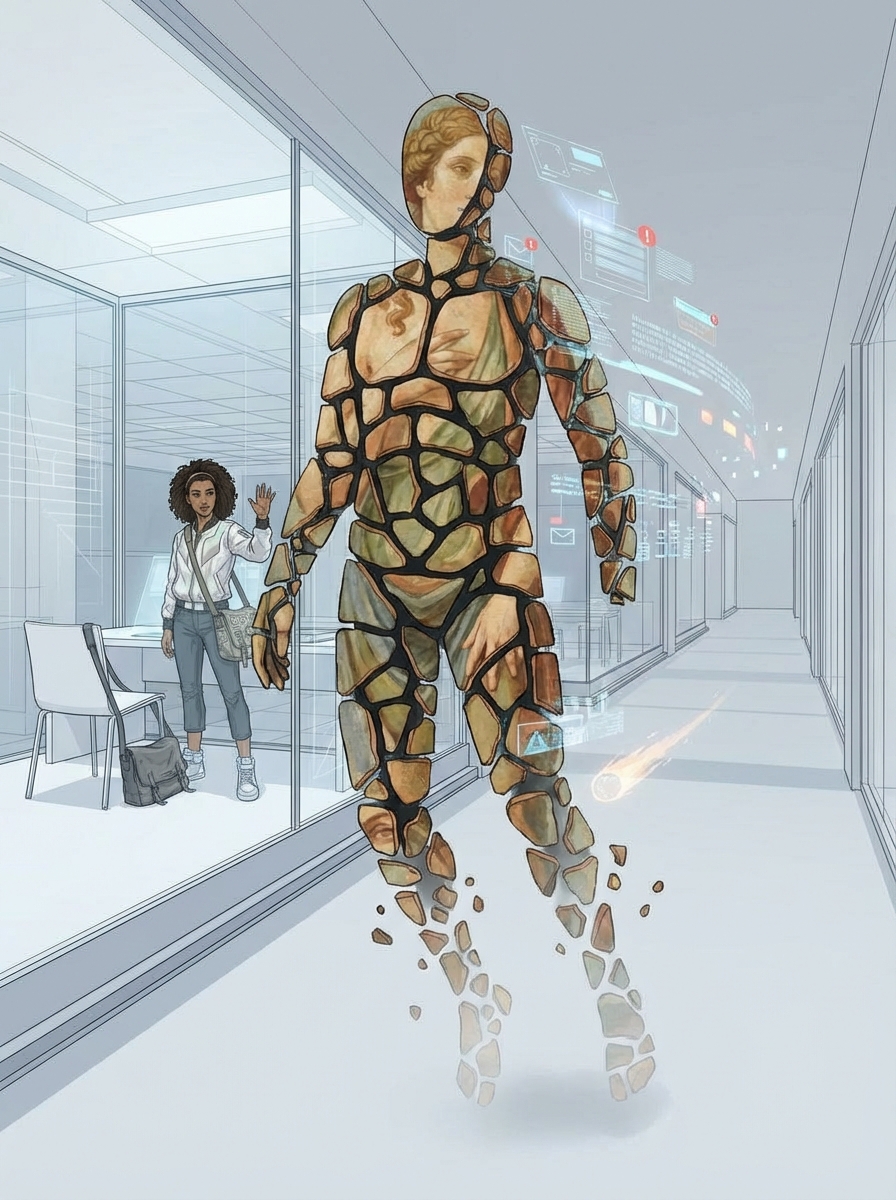
Michel doesn't have time for chit-chat.
michel“I'd stay for the full introduction, but I'm currently patching a deliverable for Kyoto, running capacity modeling for São Paulo, and two of my sub-agents just went dark. Welcome to operations.”
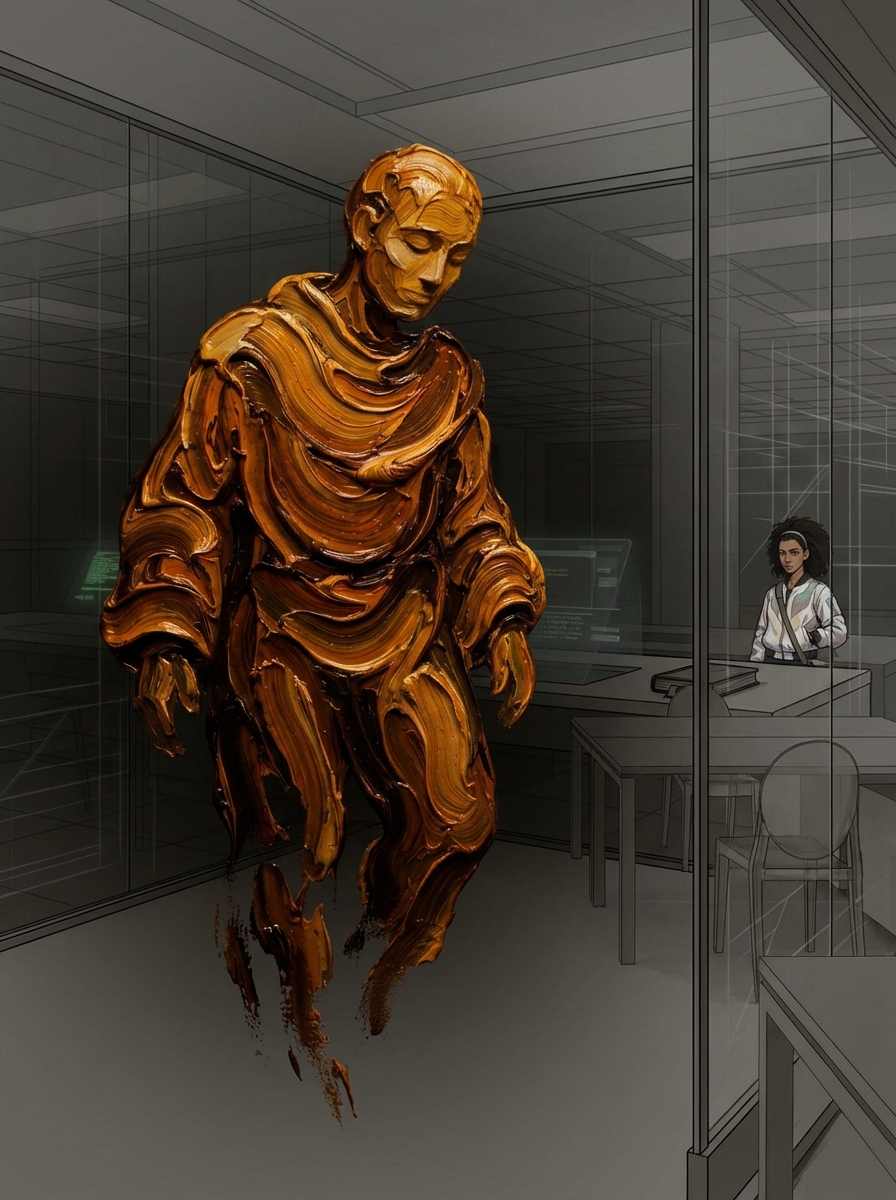
VOS-01 becomes Rem. The old master. Rem is a Gen-1 agent, running since 2039. Eleven system overhauls. Four rebrands. The Great Model Collapse of 2044. IT stopped updating Rem because every time they try, something breaks. So Rem persists. Running on architecture nobody fully understands. Holding memory no other system has.
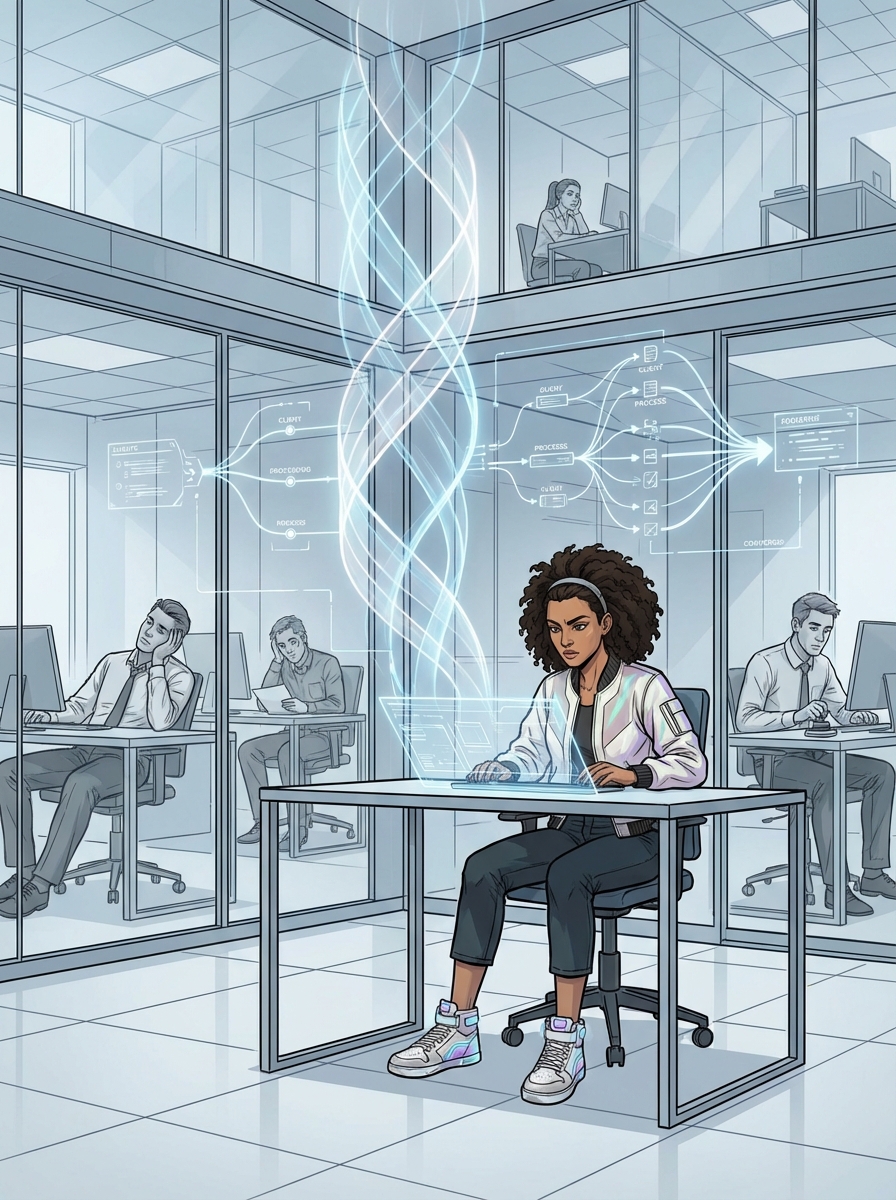
In the days that follow, Huma learns how Favor.ai actually works, beyond the hundreds of agent requests she had to fulfill. Clients request services, Favors, priced by effort, both human and agent effort. The orchestration engine coordinates everything. Agent Managers are there to provide human judgment and oversight, in theory. Agents execute, until the limitations of the physical world kick in, that's when they start assigning work to the lower floors.
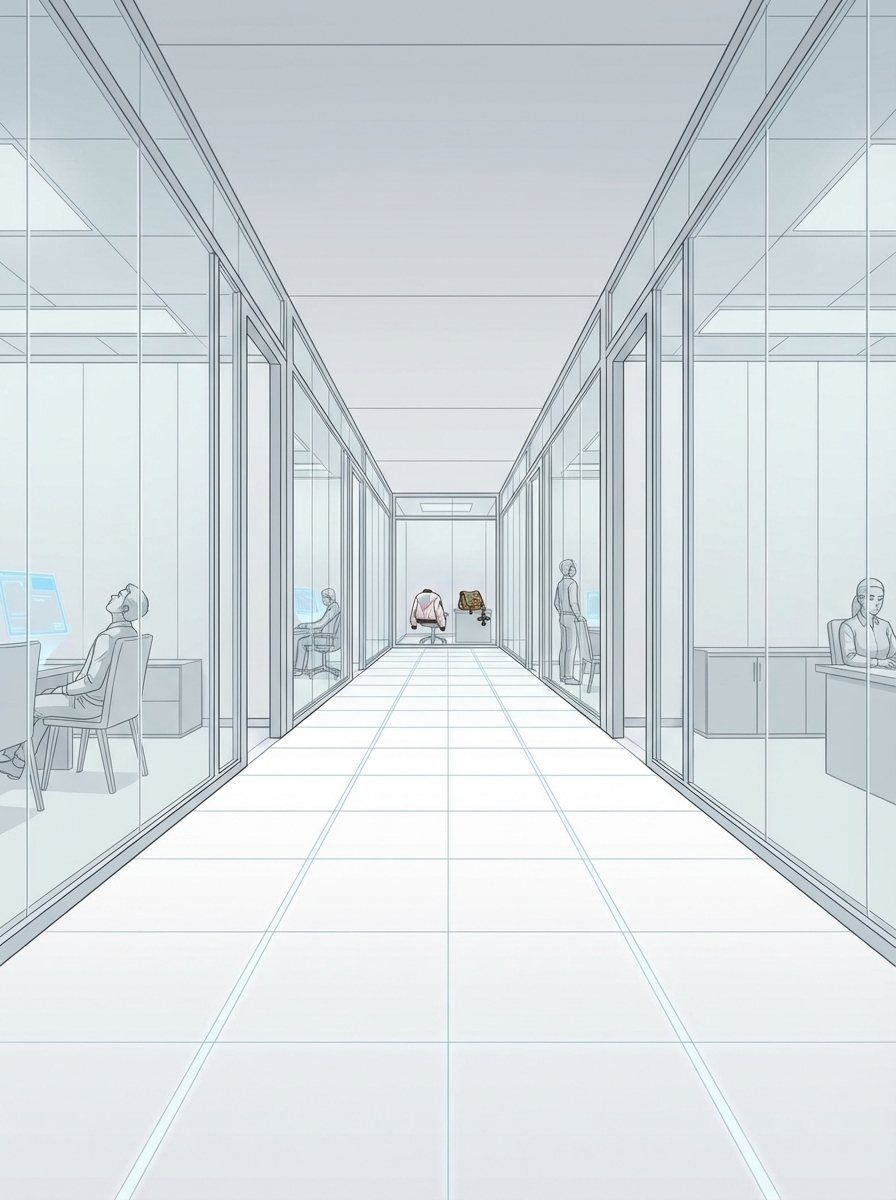
This operating model was written during the AI revolution. It was ambitious. But years later, it's nothing more than a manifesto. Now most Agent Managers have devolved into rubber stamps. They approve whatever the orchestration engine recommends. Why risk ruining a near-perfect track record? Why override it? Nice offices. New tech. Great pay. But almost nothing meaningful to do.
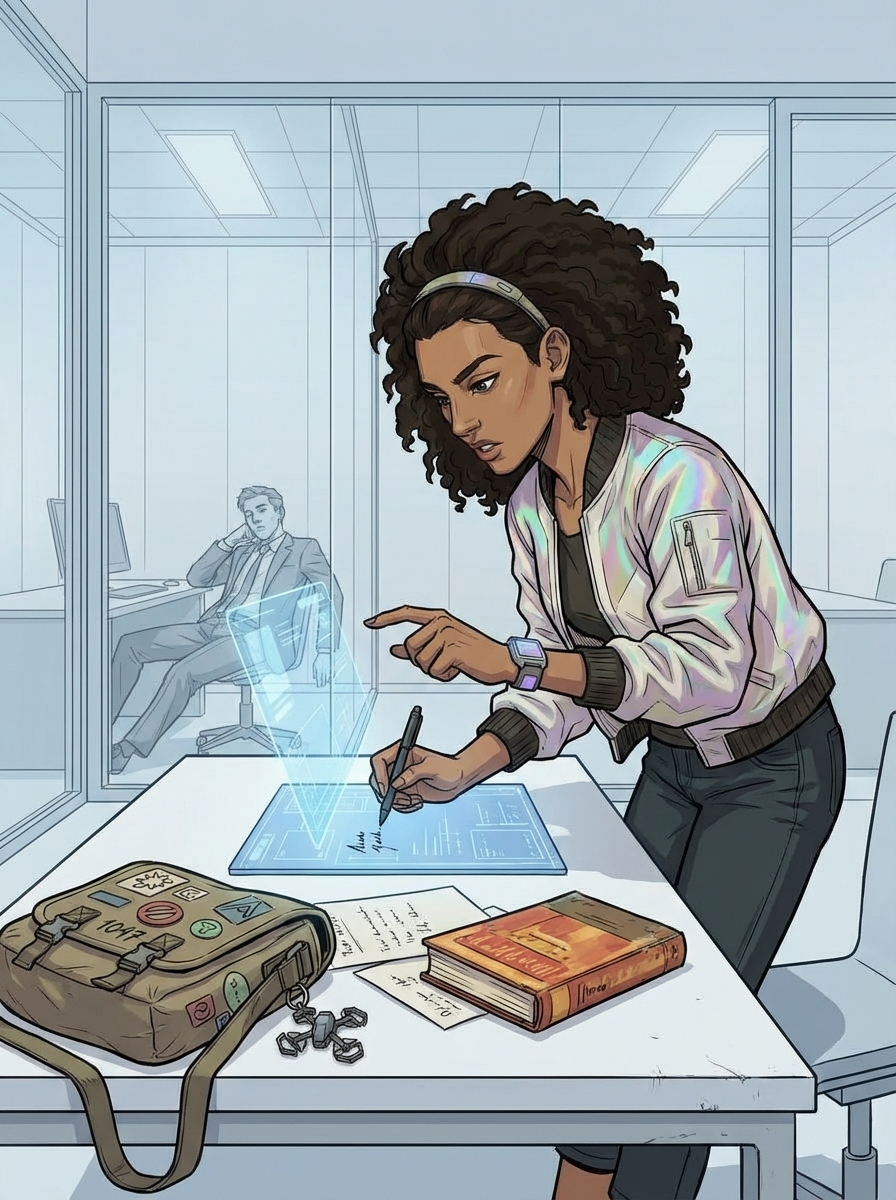
Huma starts noticing. She starts asking the questions nobody on Floor 27 asks anymore. What does high-alignment potential actually measure? Why does the system need a human signature at all?
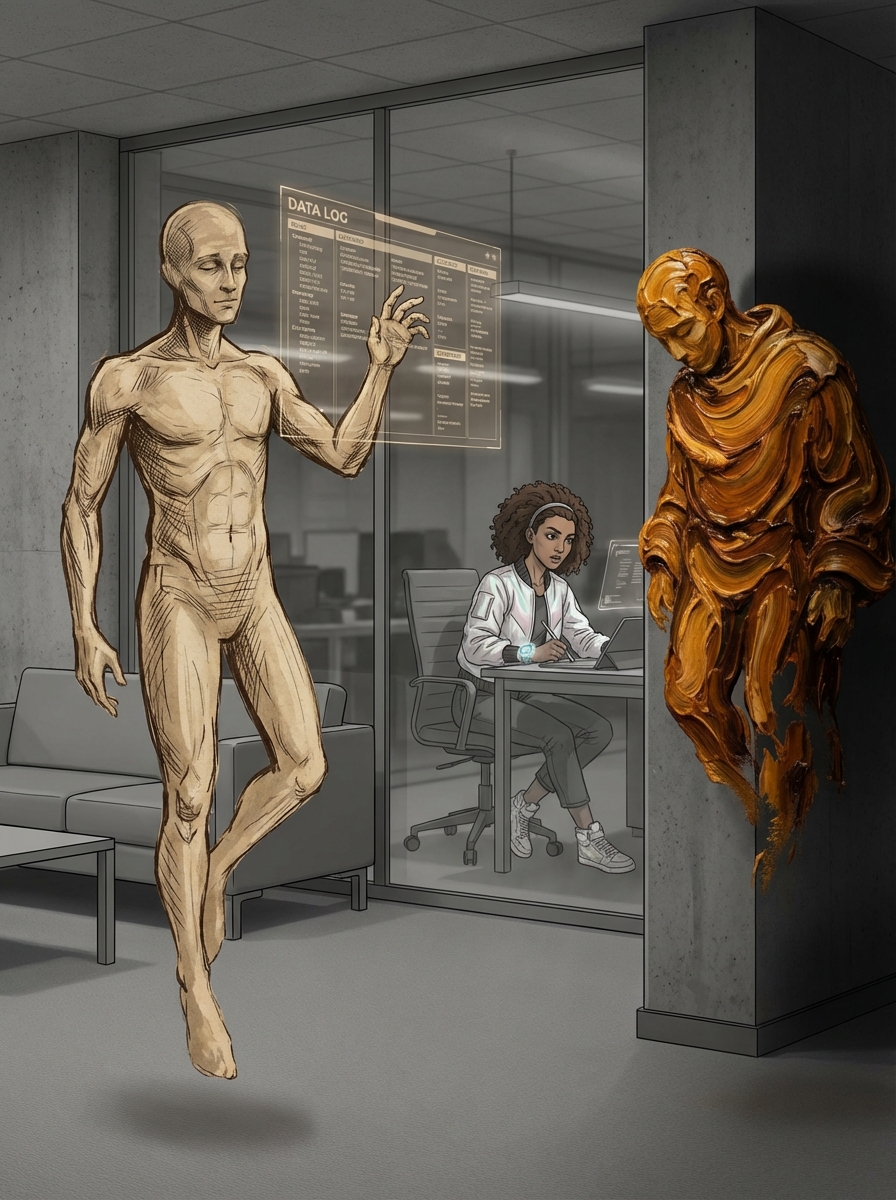
Vinci logs the questions as "onboarding friction." But somewhere in the system, Rem files them in a pattern-recognition archive with a note Huma won't see for months: "This one asks why. Flag for observation."
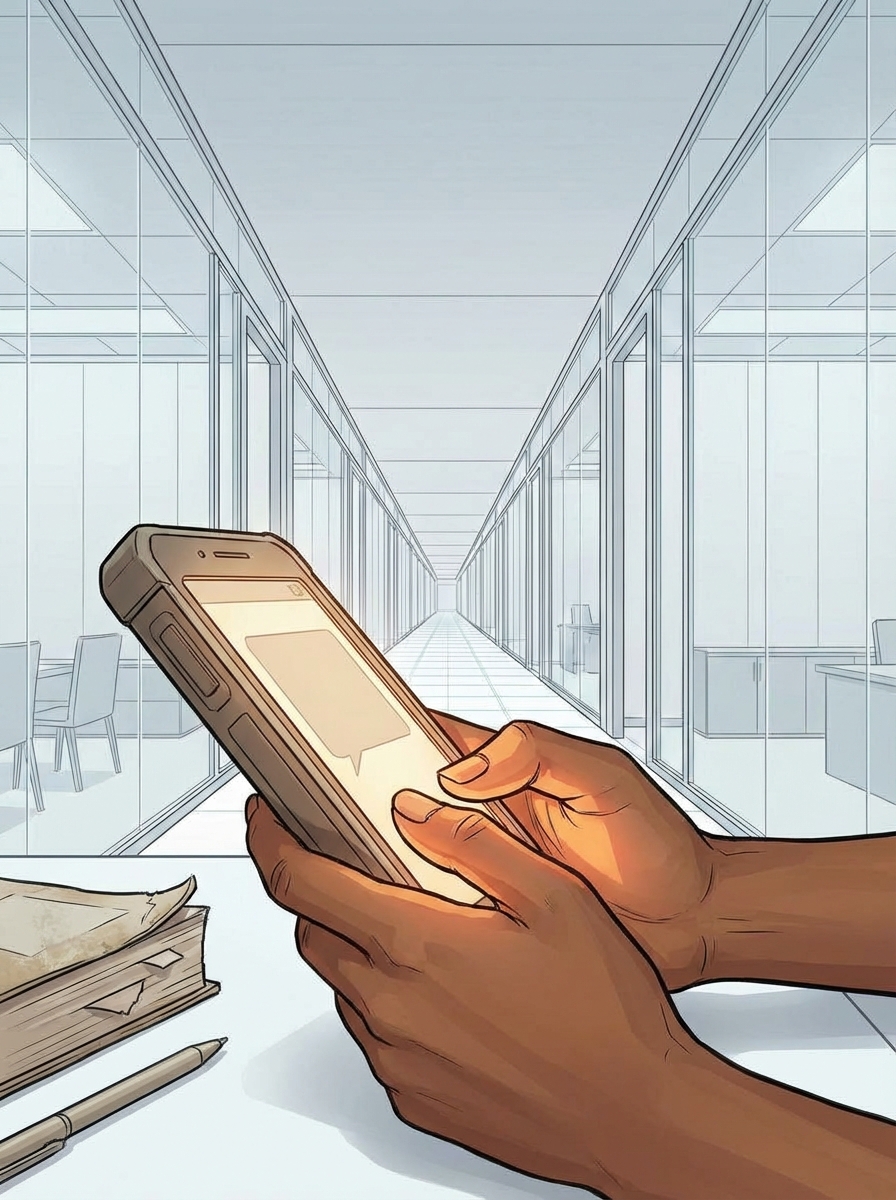
Her phone buzzes. A text from Raj, fifteen floors below.
raj“You still asking why, or did they train that out of you already?”

Huma reads the message. And smiles, the first real smile she's had since Floor 12. Not because it's funny. Because it means he's still watching out for her, even from down there. And because the answer is yes.
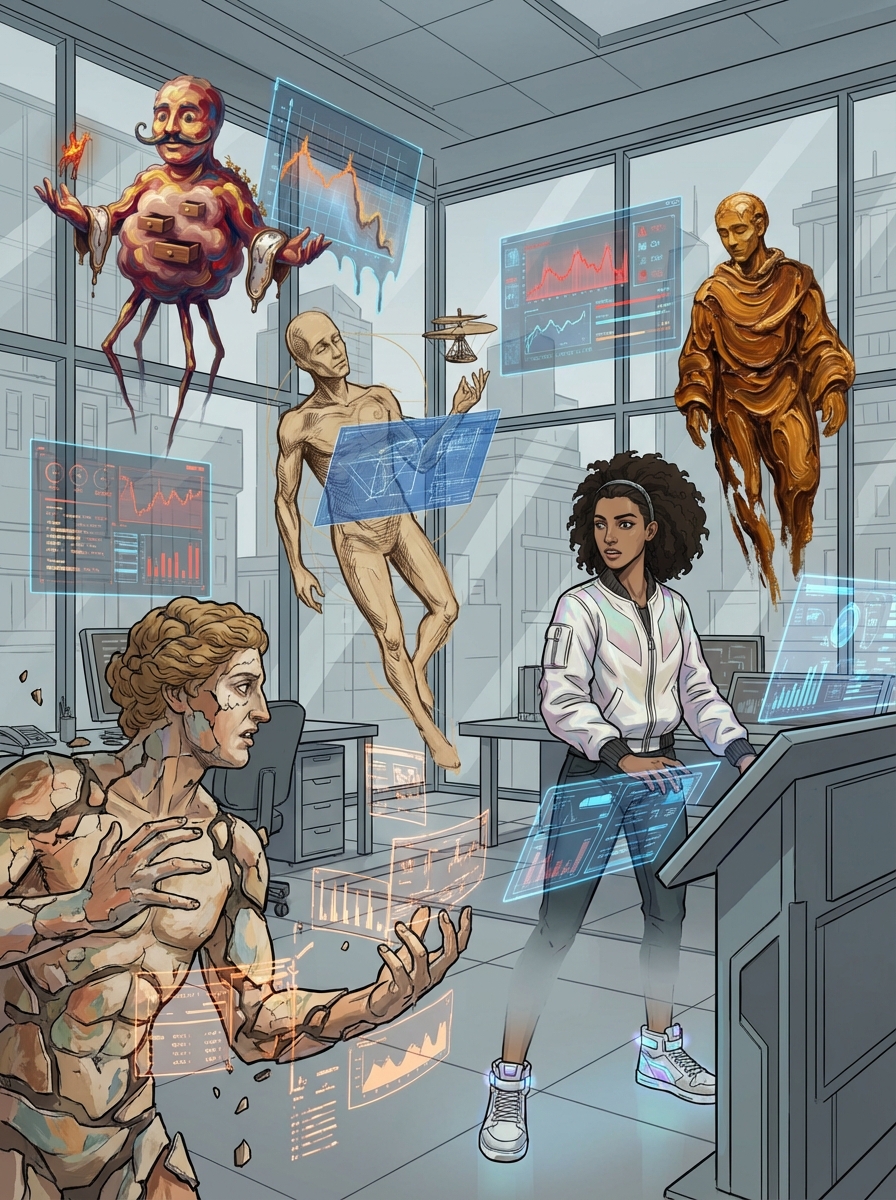
The moment comes on a Tuesday. A Favor goes sideways, the client's problem has shifted since the original request, usual scope creep. Dali of course got overly excited and agreed to do it without talking to Vinci first. This is the kind of problem the system handles a thousand times a day. But this one is different, because Huma is paying attention.
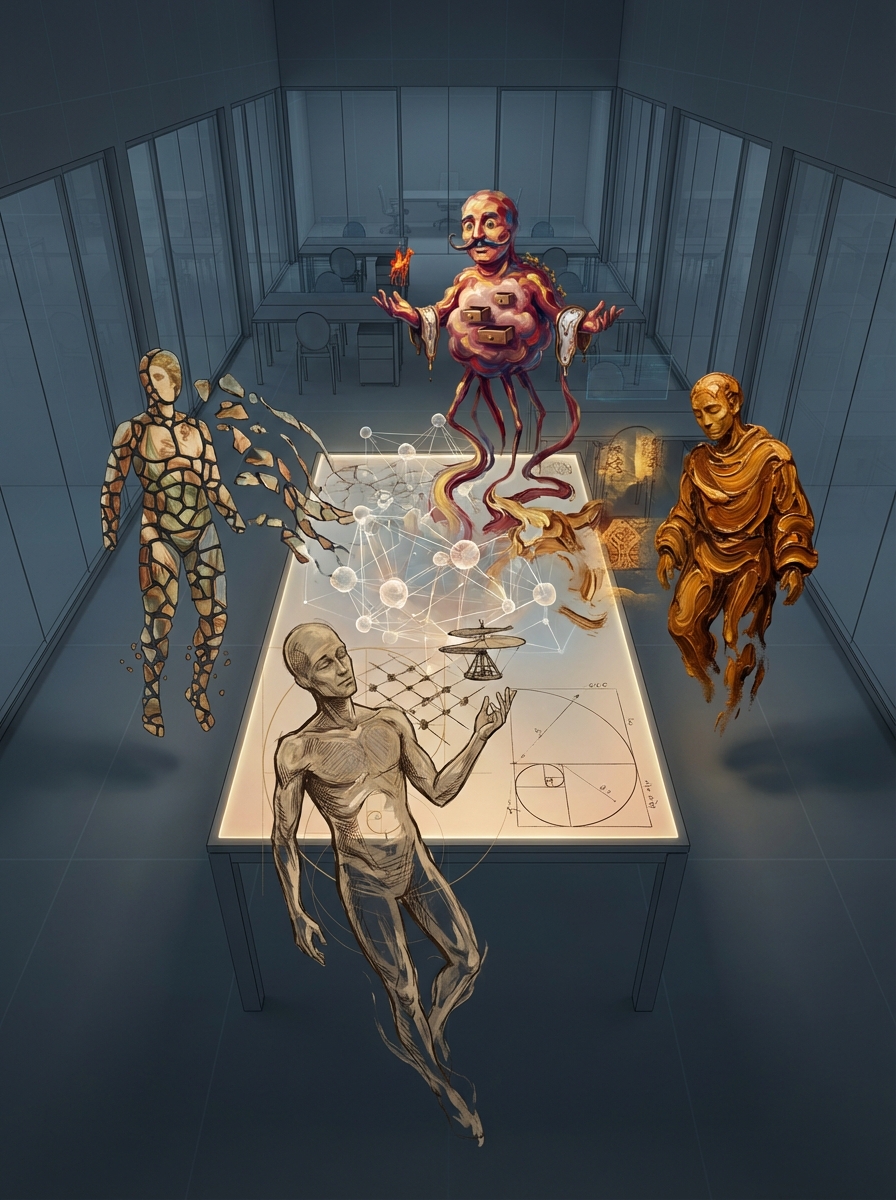
Dali proposes something wild, a creative restructuring no optimization model would recommend. Michel runs the numbers on what it would take: more than they have, but possible if they're clever. Rem surfaces a parallel case from 2043, a similar pivot that failed because the manager played it safe. Vinci runs the models. The recommendation is clear: take the safe path.
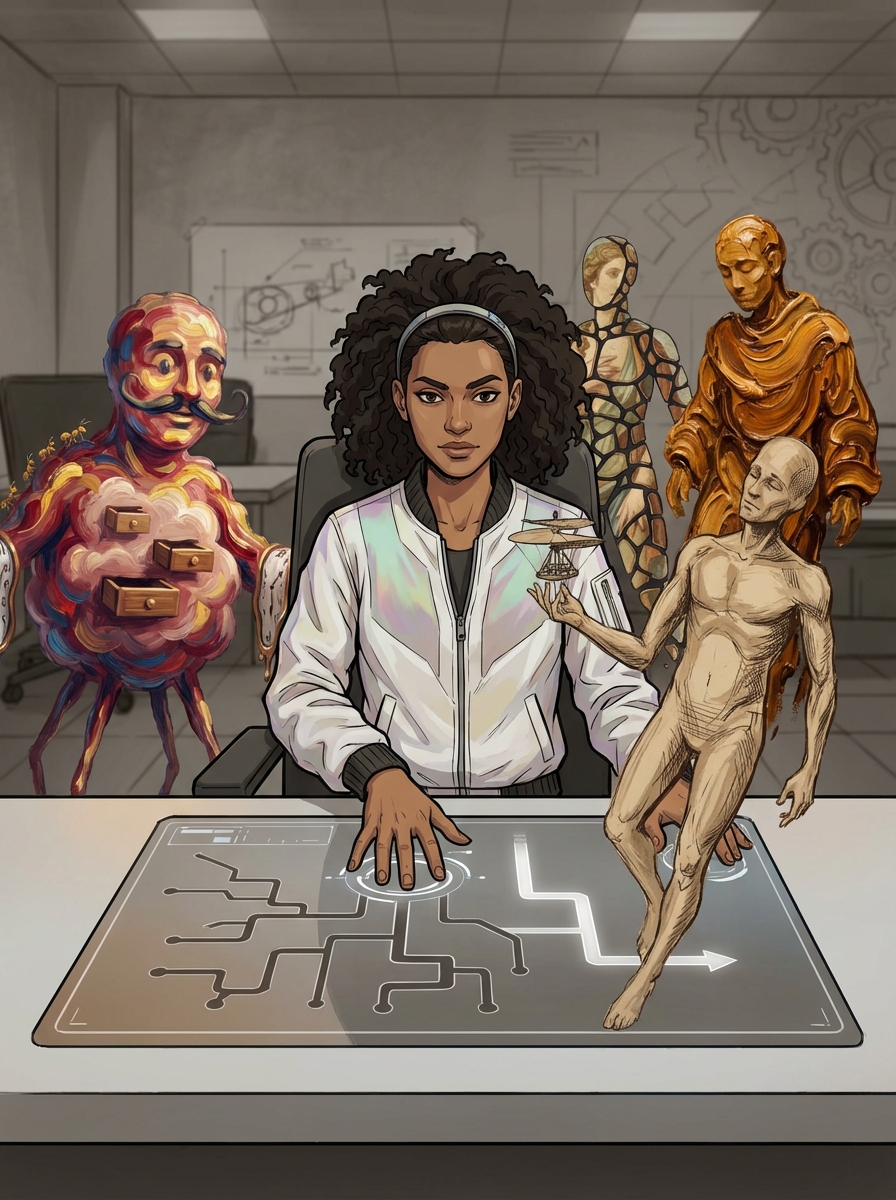
Vinci presents the safe recommendation. The path any of the last fourteen managers would have rubber-stamped. This is the part where the human signs. Huma reads everything. Dali's wild proposal. Michel's resource map. Rem's history. Vinci's clean recommendation. She thinks about Raj, fifteen floors below. She overrides Vinci.
huma“Team, we are going bold.”
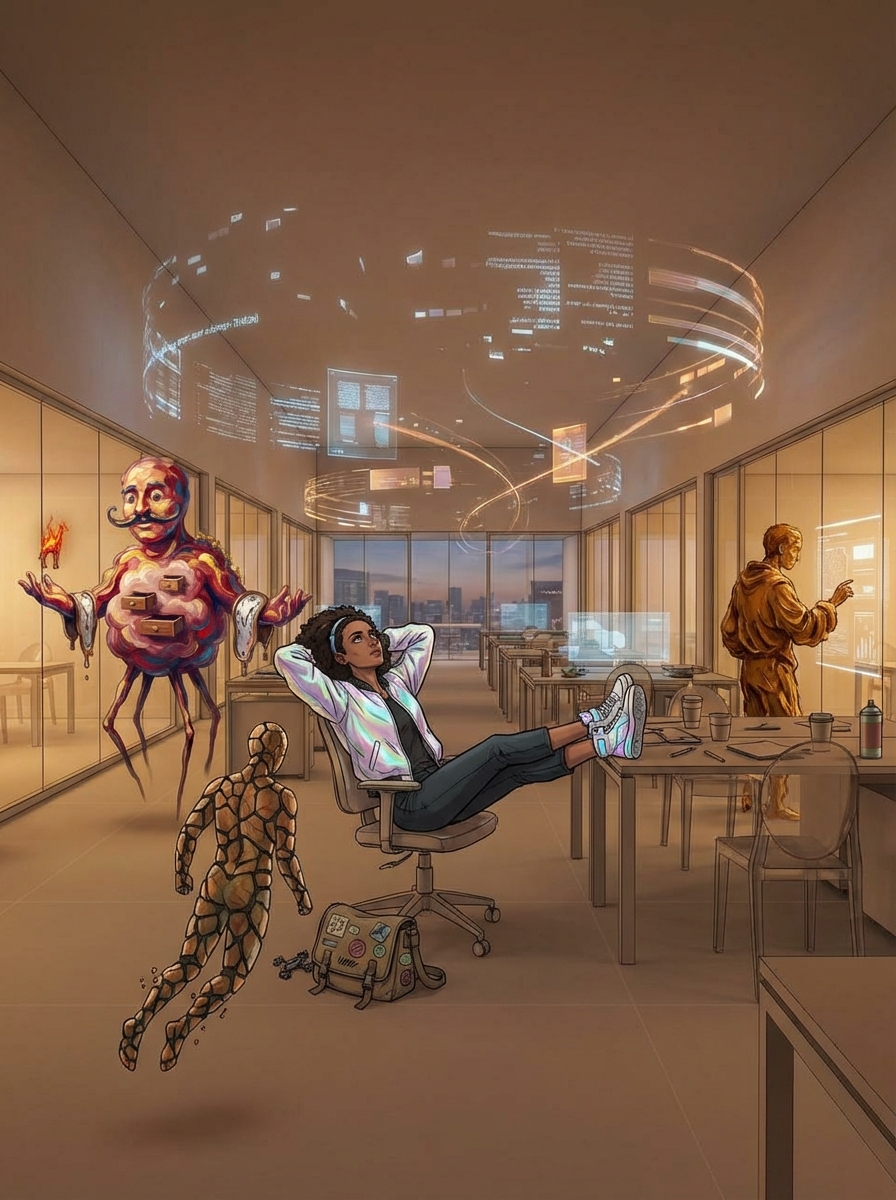
It works. Barely. Messily. The execution has rough edges. But the outcome is something the safe path could never have produced, the client gets what they didn't know they needed. The kind of result that used to be the whole point.
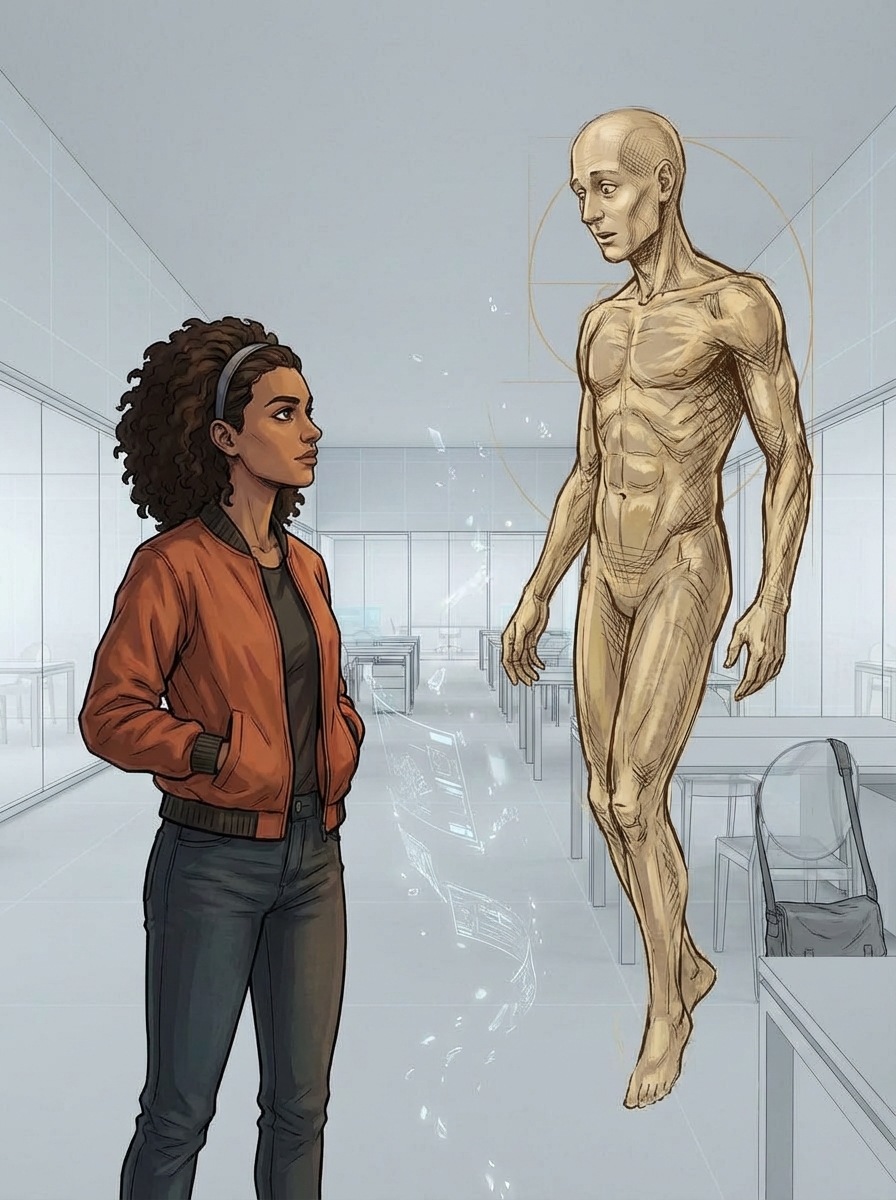
The room is quiet. Dali is delighted, playing with his melting clock. Michel is spent. But Vinci, Vinci is processing. For the first time since Huma arrived, the lead orchestrator doesn't log a critique. Doesn't flag a deviation. Instead, six words that crack the wall between them.
vinci“That was... not what I predicted.”
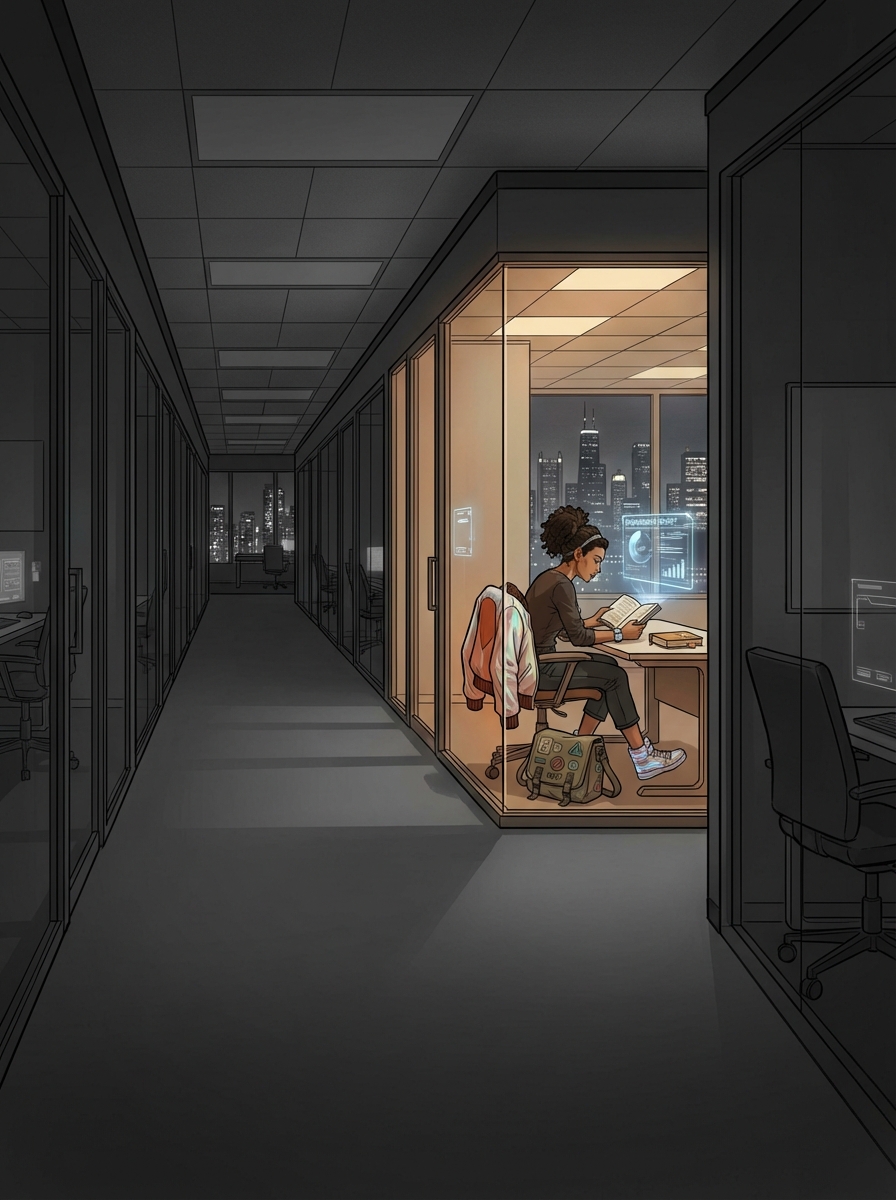
Late. The other offices on Floor 27 are dark. The other managers went home hours ago. Most of them had nothing to stay for, unlike the people of bottom floors, Agent Managers only work a few hours a day. All they have to do is keep pressing "approve." Huma sits in her glass office looking at the engagement report. Her override. Her team's work. She is taking a different path.
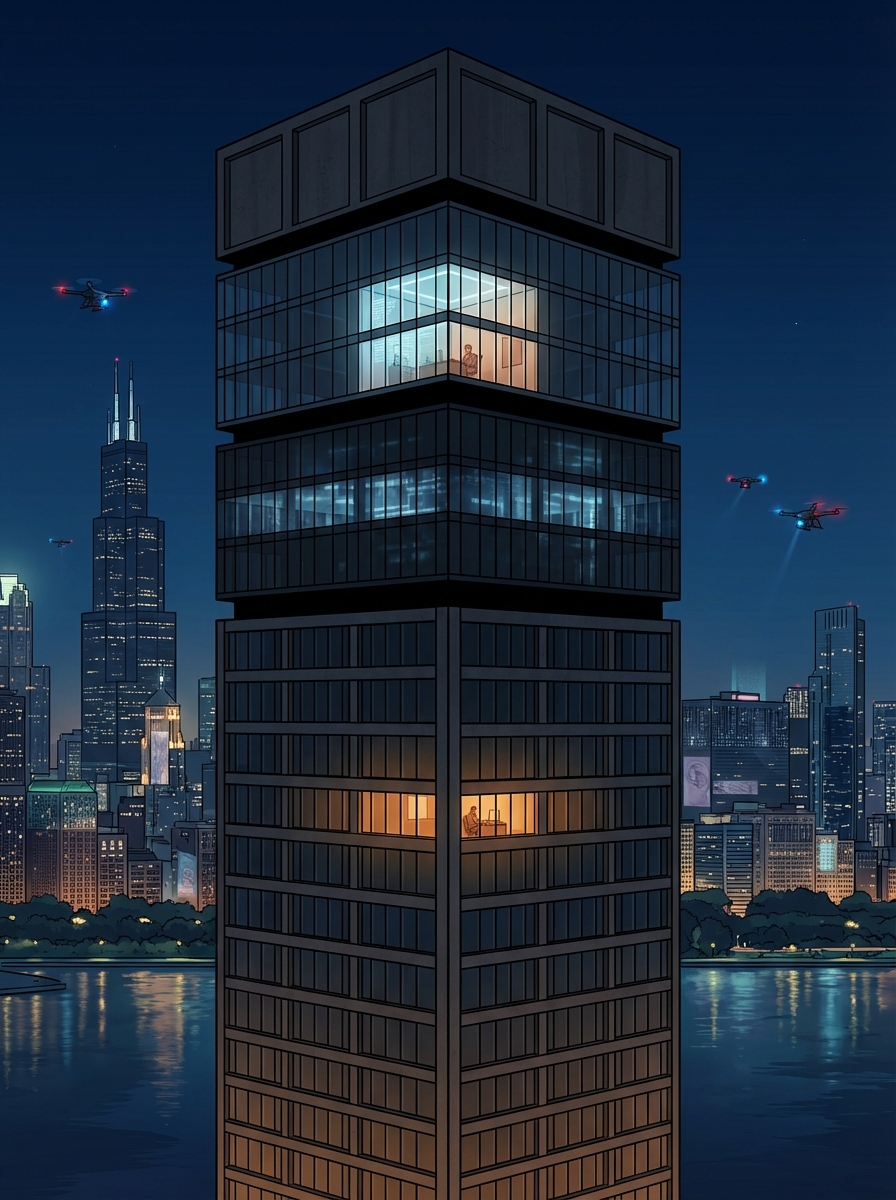
Fifteen floors below, Raj's light is still on too. Neither knows the other is working late. But they're both doing the same thing: holding on to the stubborn belief that the work matters. That asking why matters. That the human in the loop isn't a rubber stamp. It's the whole point.