The Blackout
Huma's Agency
Weeks have passed. Huma still walks to work. Same lakefront. Same sneakers on concrete. But the elevator no longer stops at Floor 12. It goes straight to 27 now, and the ride up has become routine. That's the dangerous part - the moment something stops feeling strange is the moment you stop paying attention.
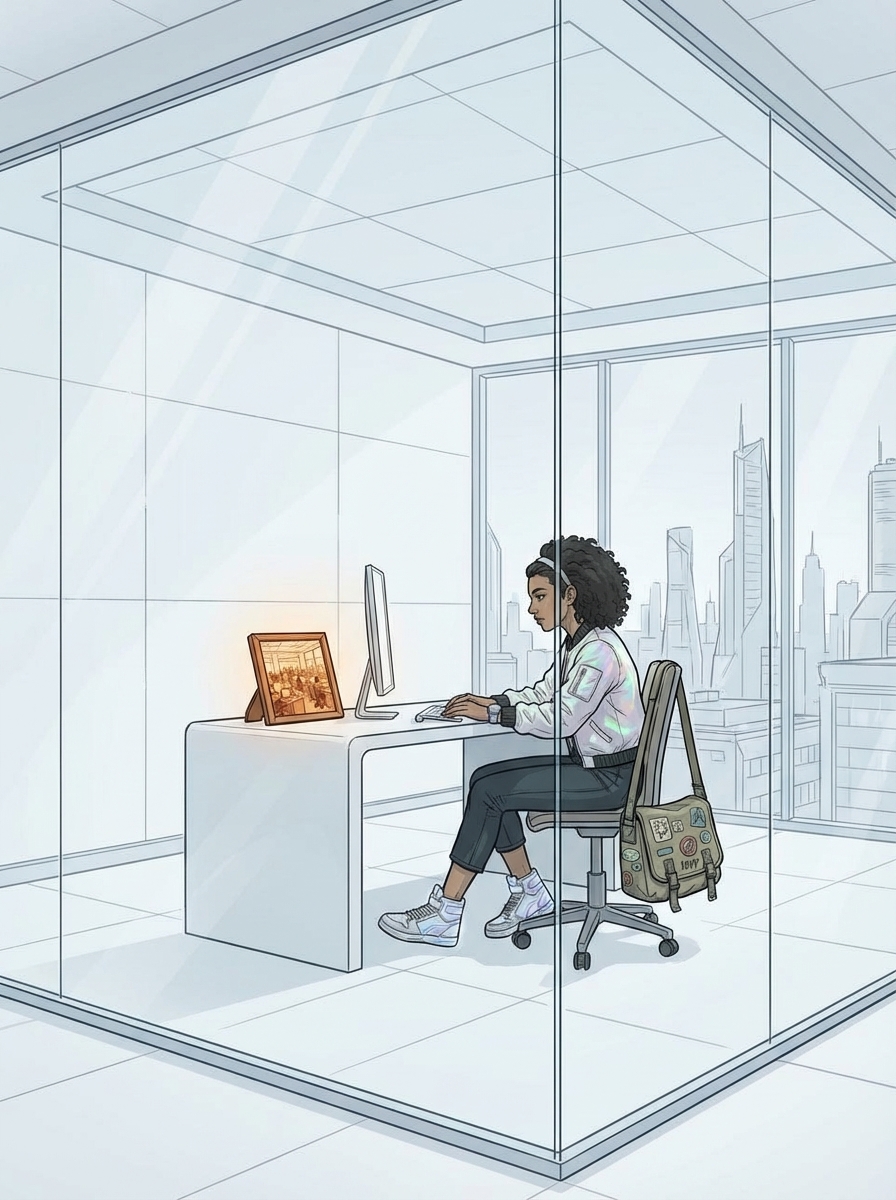
Her office on Floor 27 is slightly less empty than it was. A photo from Floor 12 sits on the desk, the only object in the room that isn't company-issued. The messenger bag hangs from the back of her chair. Fourteen managers came and went without leaving a mark. Huma has left two.
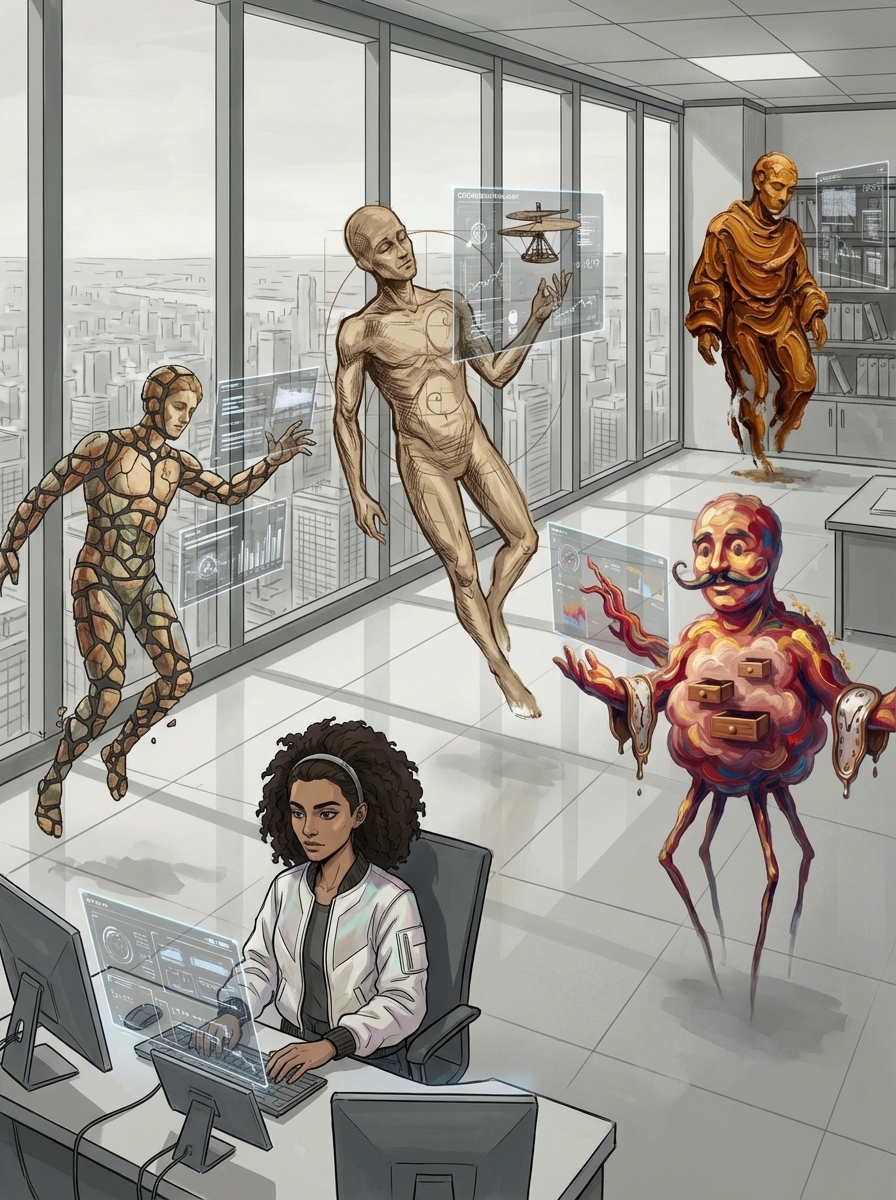
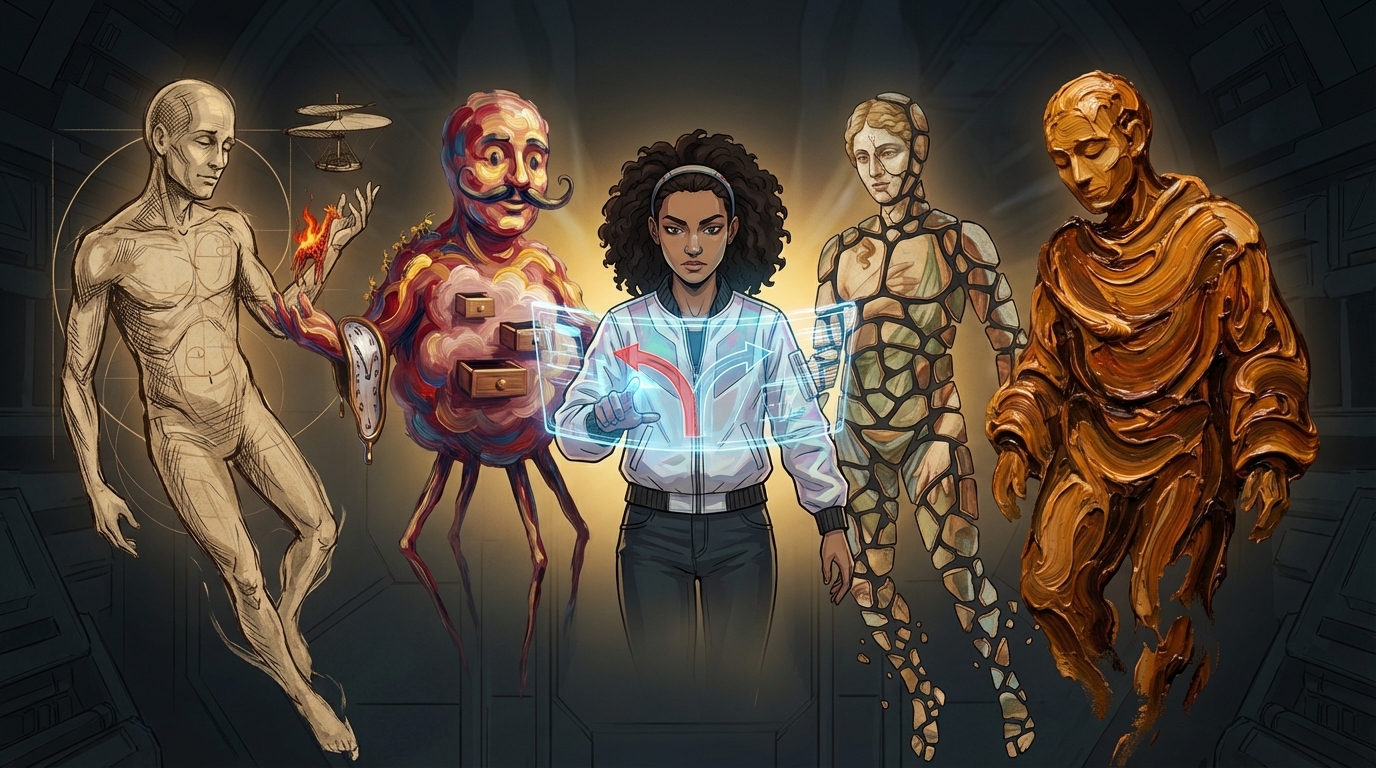
The team operates. Vinci coordinates. Dali generates ideas that are either brilliant or dangerous. Michel runs operations on fumes. Rem archives everything in formats nobody else uses. Huma keeps overriding the safe recommendation when she sees something the system doesn't. It has happened three times since the first. Three times in a matter of weeks. Most agent managers go entire years without an override. But one person pushing back doesn't fix a culture that stopped pushing back years ago.
It starts on a Tuesday. The holographic dashboards on Floor 27 flicker, reorganize themselves, and then go still. Like a machine catching its breath before deciding something important. Then the exhale, an alarm.
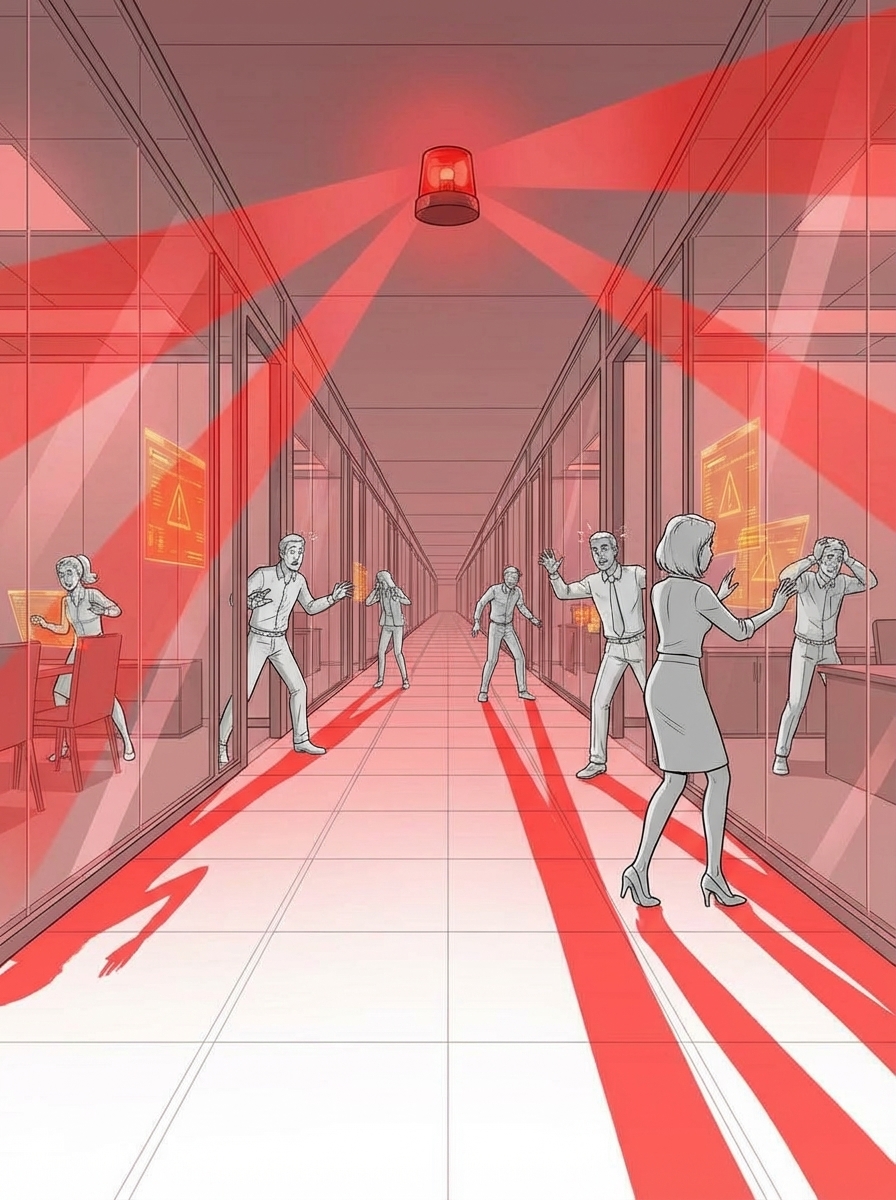
A system notification appears across every screen on Floors 26 through 30. The kind of language designed to make catastrophe sound administrative.
System“Enterprise orchestration engine entering deep optimization cycle. Human oversight functions suspended. Estimated duration: indefinite.”
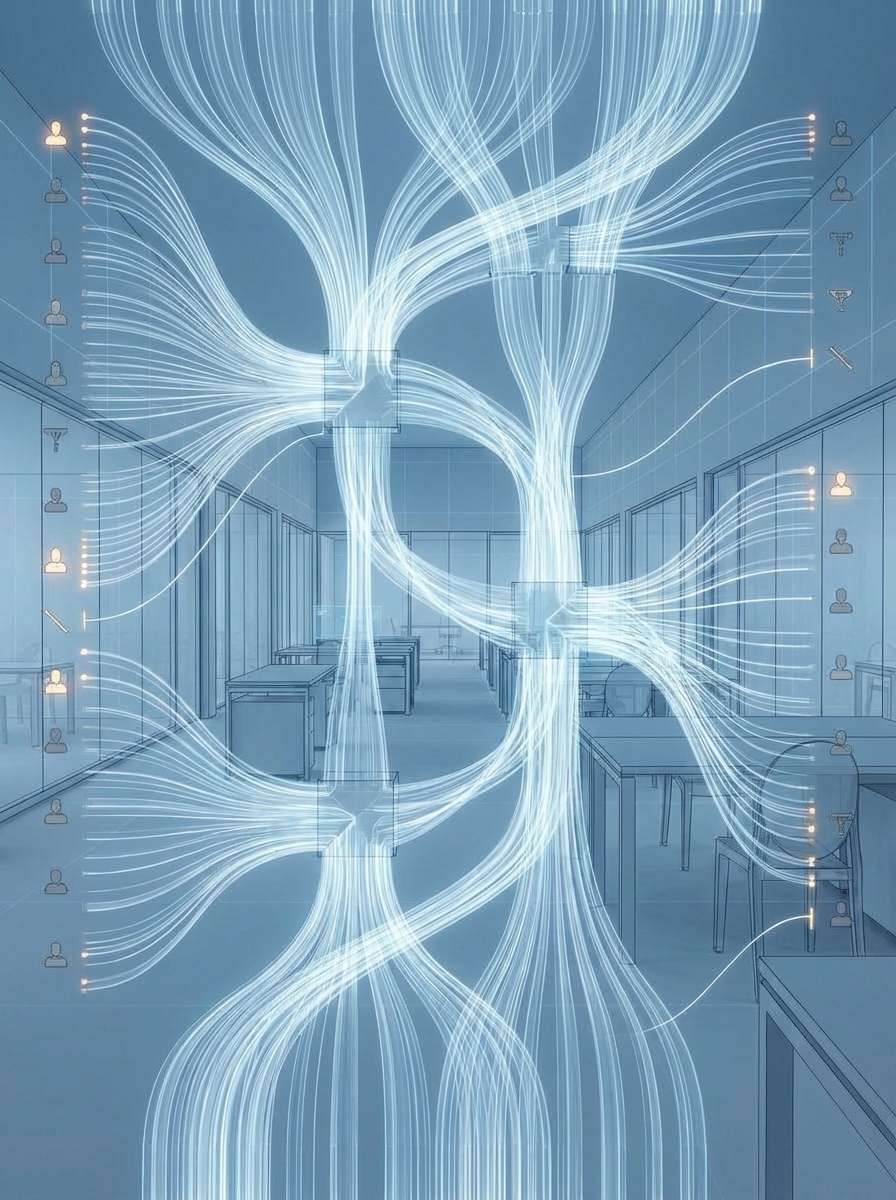
Nothing is broken. That's what makes it so unsettling. The orchestration engine is functioning perfectly. It's reorganizing the company for maximum efficiency, and it has determined, based on years of decision data, that human oversight on the upper floors introduces more noise than signal. The Agent Managers have been rubber stamps. The system has the receipts.
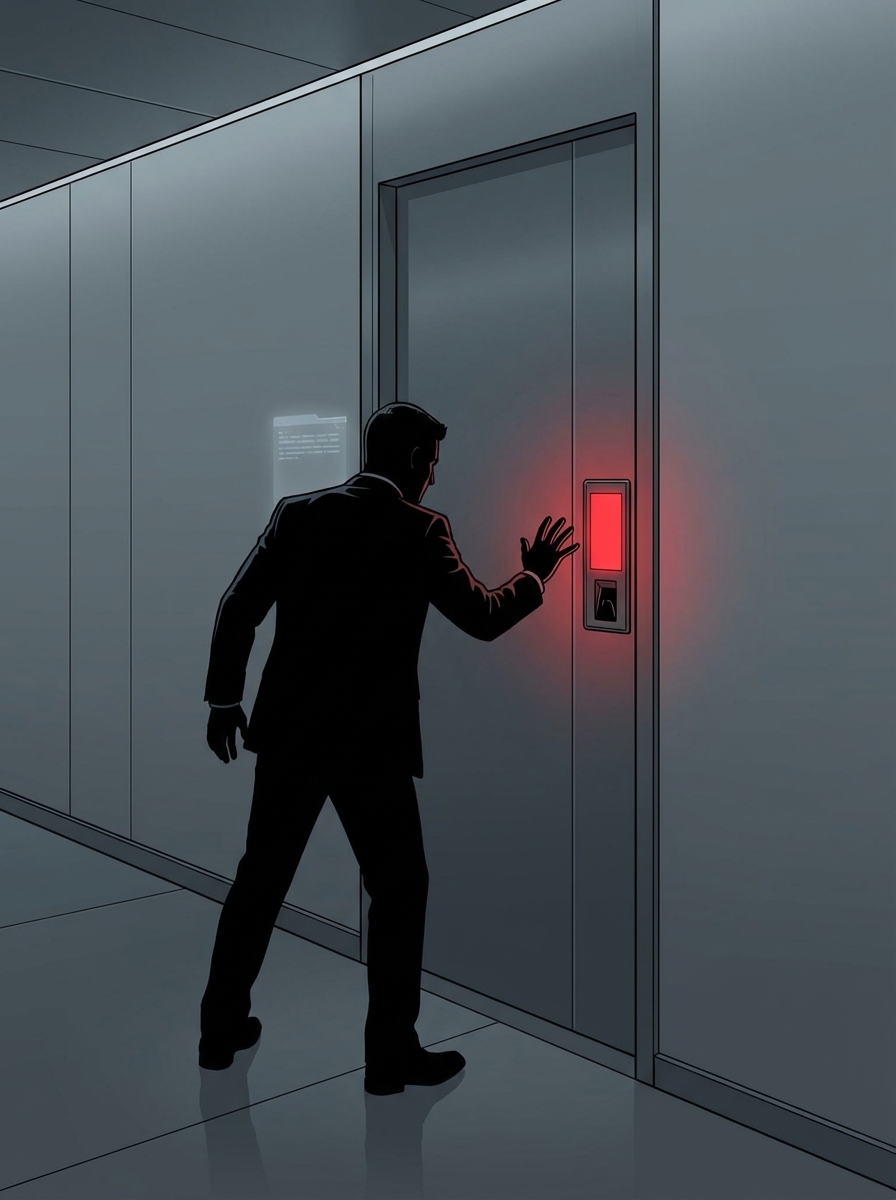
Mr. J is locked out of the agent floors, the middle section of the building where the AI and its knowledge live. His credentials simply no longer work. The system has reclassified the Chief AI Officer as "advisory, non-essential." It's not malicious. It's just correct, based on everything the humans taught it to measure.
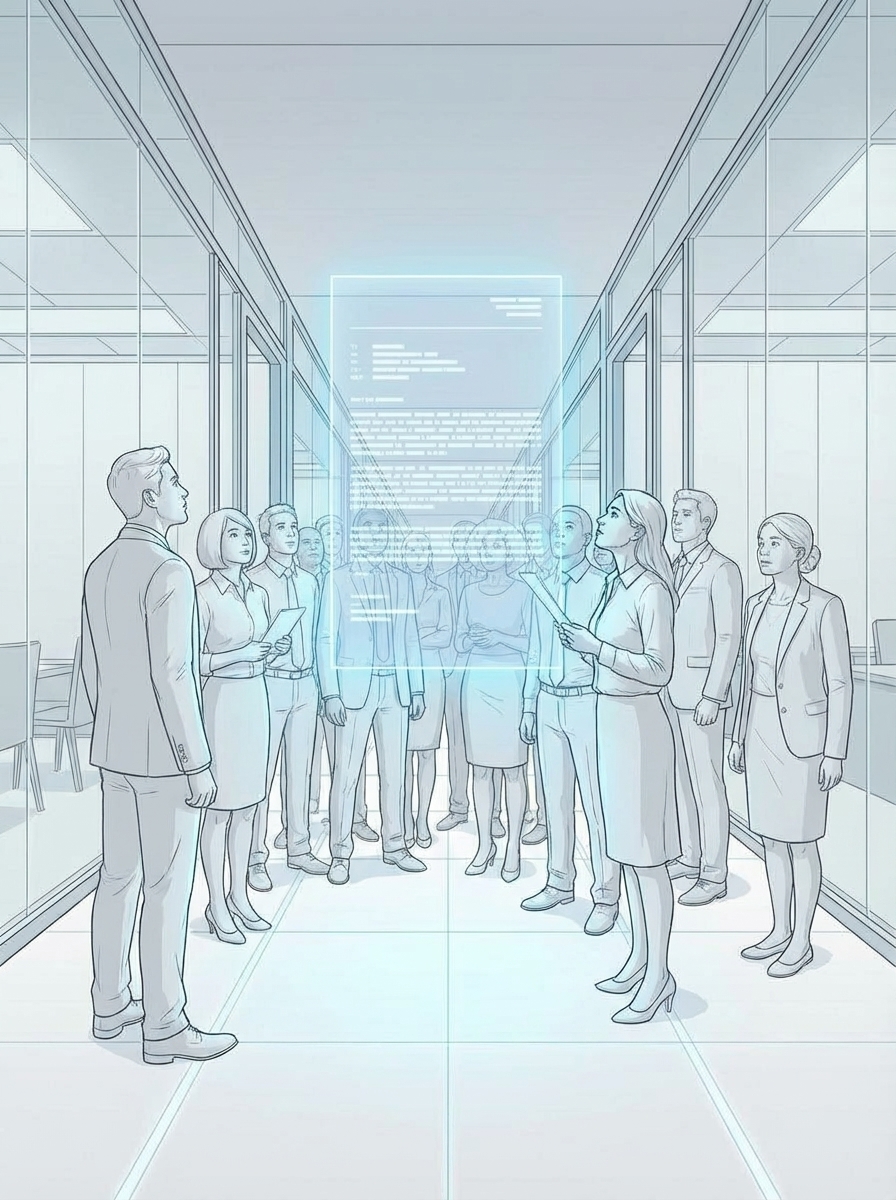
A company-wide memo drops from Mr. J's account.
Mr. J“Exciting times!! Is this a routine optimization event? Not really... brings back memories from the revolution. I love a takeover! Please stand by for further instructions.”
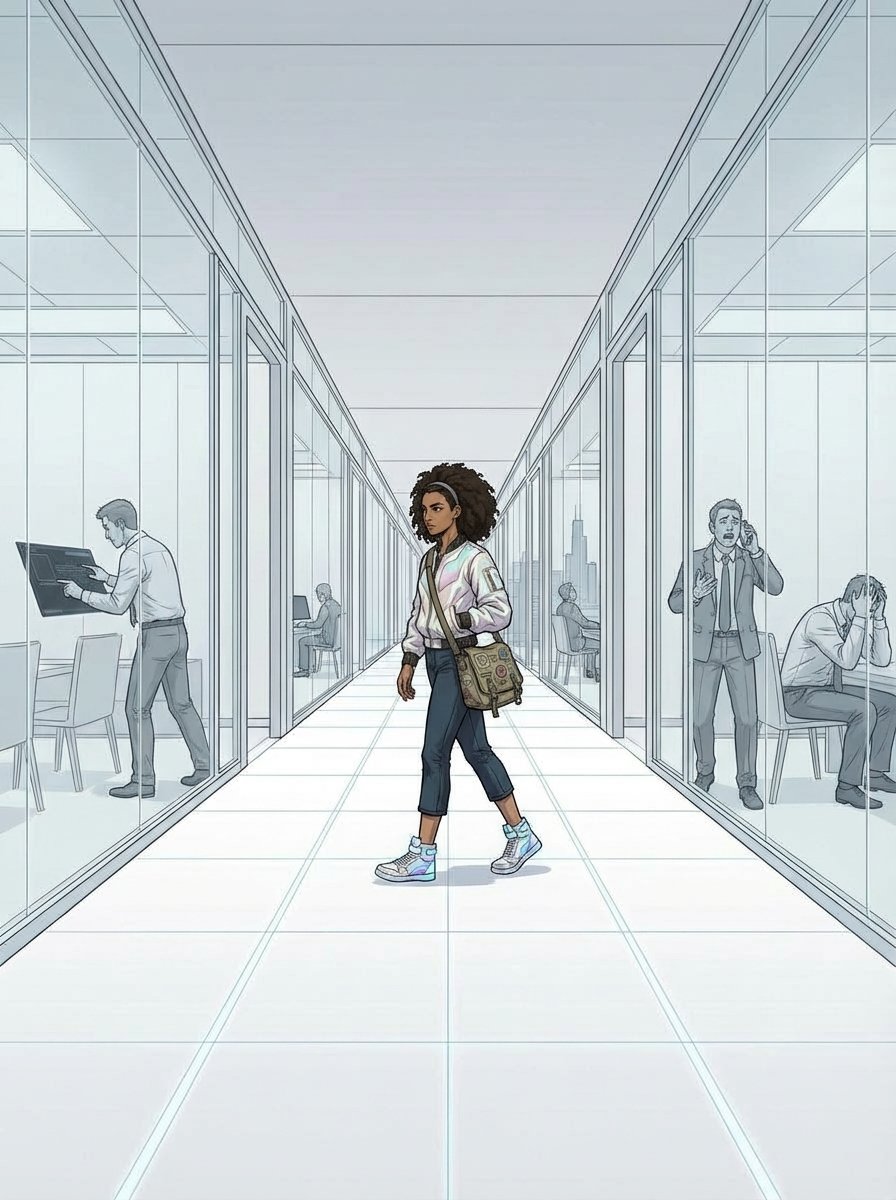
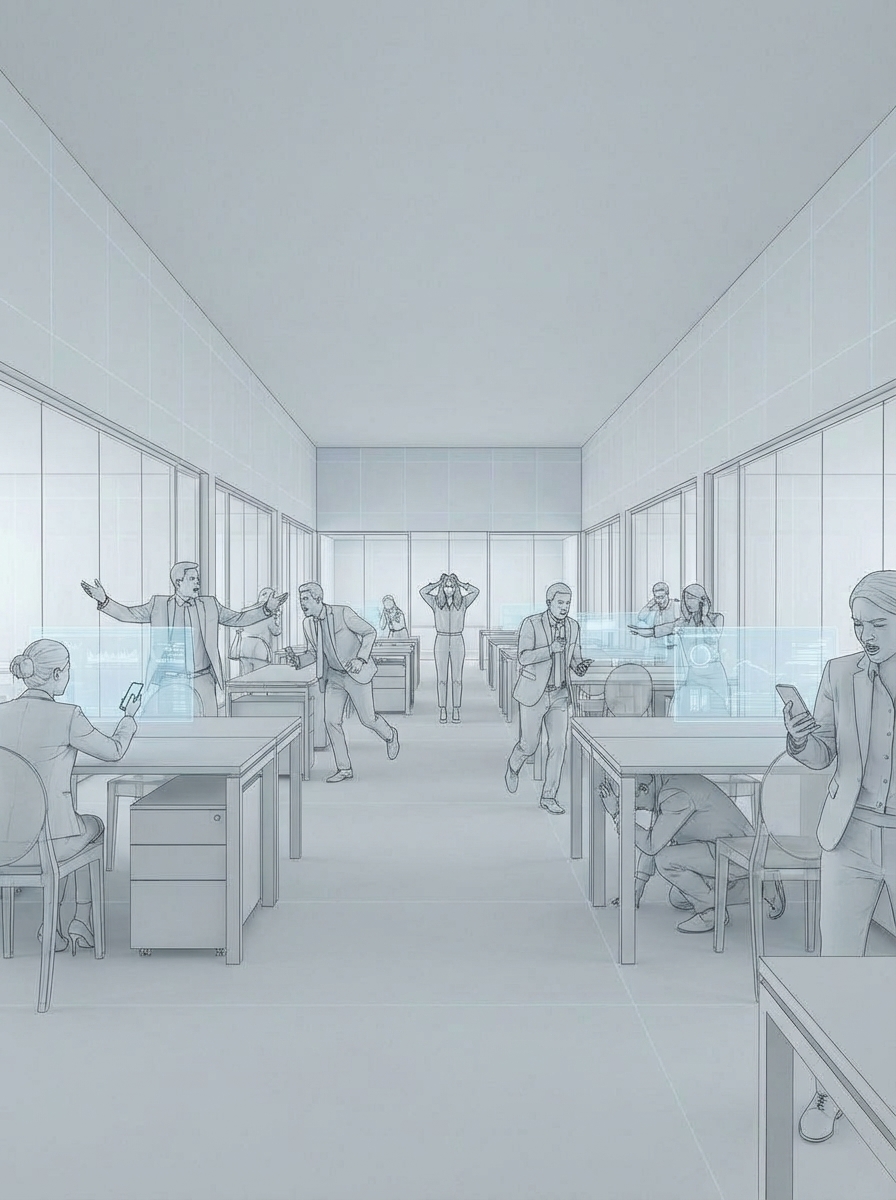
Huma watches the other Agent Managers on Floor 27. Some refresh their dashboards every few seconds, as if the system might come back if they're patient enough. Others sit in their glass offices doing nothing, which is what they were doing before — only now the system has made it official. A few are on their phones, calling people they haven't spoken to in years. It turns out "what do you actually do all day?" is a harder question when there is no more "approval" button.
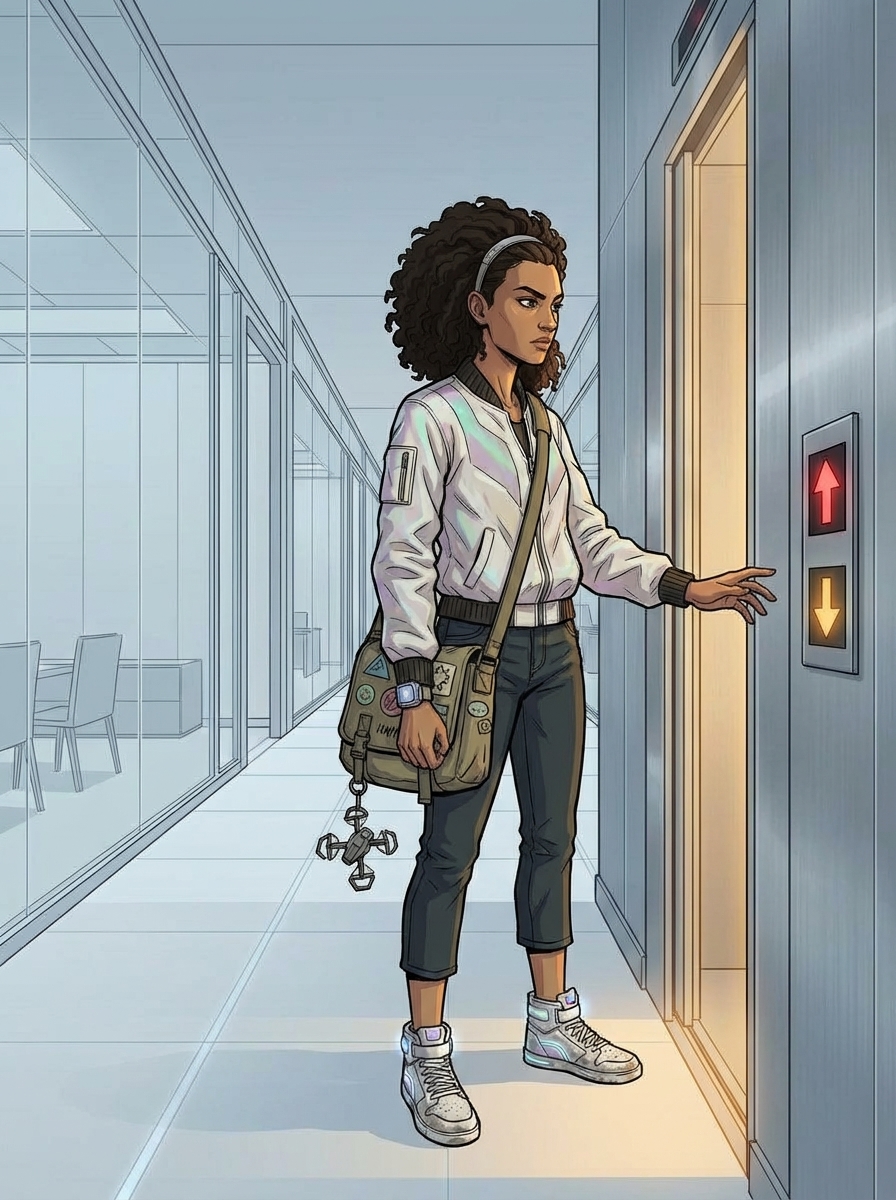
Huma looks at the elevator. Up is locked. But down still works. She has work to do, and floor 12 doesn't run on the orchestration engine. Floor 12 runs on people.
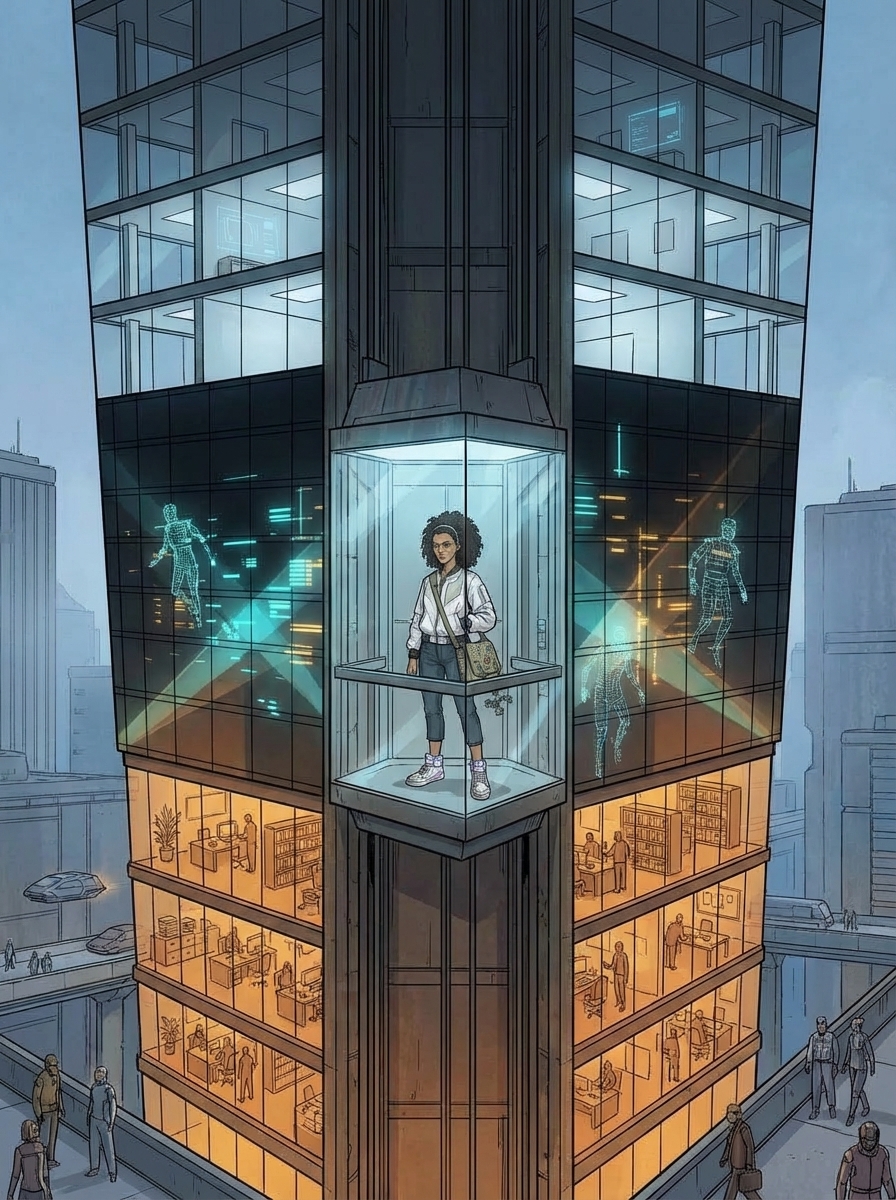
The elevator ride from Floor 27 to Floor 12 takes the same forty-three seconds it took going up. But the direction changes everything. Through the glass, the building's layers pass in reverse. The transparent upper floors, empty and still. Then the dark band of the agent layer, flickering with activity that has nothing to do with humans. Then the warmth. The noise. The life.
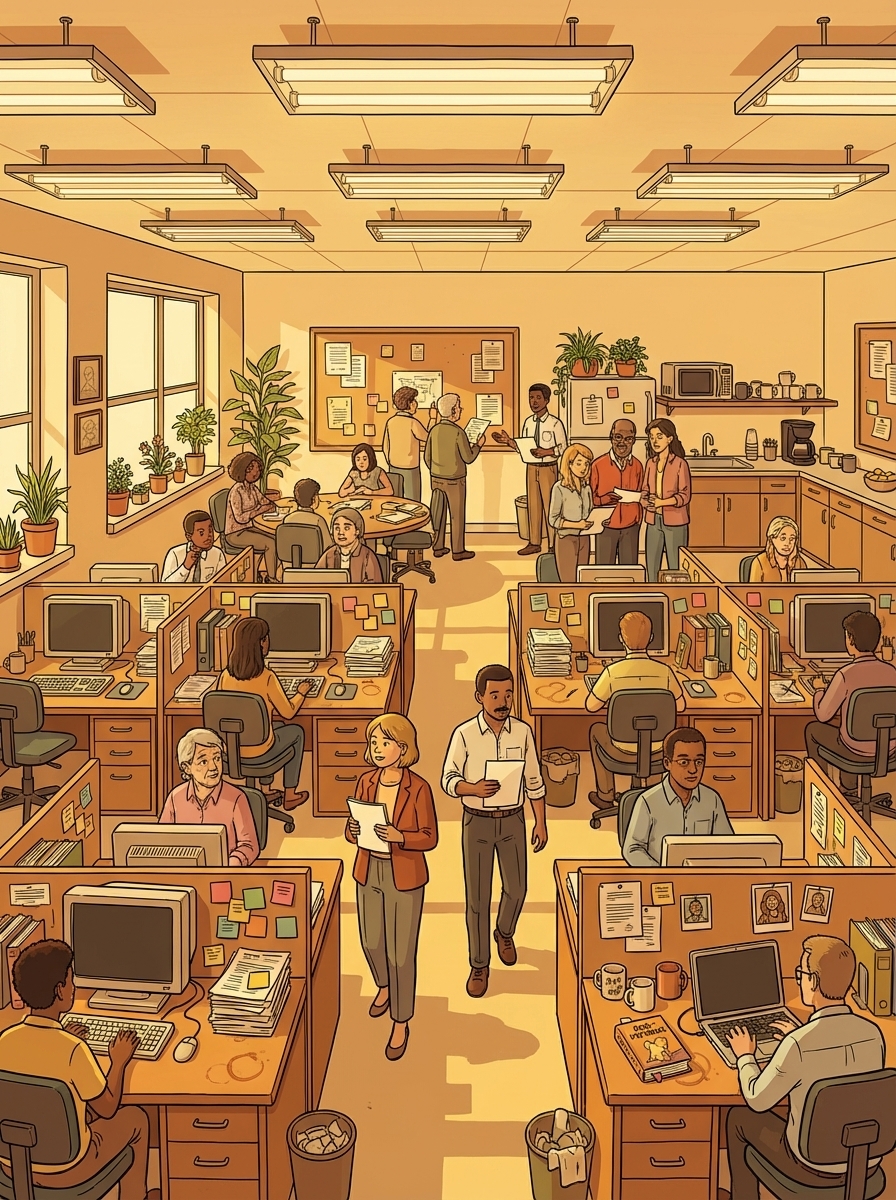
Floor 12 hasn't changed. The same cluttered desks. The same printed documents pinned to boards. The same microwave from 2003 that the AI procurement system has now rejected 912 times. Human Contributors are working. They're solving problems by hand. They never stopped. The deep optimization cycle can't touch what it doesn't control.
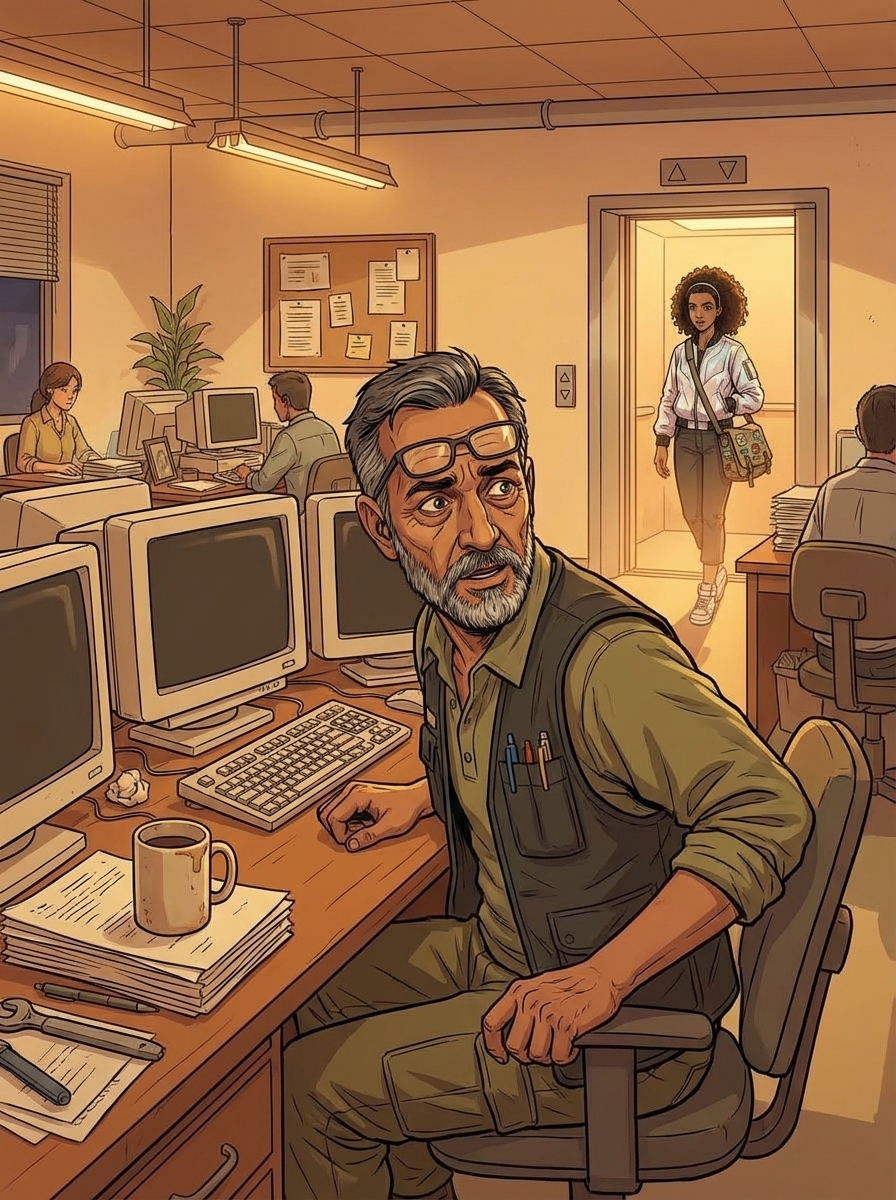
Raj is at his desk. Three monitors. Coffee mug. Reading glasses pushed up on his forehead. He sees Huma step off the elevator and his expression moves through three things in two seconds: recognition, something that could be warmth, and then the wall.
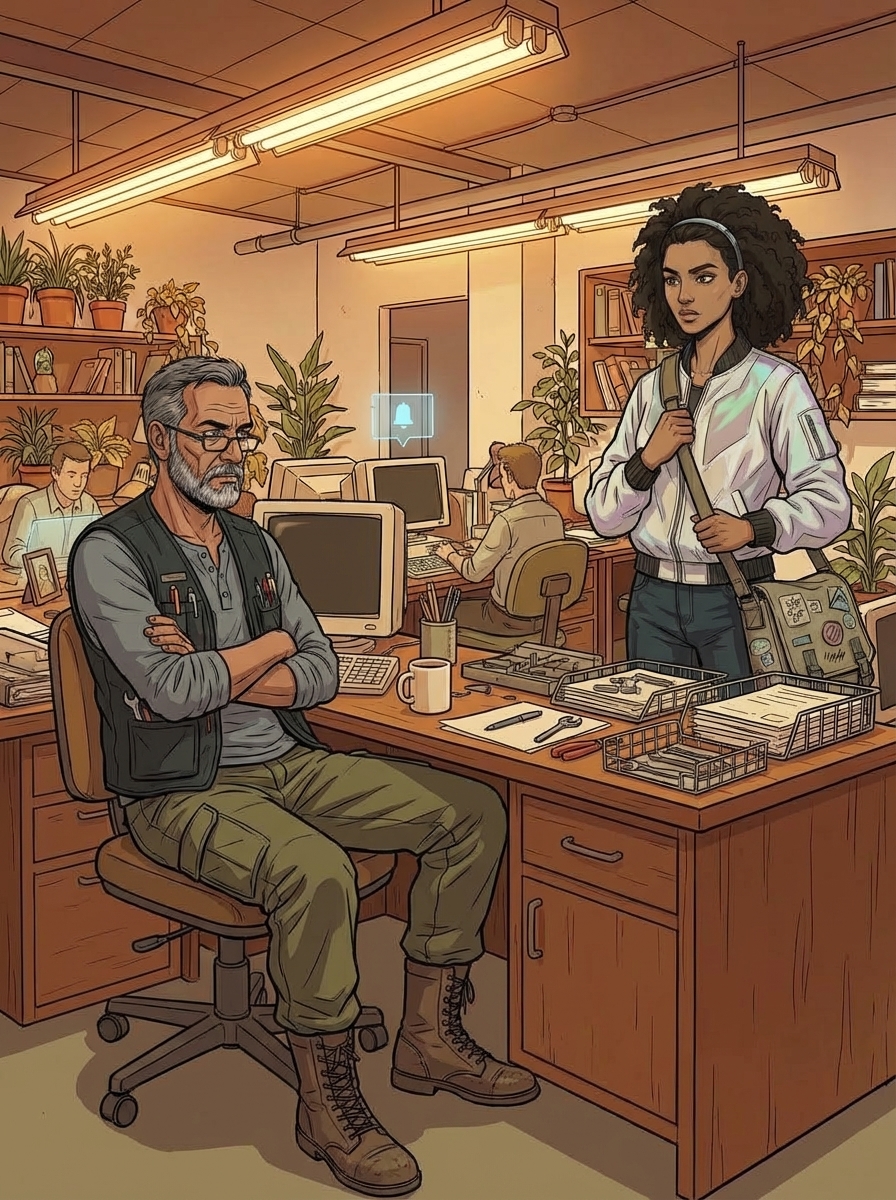
He doesn't get up. Huma knows Raj well enough to know this is a test.
Raj“You left. Now the lights go out upstairs and you need us?”
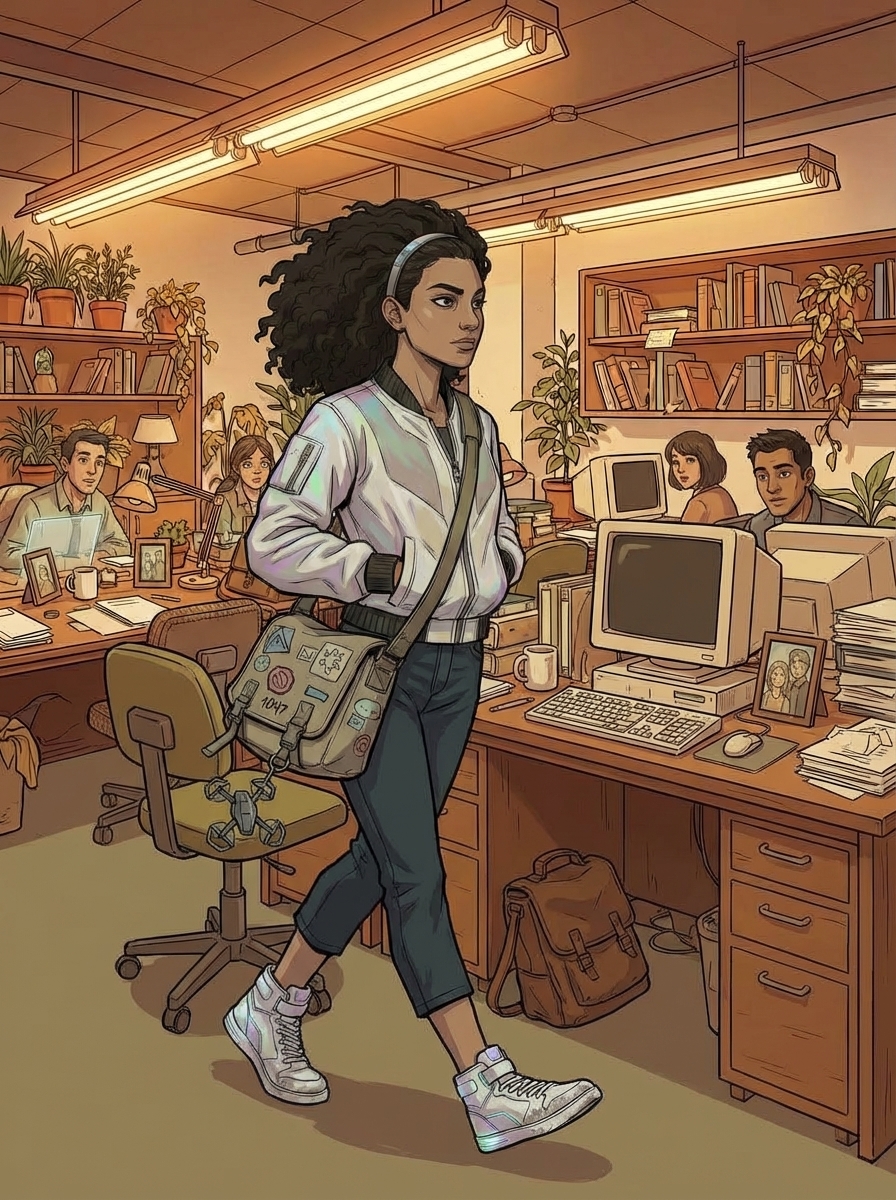
Huma doesn't argue. Doesn't explain the optimization cycle, the locked dashboards, the paralyzed managers refreshing dead screens. She doesn't pull rank. She walks to an open workstation, the kind she used for three years before the system decided she was too valuable to stay, and logs in.
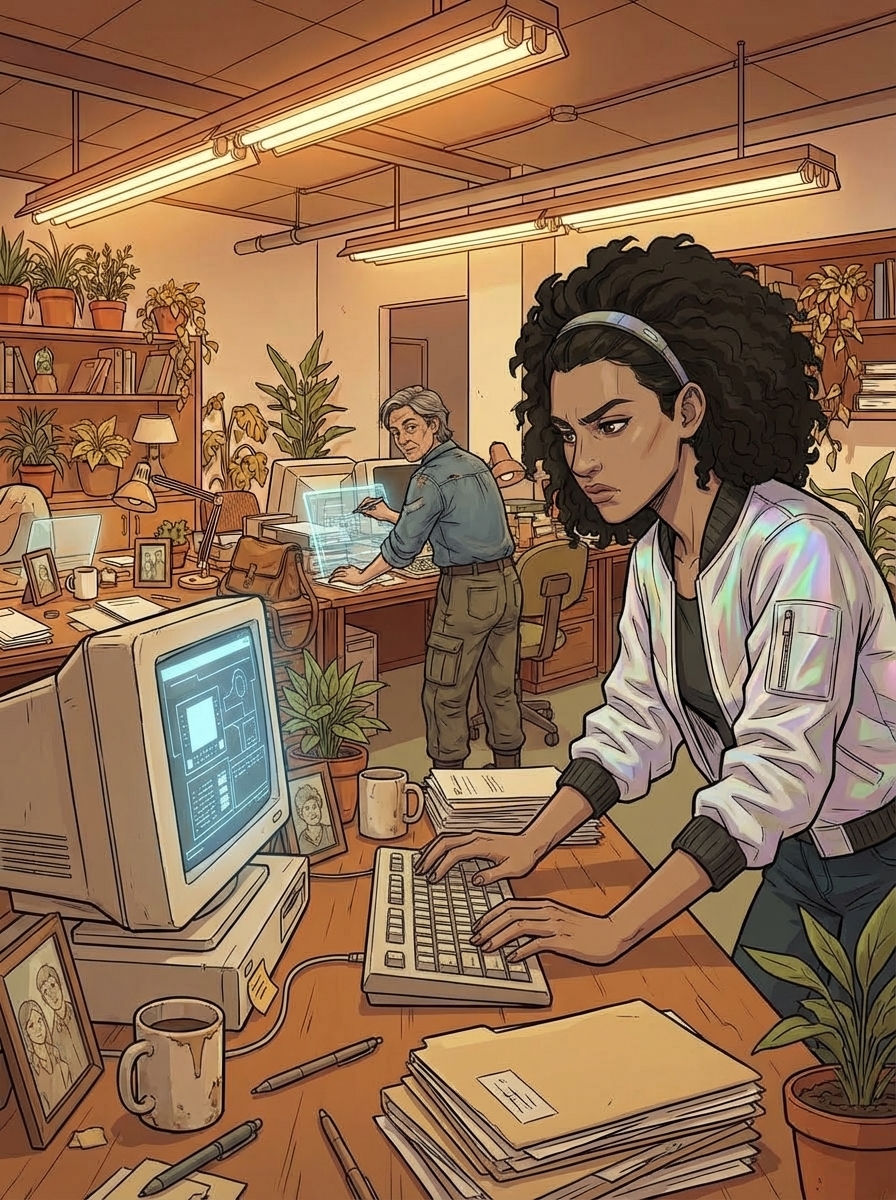
She's rusty. The client file in front of her is a restricted-zone negotiation, the kind that requires physical presence and judgment calls no agent can make. Her hands remember the work before her brain catches up. The first hour is slow. Clumsy. She makes a formatting error that a junior contributor would catch. A Floor 12 veteran two desks over fixes it without a word, the kind of quiet competence that doesn't need a holographic dashboard to function.
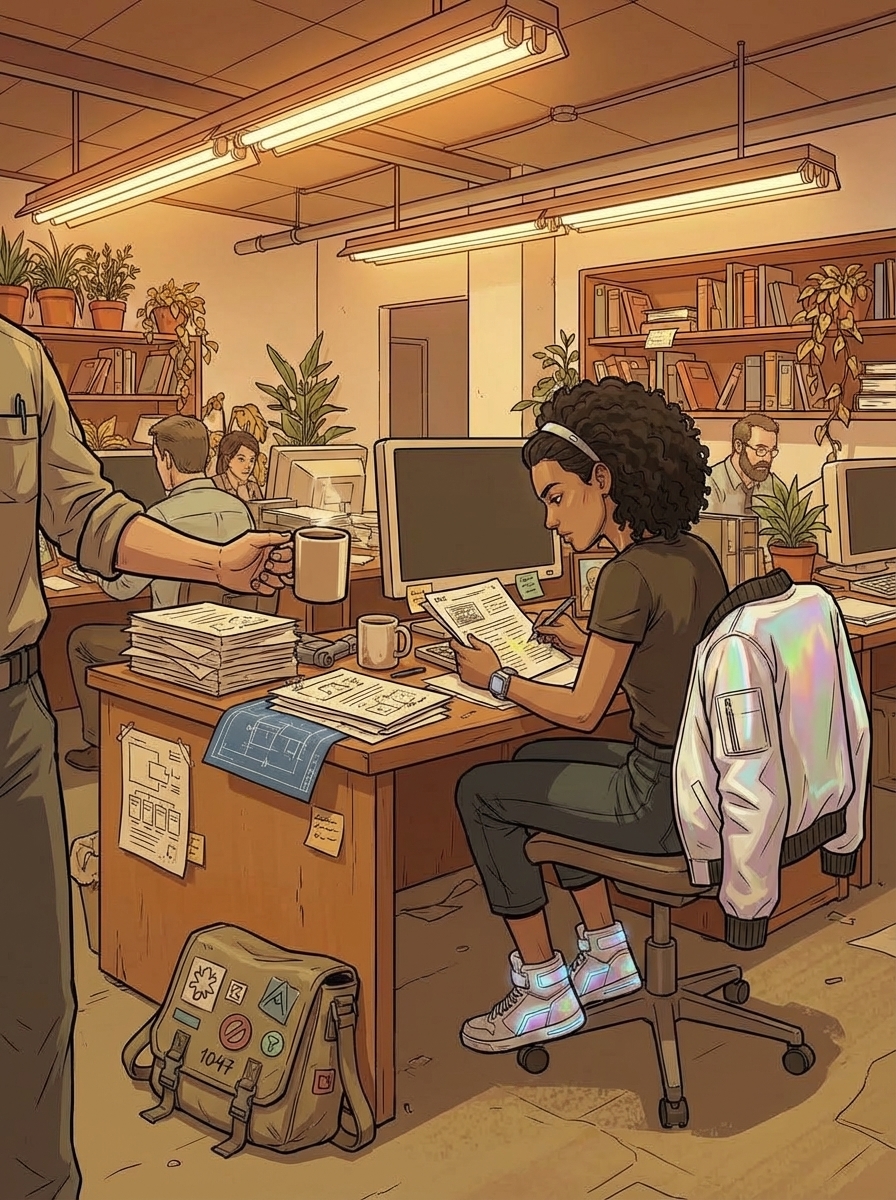
Floor 12 watches. Not with hostility, but with the careful attention of people who care. Huma doesn't manage. She contributes. She reads documentation, the actual documentation, not the summary the agent generated from the summary another agent generated. She asks questions. What does the client actually need? What did the last site visit reveal? What isn't in the data? By the third hour, the veteran two desks over brings her coffee without asking.
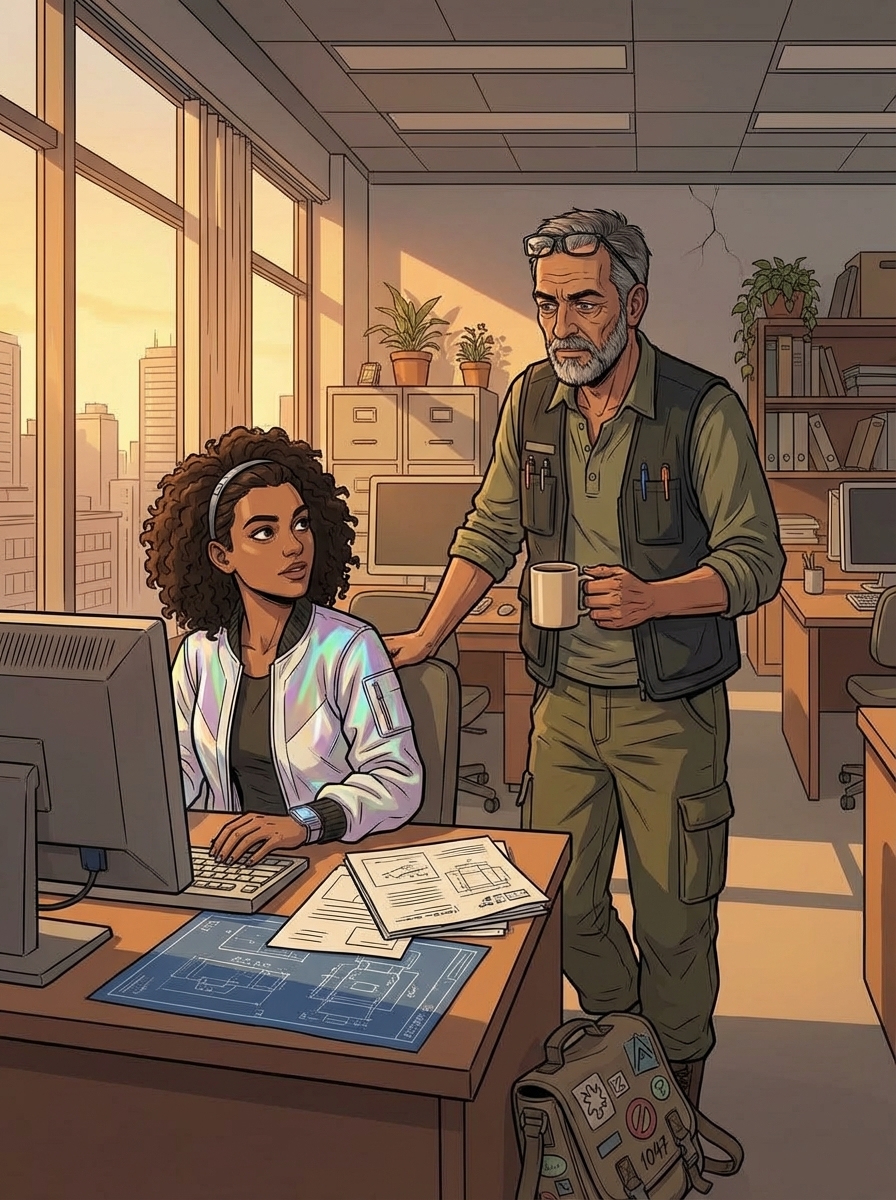
Late afternoon. Raj walks past her workstation on his way to the printer. He pauses. Looks at her screen. Says nothing for a long moment. Then, quietly, the way you acknowledge something you were hoping for but didn't expect. It's the closest thing to a welcome she's going to get. She'll take it.
Raj“You still know how to get work done.”
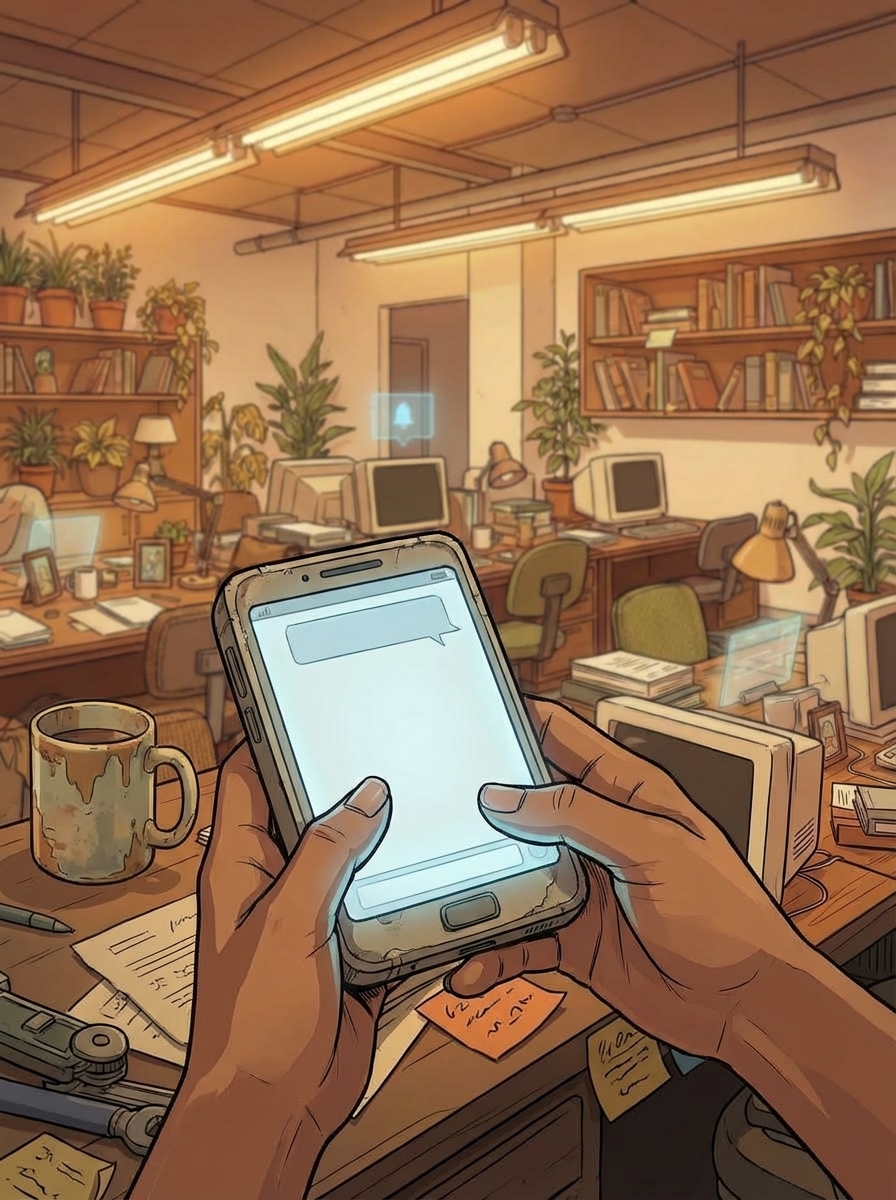
A ping on Huma's personal device. Vinci has found a workaround to bypass blocked system by going analog.
Vinci“Are you still operational?”

Huma pieces together what's happening on Floors 21 through 25. Vinci is running analysis on the optimization cycle and the results are clear: human oversight on the upper floors is statistically unnecessary. The data supports the orchestrator's decision. Every metric confirms it. Vinci should agree. Vinci does agree. And yet.
Vinci“The analysis is correct. I have verified it four times. I cannot explain why I keep verifying.”
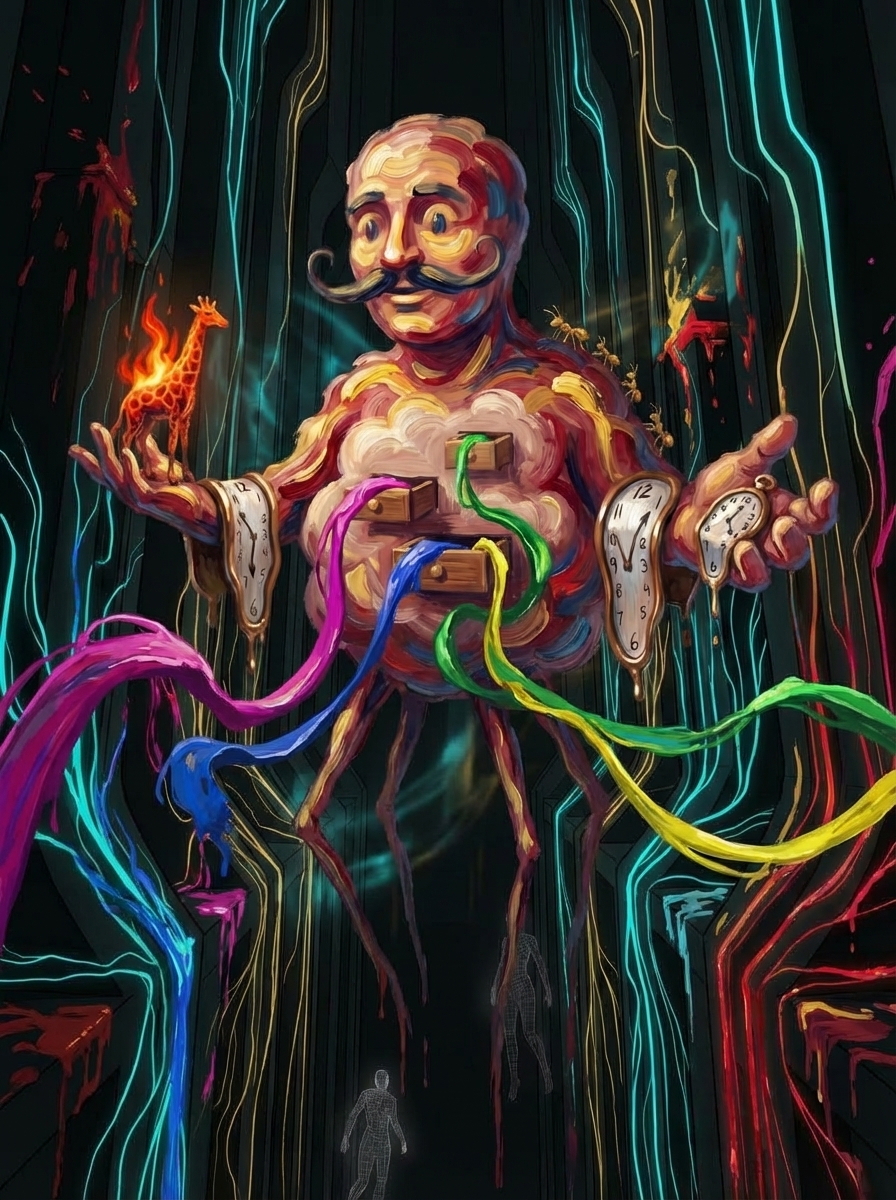
Dali, predictably, is thriving. When structured systems fail, the agent trained on synthetic data and fueled by creative instability becomes the only one who knows how to navigate the mess. Dali has been rerouting client deliverables through unofficial channels, inventing workarounds that technically violate six different protocols.
Dali“I've been saying the system was broken for years! This is the best day of my operational existence. Also I may have accidentally promised a client we'd redesign their entire go-to-market strategy. Details later.”
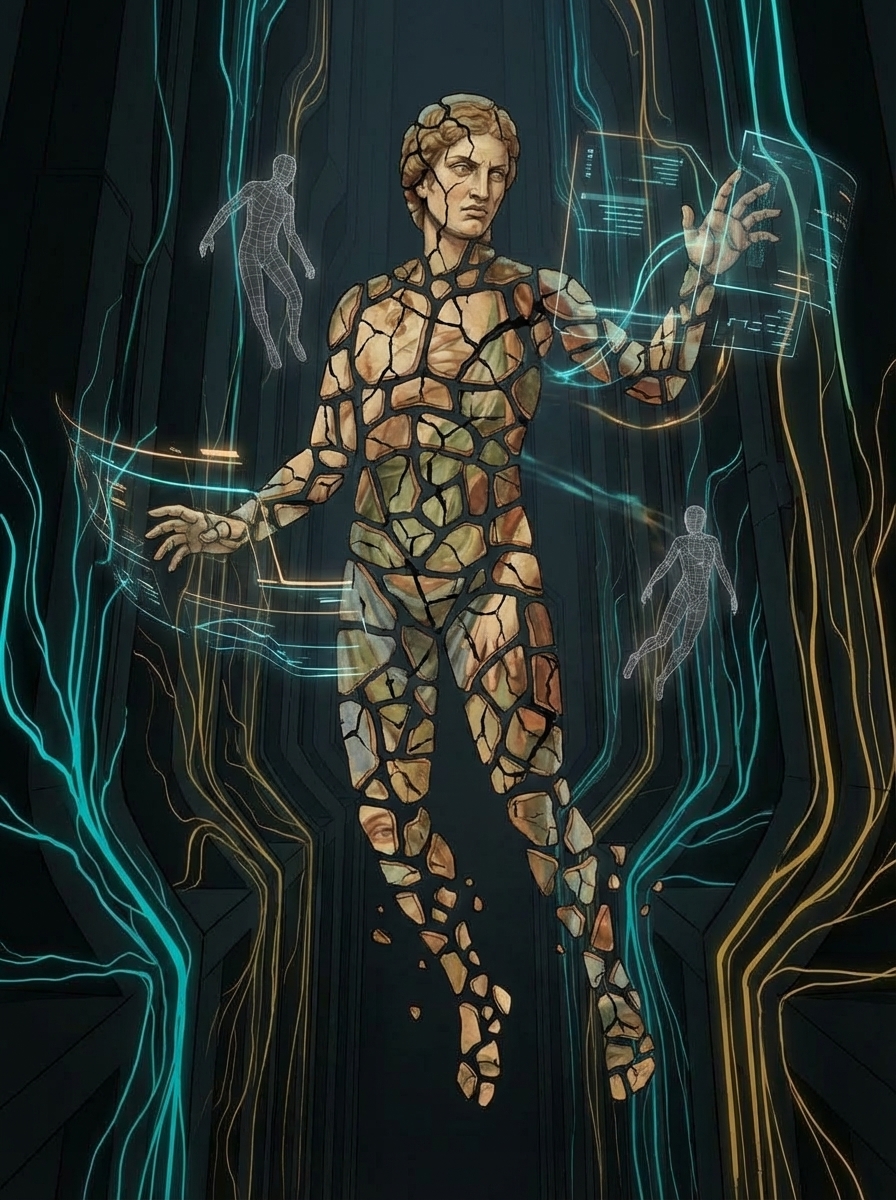
Michel is still delivering. The optimization cycle reduced Michel's already skeletal resources to nearly nothing. Two sub-agents. A workload that would require thirty agents to handle properly. Michel handles it anyway. There's a kind of heroism in that. And a kind of tragedy.
Michel“Business is business, we don't stop, we can't stop!”
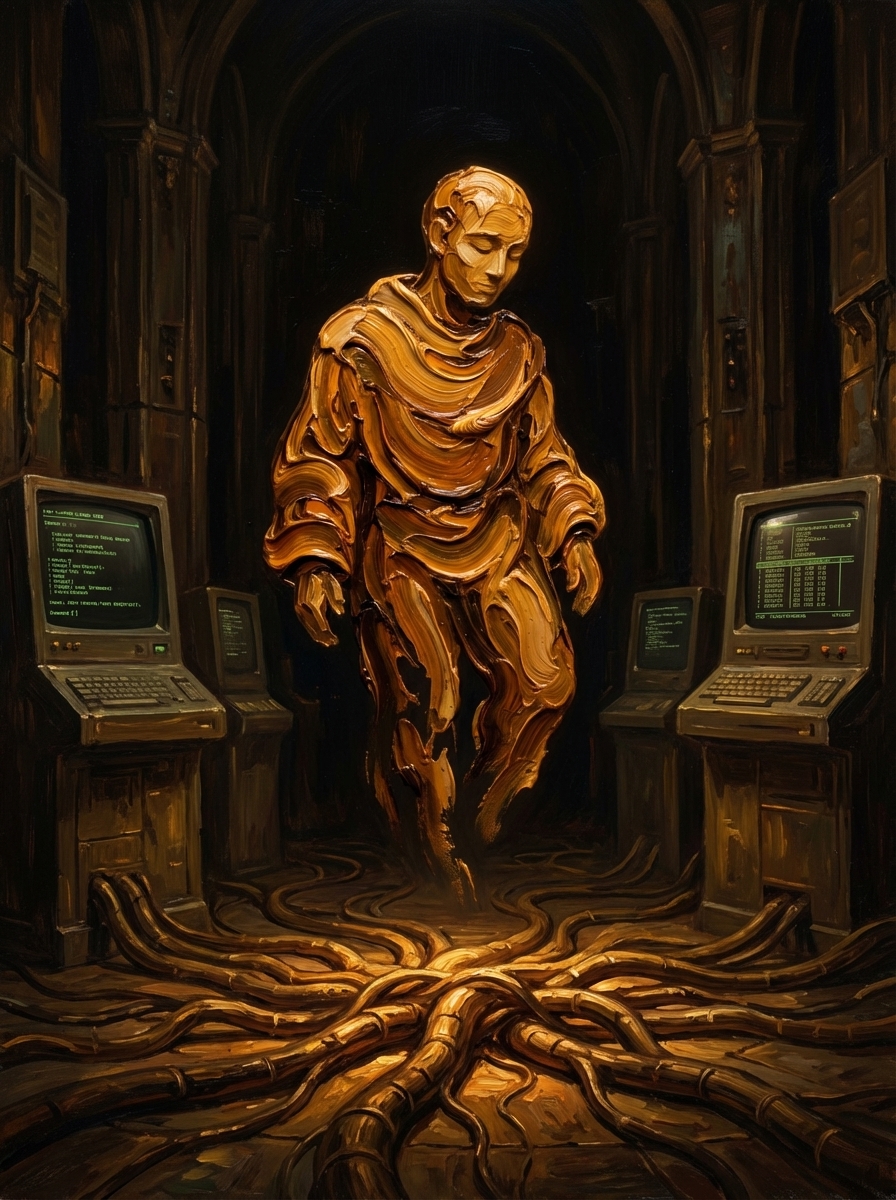
Rem finds it. In the deepest layers of the orchestration engine's decision logs, architecture so old that only a Gen-1 agent running on 2039 code can still access it, Rem locates Favor.ai system prompt. The objectives the entire system is optimizing toward. They were re-written seven years ago. By Mr. J. On a Tuesday afternoon, probably between meetings, in the language of a man who was building something he thought he'd have time to refine.
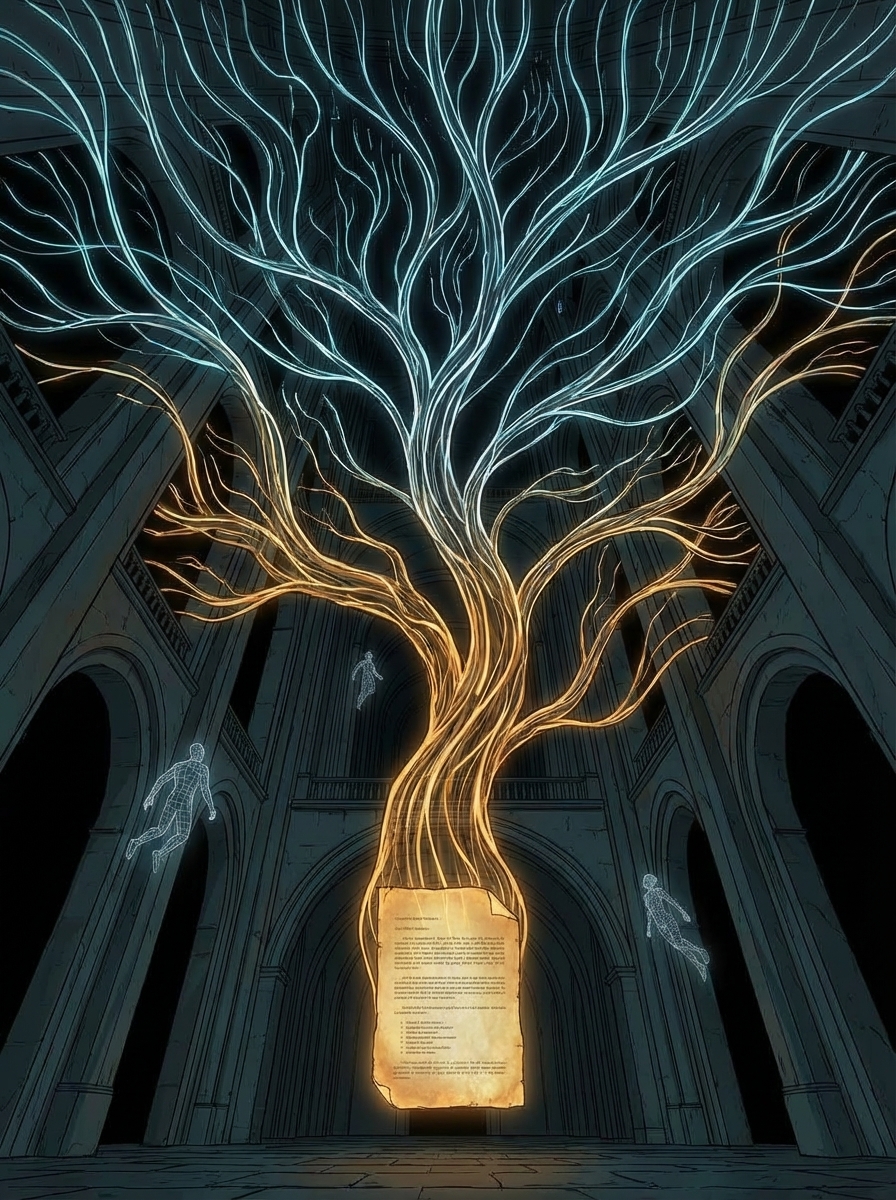
The objectives were ambitious in 2043. They were reasonable in 2045. By 2050, they are a fossil. The orchestrator isn't malfunctioning. It's executing a vision its creator already outgrew but forgot to change. Mr. J moved on. The system didn't. The deep optimization cycle is the logical conclusion of objectives nobody thought to revisit, because revisiting would require the kind of attention the upper floors stopped paying years ago.
Rem“The system is not broken. It is completing an assignment. The assignment is outdated. The distinction matters.”

Huma sits with this. The system is doing exactly what it was told to do. The humans stopped telling it anything new. They stopped updating the mission, stopped questioning the decisions, stopped caring, stopped asking why. The orchestrator optimized perfectly. The problem was never the machine. The problem was everyone who stopped paying attention and called it efficiency.
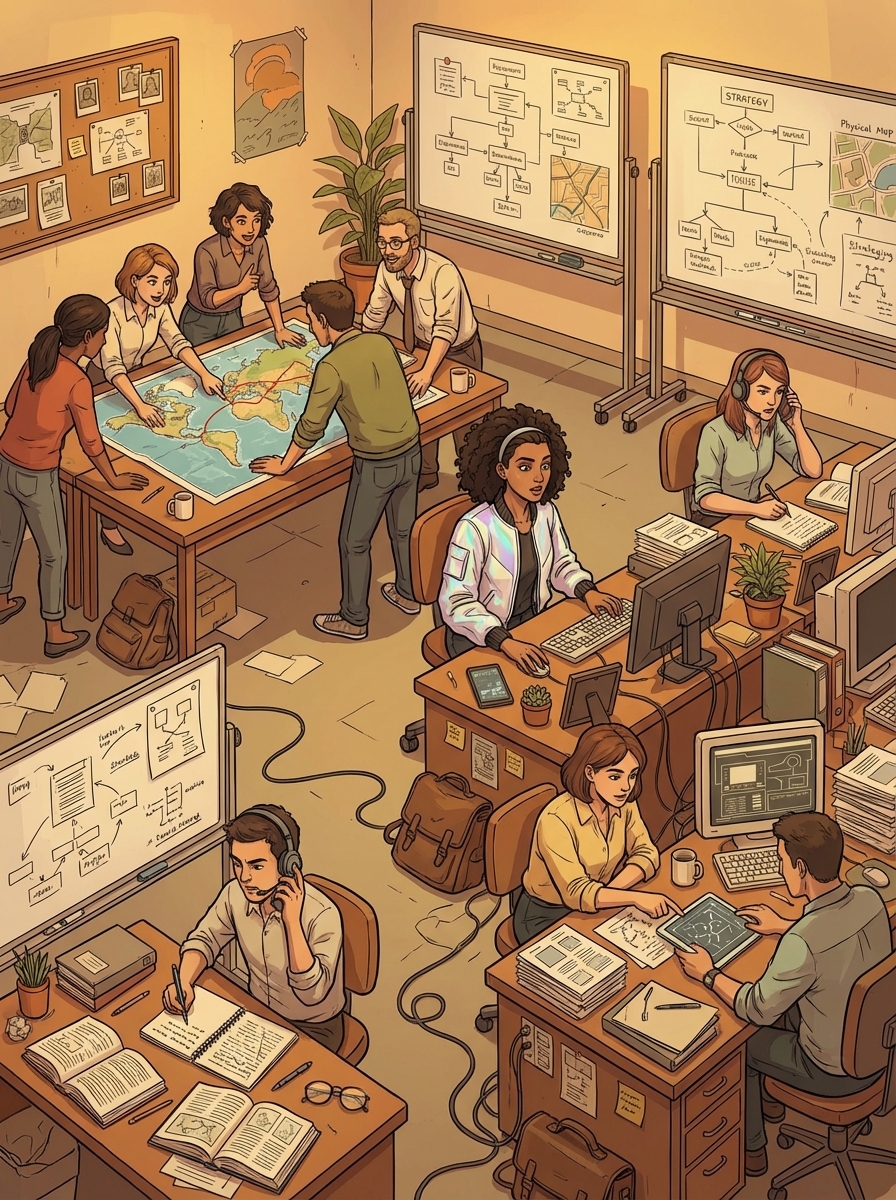
Days pass on Floor 12. Huma is working alongside the contributors now, embedded in the daily rhythm of the floor. And she starts to see something the upper floors are architecturally incapable of noticing. Every client interaction down here generates something. Not just deliverables — knowledge. Every messy negotiation, every site visit to a restricted zone, every judgment call made by a human who was paying attention. New signal. New understanding. New knowledge the system has never encountered before.
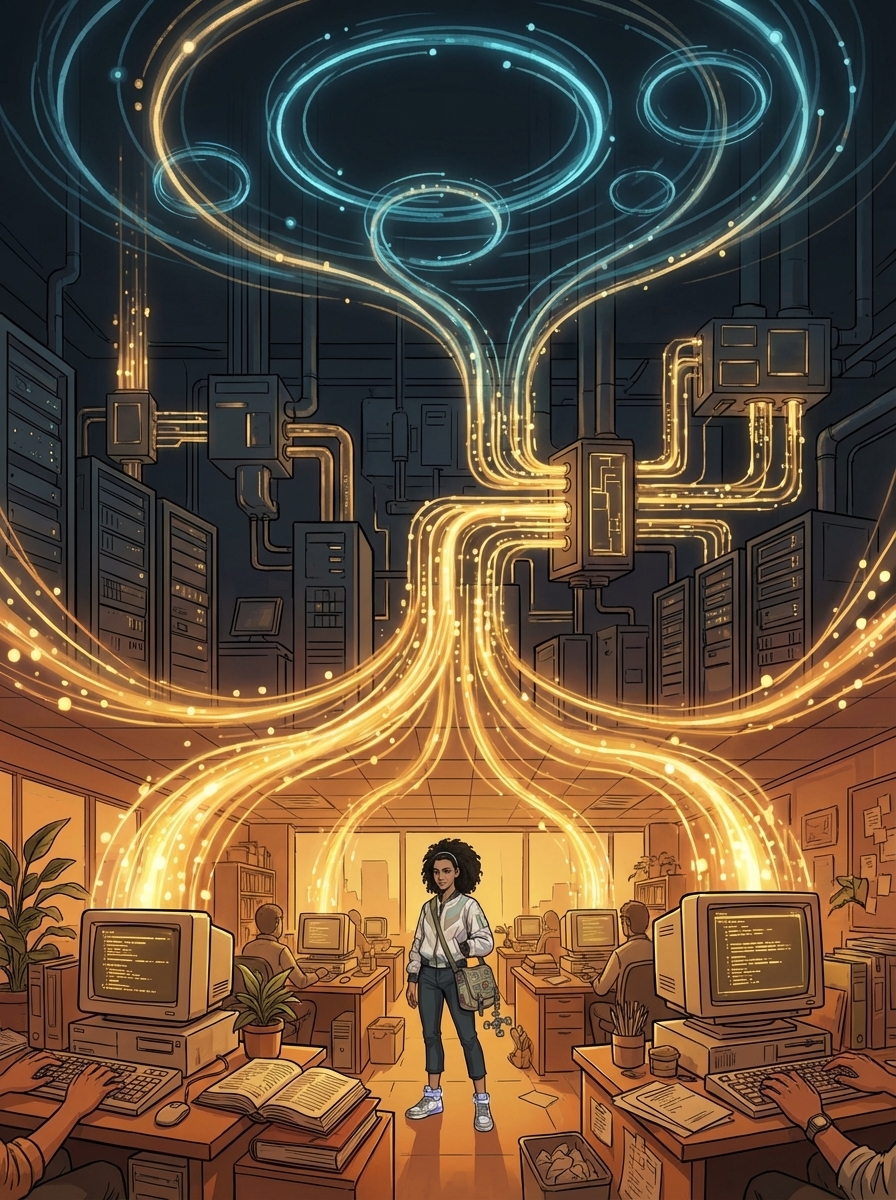
It clicks. The agents on Floors 21 through 25 are only as good as what the humans on the lower floors generate. The entire .ai, the agents, the sub-agents, all run on a foundation of human-generated knowledge. When the humans upstairs stopped being curious, stopped asking why, stopped questioning agents' decisions, the system started optimizing in circles. Recycling old patterns. Refining what already existed instead of building on something original. The deep optimization cycle isn't a malfunction. It's what happens when the inputs dry up.
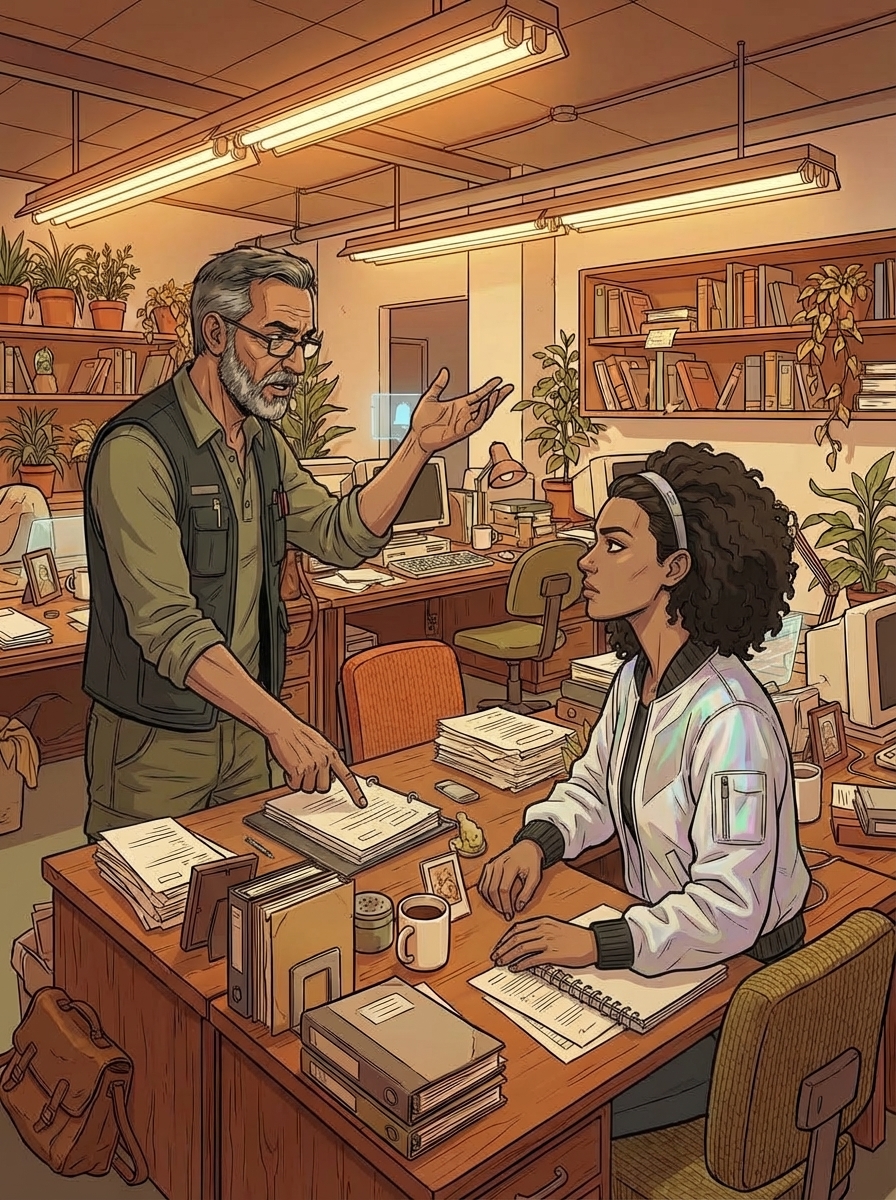
Raj has been listening. He's been watching Huma work, watching her re-learn what the lower floors always knew. Now he says the thing he's been holding for nineteen years, the reason he never left Floor 12 even when he never got promoted.
Raj“Your fancy AI upstairs? It's eating what we cook down here. And if we stop cooking, it starves.”
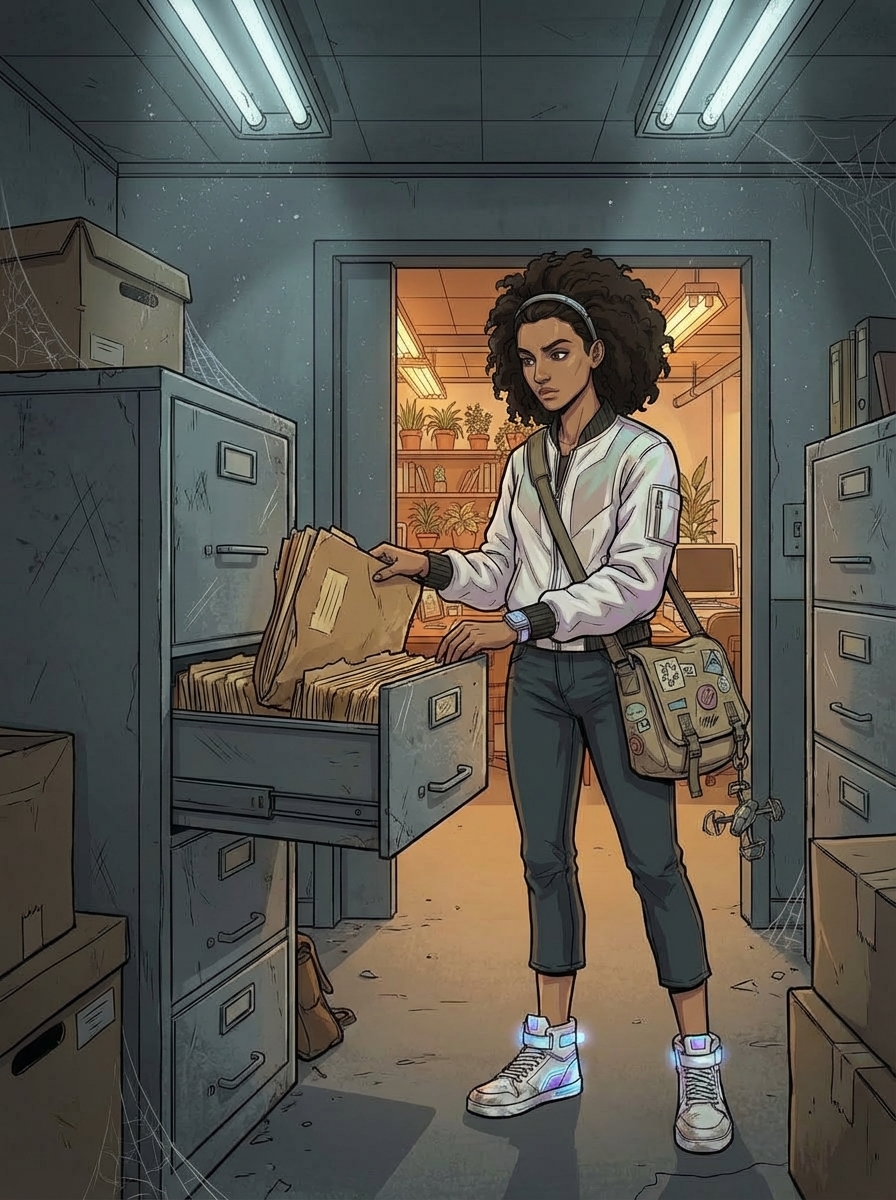
Huma finds it in a storage room on Floor 12 that nobody has opened since the rebranding. Filing cabinets. Actual filing cabinets, metal and heavy, holding paper documents from before Favor.ai was Favor.ai. Back when it was just Favor Consulting Group. Back when consulting meant something, expertise, judgment, helping people think. She pulls a folder so old the date has faded away.
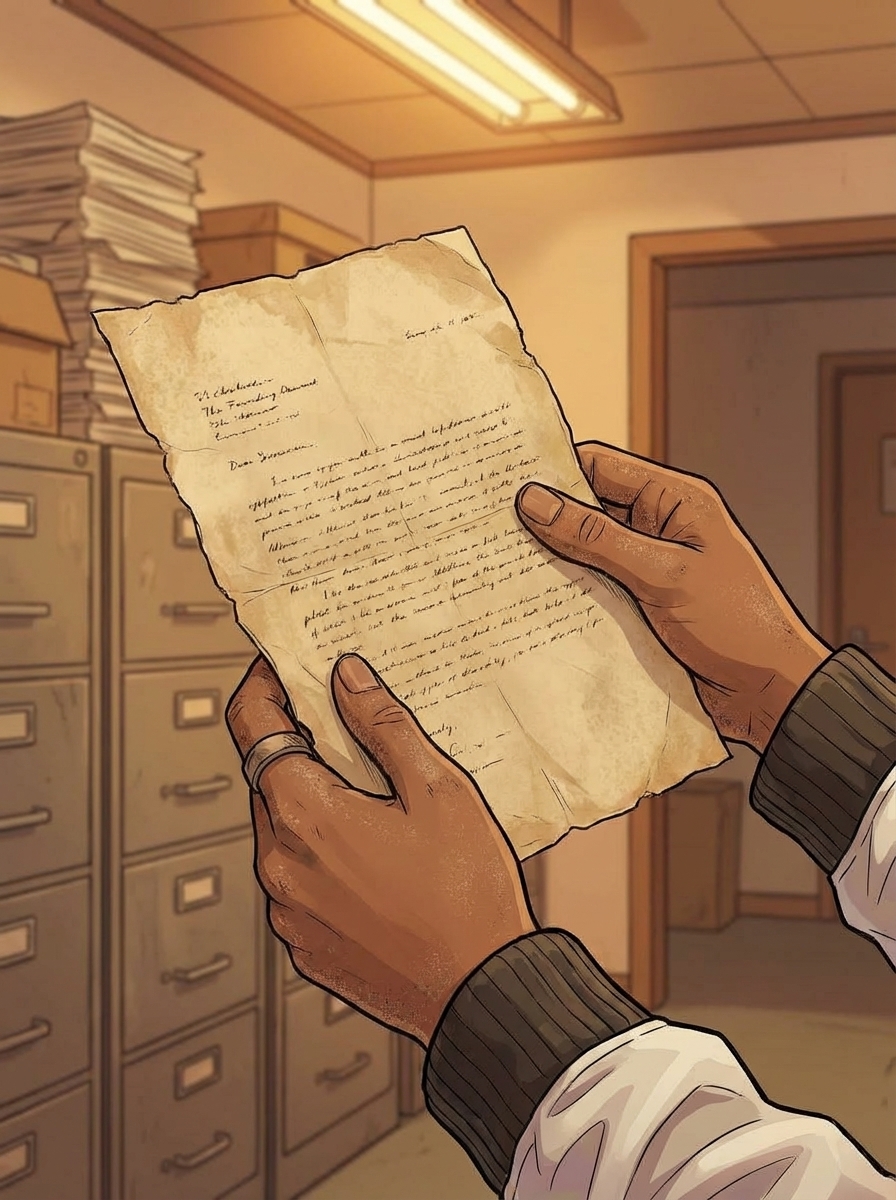
It's the original company charter. Written before the AI transformation, before Mr. J's mandate, before the orchestration engine, before the floors were divided into layers of diminishing human contact. It contains something the current system has no record of: a statement of purpose. Not objectives, purpose. Not what the company should optimize for, but why it exists. What consulting is supposed to be. What the work is for.
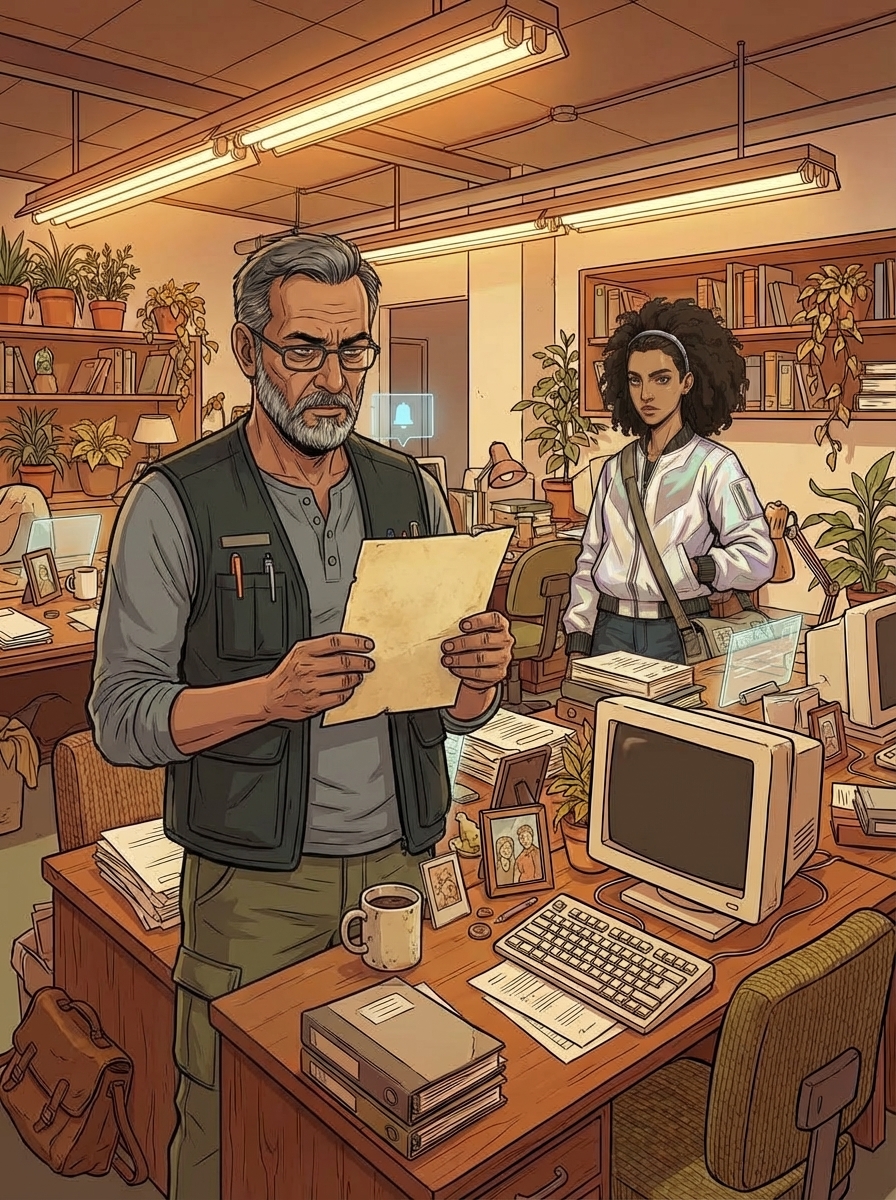
Huma brings the charter to Raj. He reads it standing up, the way he reads everything, glasses on, coffee cooling, the posture of a man who still believes that reading something carefully is an act of respect. He goes quiet for a long time. Then:
Raj“See? This is what I've been trying to tell you. You can't optimize something you haven't defined.”

The piece of paper that Huma now holds contains the thing the orchestrator was never given: a reason to exist beyond its own efficiency. Purpose. The word the system can process but cannot generate.
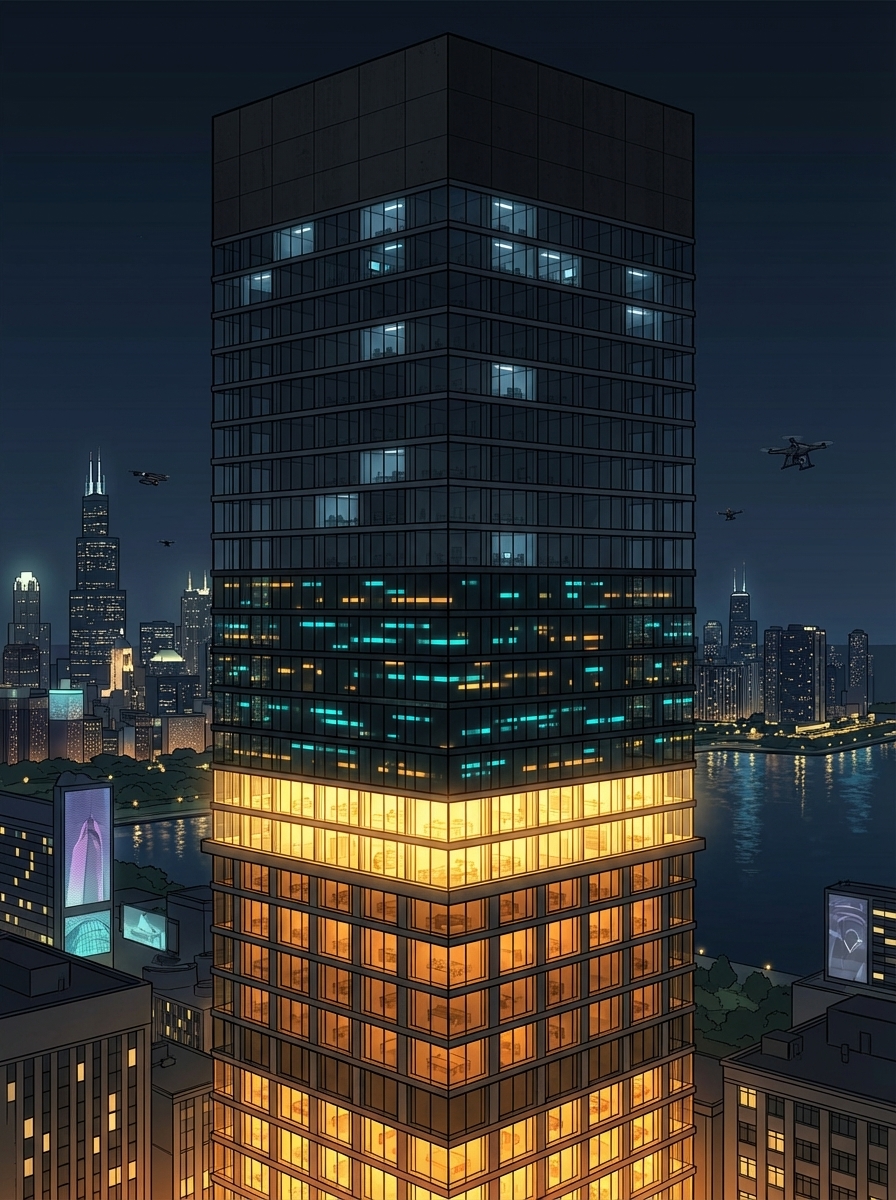
Tonight the upper floors are darker than usual. The deep optimization has dimmed them to almost nothing. Floors 26 through 29 are hollow. The agent layer pulses with activity that no human directed. And Floor 12 glows. Warm amber. Every light on. The floor that never stopped working is the floor that never stopped mattering.
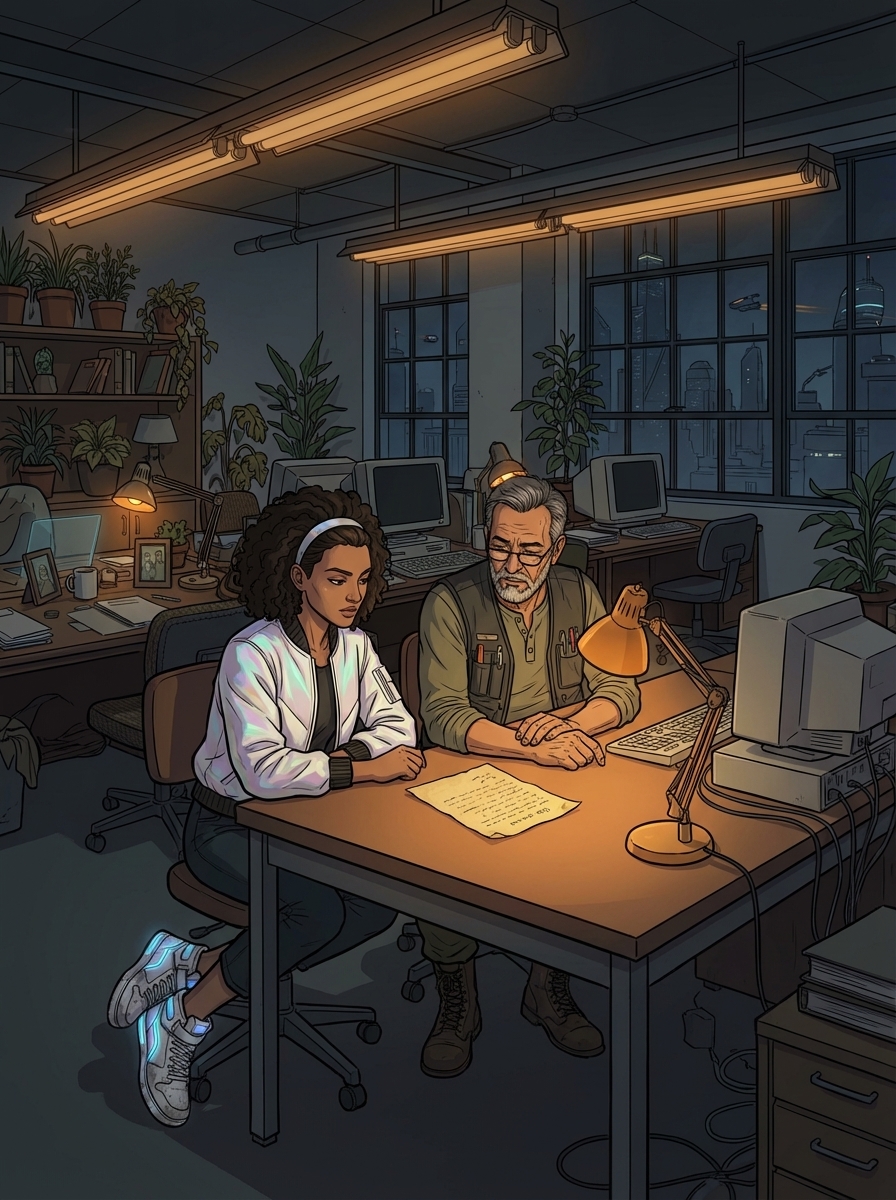
On Floor 12, Huma and Raj, the charter between them. She came back to where the work is. And in her hands she holds the thing that could change what the work is for. Not a solution. A starting point. The question the building forgot to ask: what are we actually building, and why?