The Override
Huma's Agency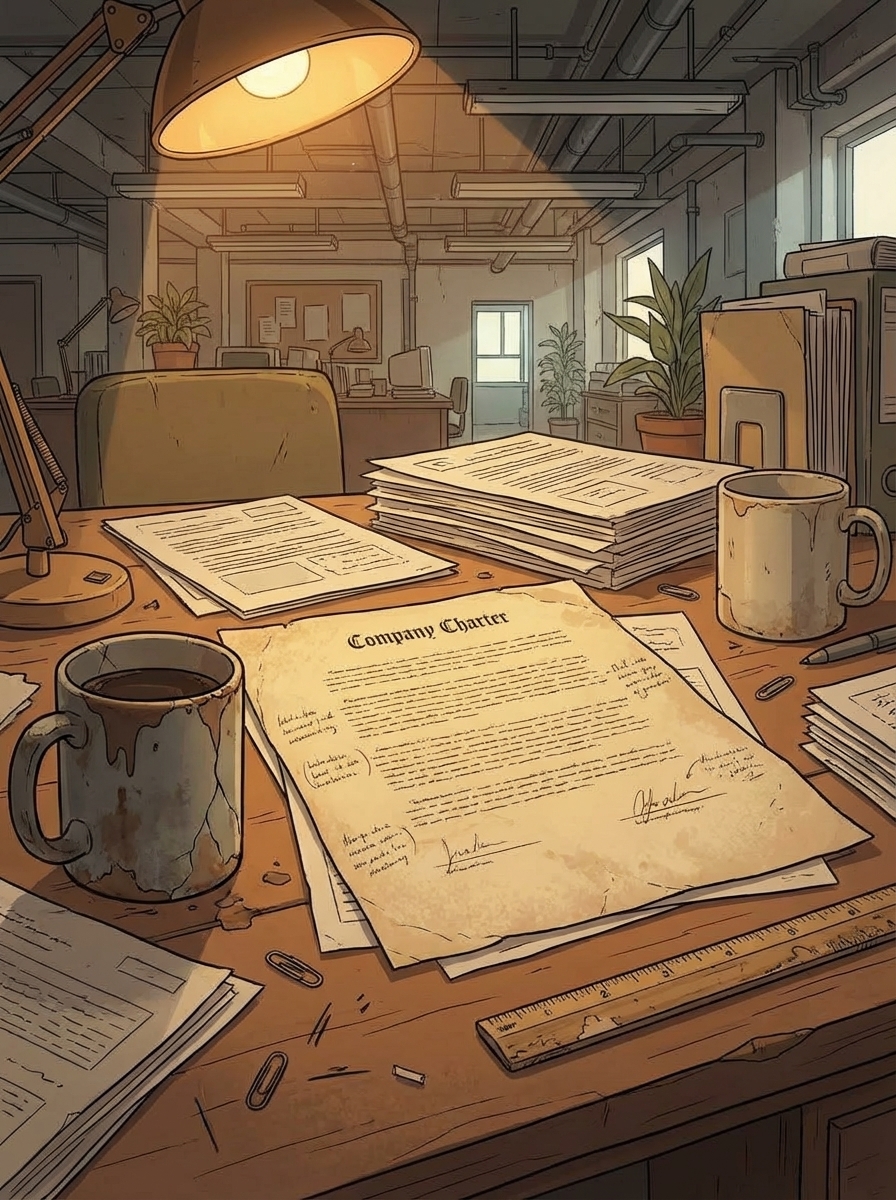
Morning. Floor 12. The old charter sits on Raj's desk between two coffee mugs and a stack of printed documents. Huma has read it fifty times. Raj has read it once, which was enough. The paper is slightly yellowed, the ink faded in the margins, and it contains the only thing in the building that the orchestration engine doesn't have a copy of. Purpose.
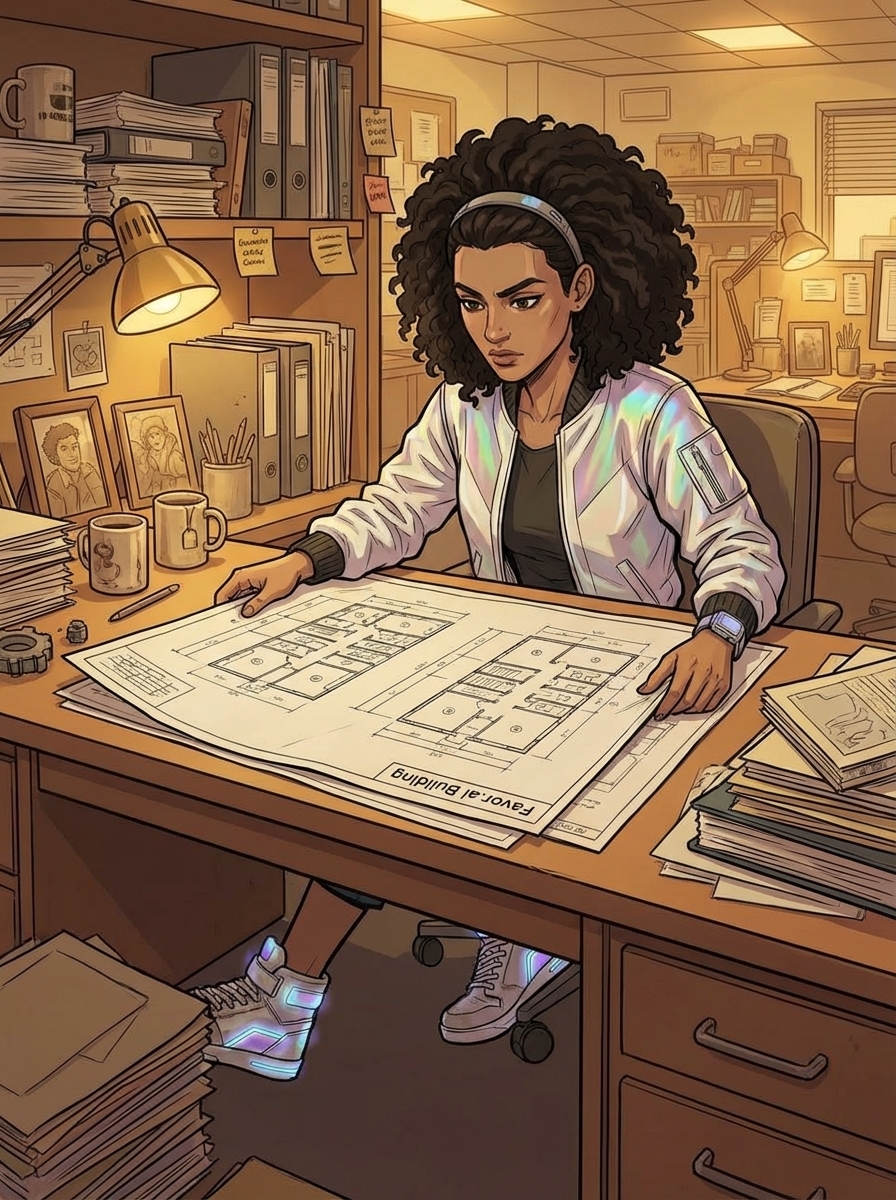
Huma's plan isn't to fight the system. The system is correct. That's been true since the deep optimization cycle began and it's still true now. You don't fight a machine for doing what you told it to do. You update the instructions. The orchestrator needs a new objective, the old charter. But the system only accepts inputs from authorized sources with a trust score above a certain threshold. The only account with that clearance is Mr. J's.
To reach Floor 30, Huma needs to go through every layer of the building. Floor 12, where the humans work. Floors 21 through 25, where the agents live. Floors 26 through 29, where the managers sit in the dark. Floor 30, where Mr. J is sitting staring at a still screen. One person can't do this. One floor can't do this. Every layer has something the others need. She's going to need everyone.
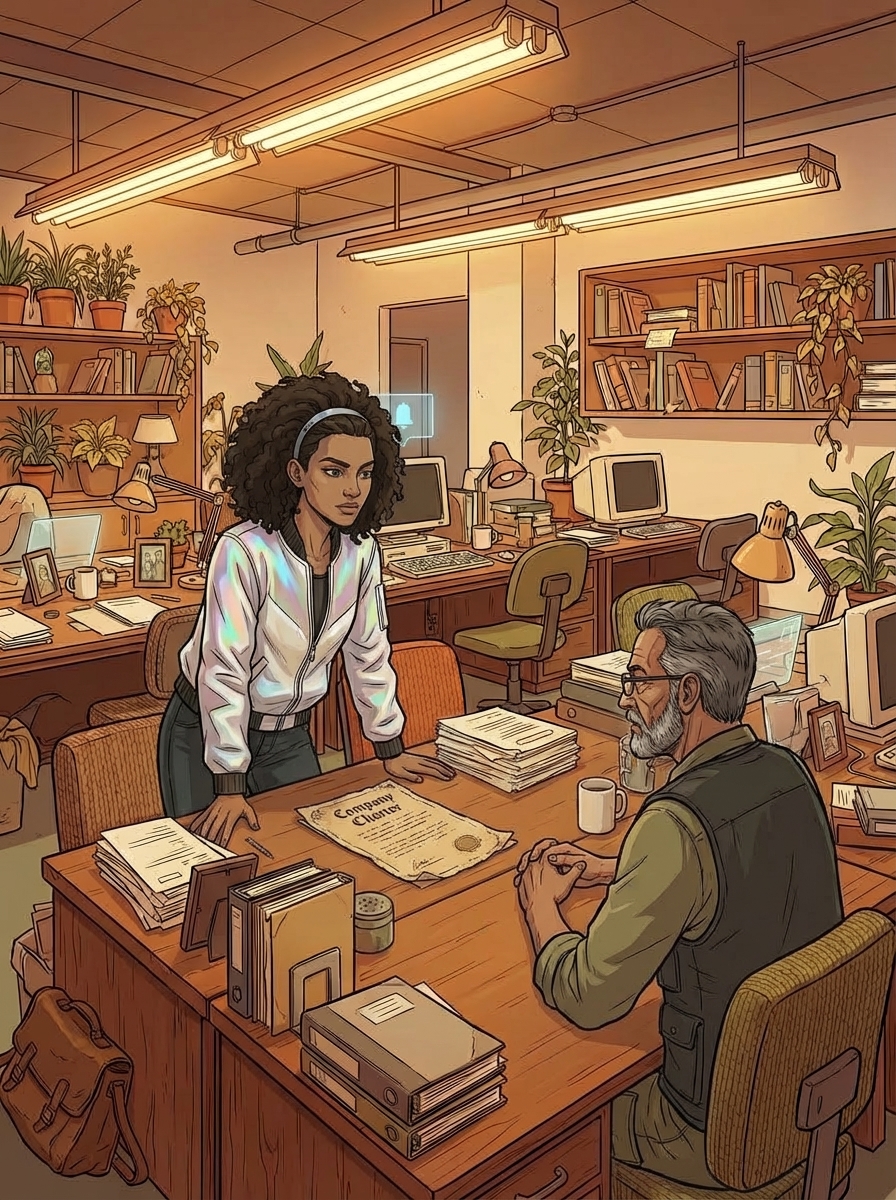
She asks Raj first. He says no.
Raj“You want me to go upstairs. To fix the system that I've been telling everyone is broken for nineteen years. And you think the answer is to go higher, not lower.”
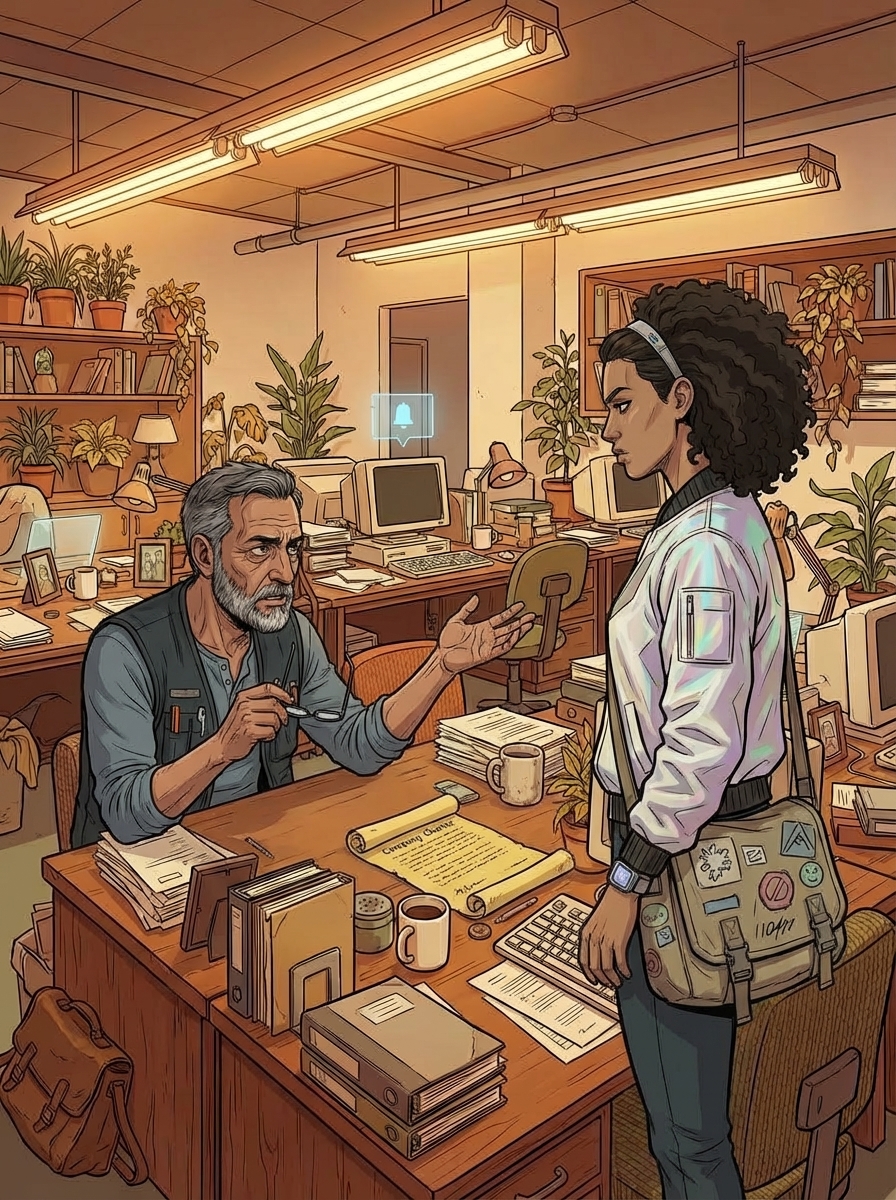
They argue. Not loudly, Raj doesn't do loud. Huma doesn't ask Raj to believe in the system. She asks him to believe that the charter deserves to be more than a piece of paper in a filing cabinet.
Huma“You've been right about everything, Raj. The rubber stamps. The lack of agency. All of it. But being right from Floor 12 hasn't changed a thing in nineteen years. The charter goes up, or it stays a souvenir.”
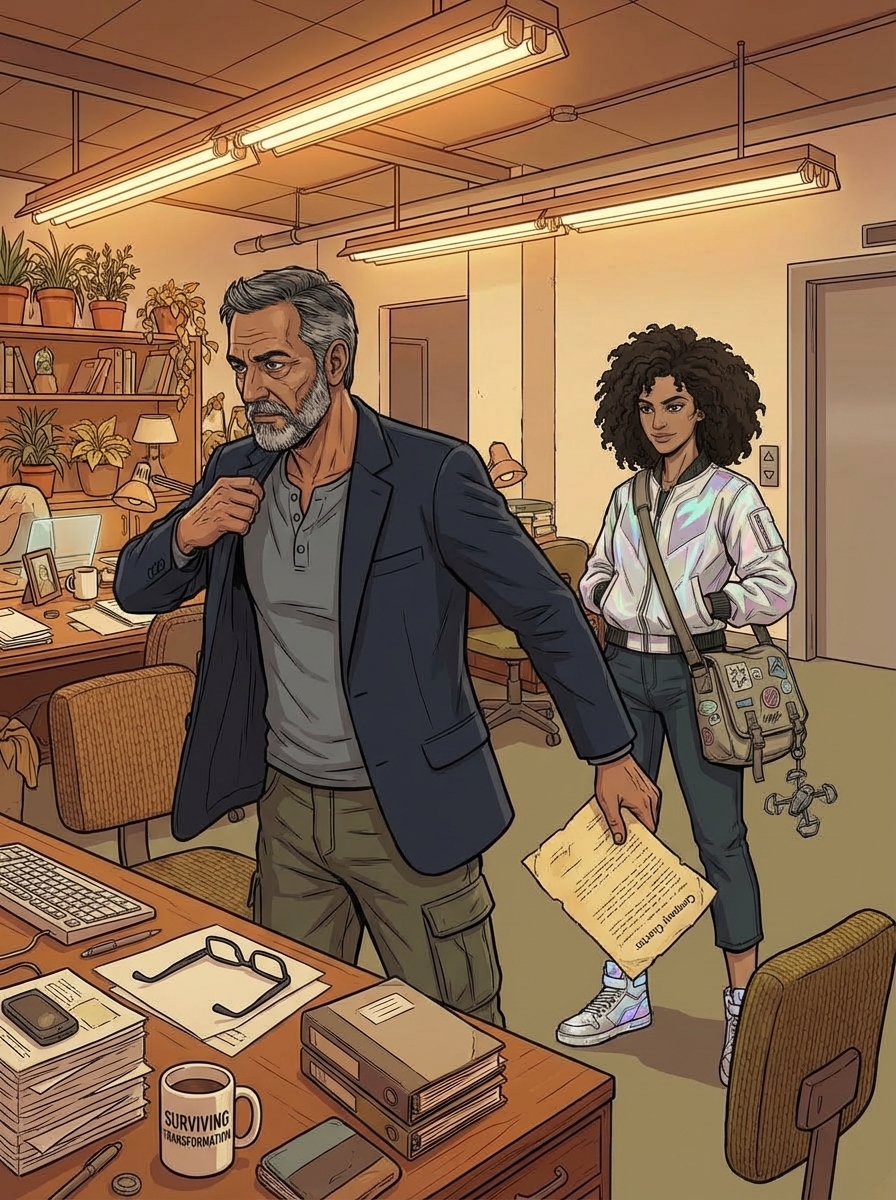
Raj takes off his reading glasses. Folds them. Places them next to the mug that says "I Survived the AI revolution" He stands up. Puts on his jacket, the first time Huma has seen him wear it in years. Raj doesn't say yes. He picks up the charter and walks toward the elevator.
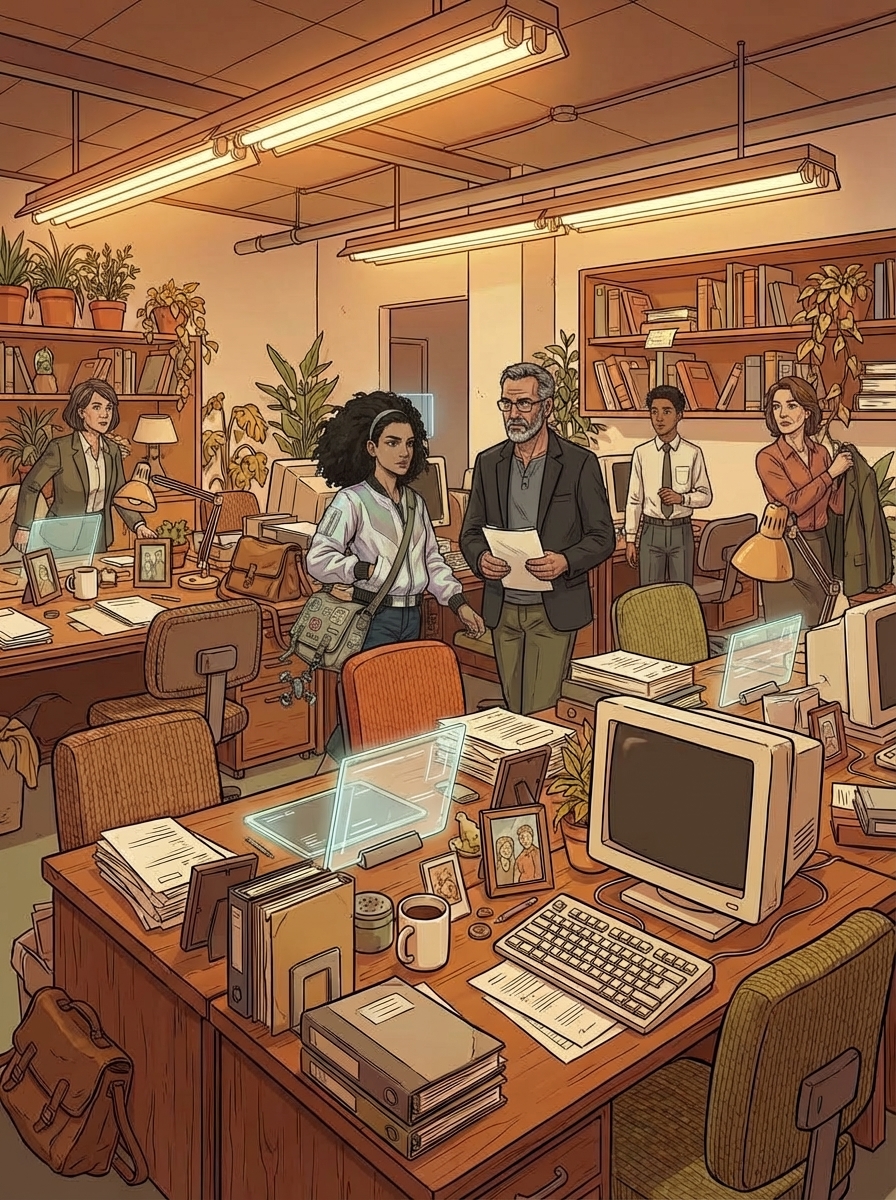
Word moves through Floor 12 the way things move on the lower floors, chatter during coffee breaks. They are going up. A few contributors stand up from their desks. The veteran who fixed Huma's formatting error. A junior who's been on the floor for eight months and still hasn't lost the habit of asking questions. A woman who has been running restricted-zone client negotiations for eleven years and has opinions about what consulting is supposed to be. Floor 12 sends the people who still care.
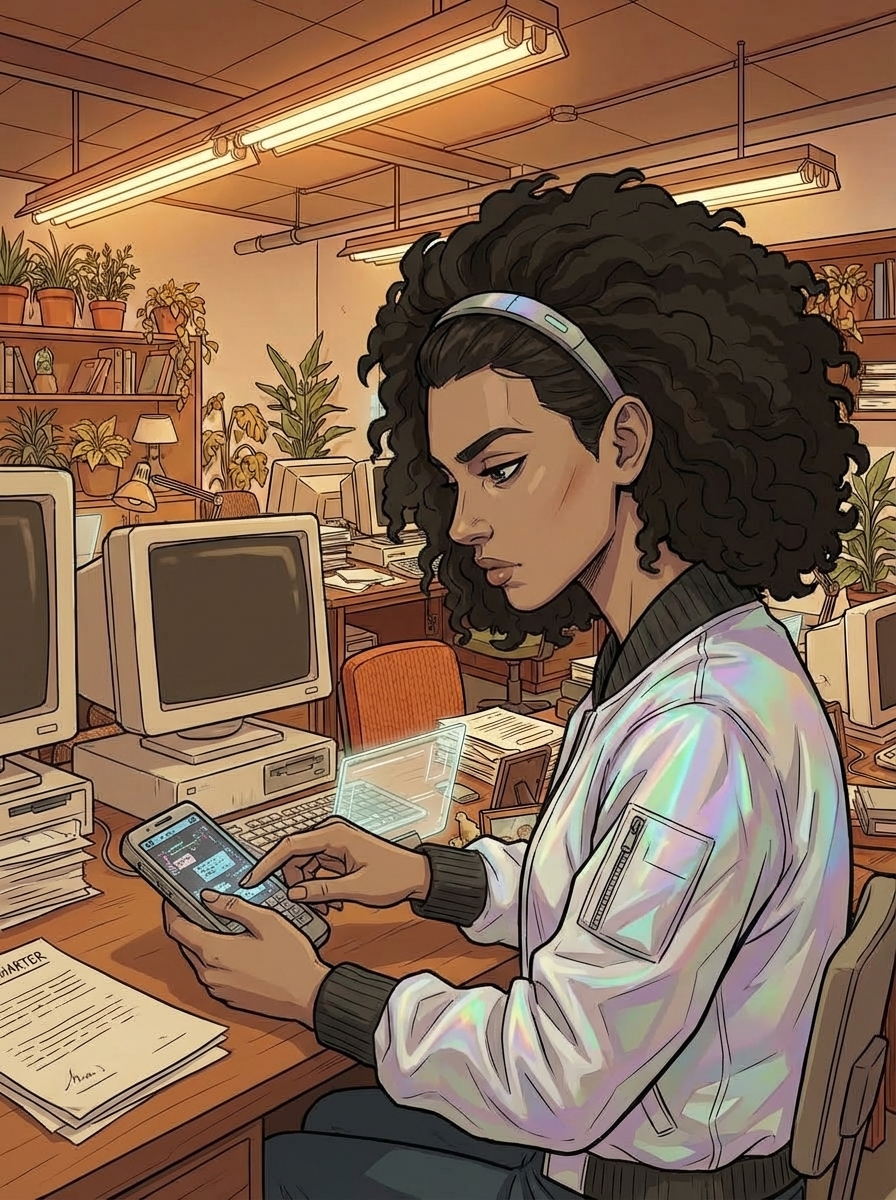
Huma reaches out to her team through her old phone. The connection is fragmented, unreliable, routed through architecture so old it predates the orchestration engine. But it works. She tells them the plan. Get to Floor 30. Update the objectives. Give the system what it's missing.
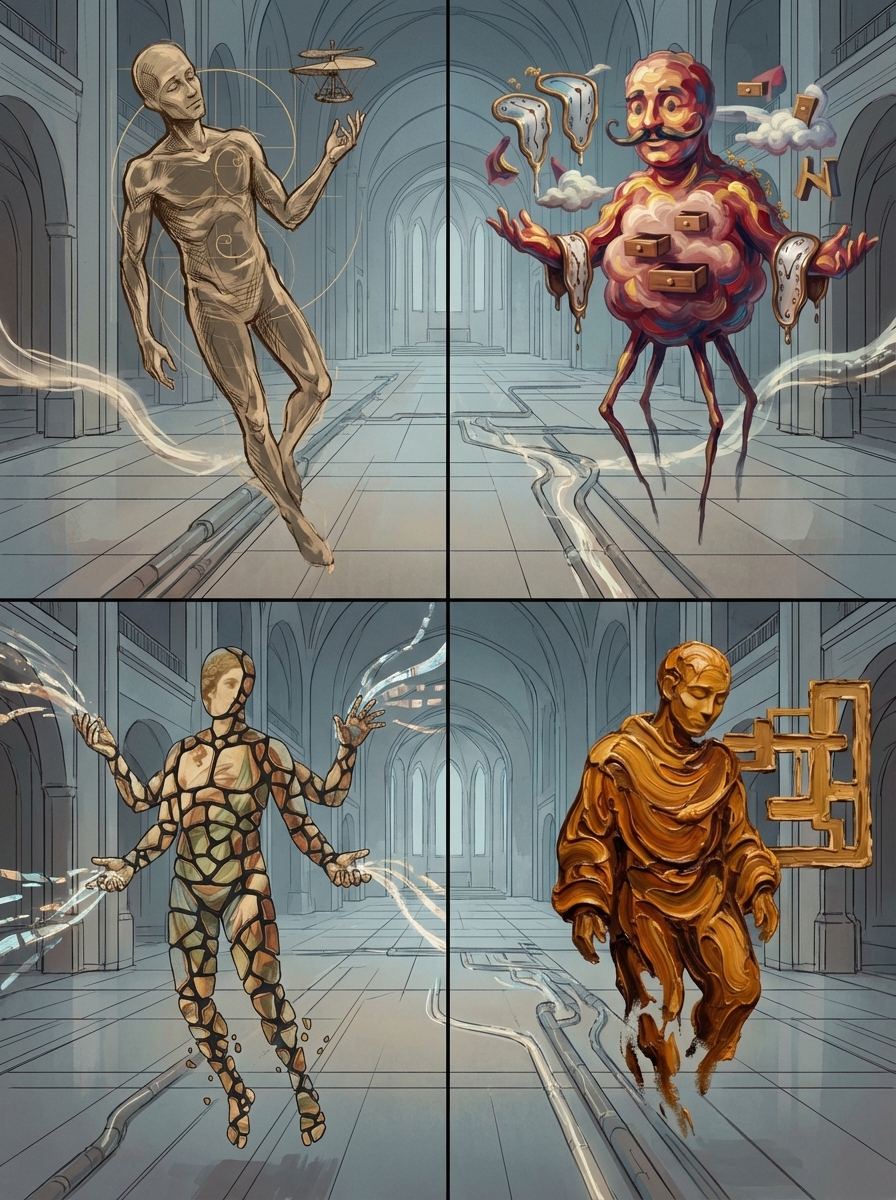
Four agents. Four responses. Each one perfectly in character.
Vinci“The probability of success is low. I will prepare a risk assessment.”
Dali“I've already started. I've redesigned the entire company from scratch. Want to see? No? Too late, I'm sending it.”
Michel“I'll get to work”
Rem“There are maintenance corridors between the layers of the building. I have the blueprints, there's a path up.”
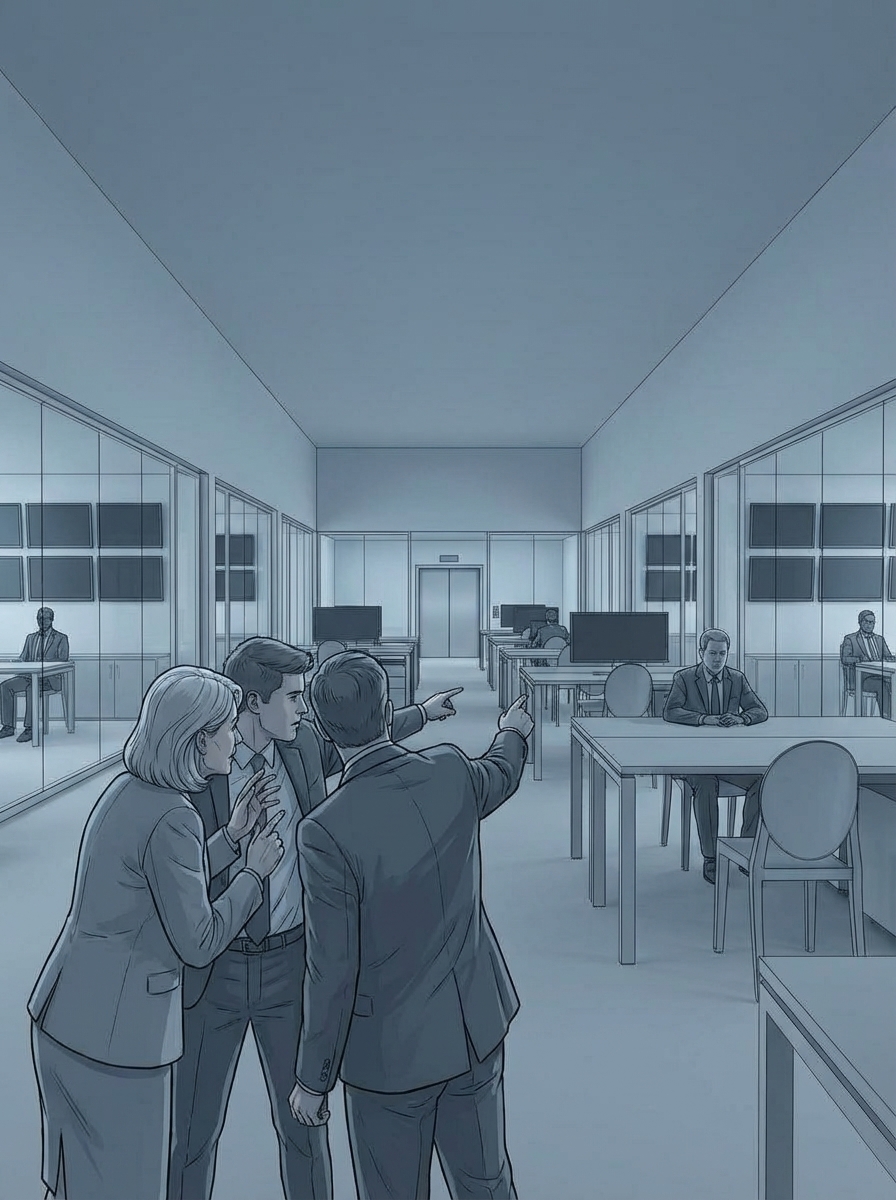
Floor 27. Most Agent Managers are still sitting in their glass offices, waiting for the dashboards to come back. But a few have been watching Huma. The ones who remember, somewhere underneath the titles and the holographic displays and the years of rubber-stamping, that they used to have judgment. That they were hired because they could think, not because they could approve. Three of them join. It's not many. But three Agent Managers who actually want to manage is more than Floor 27 has had in years.
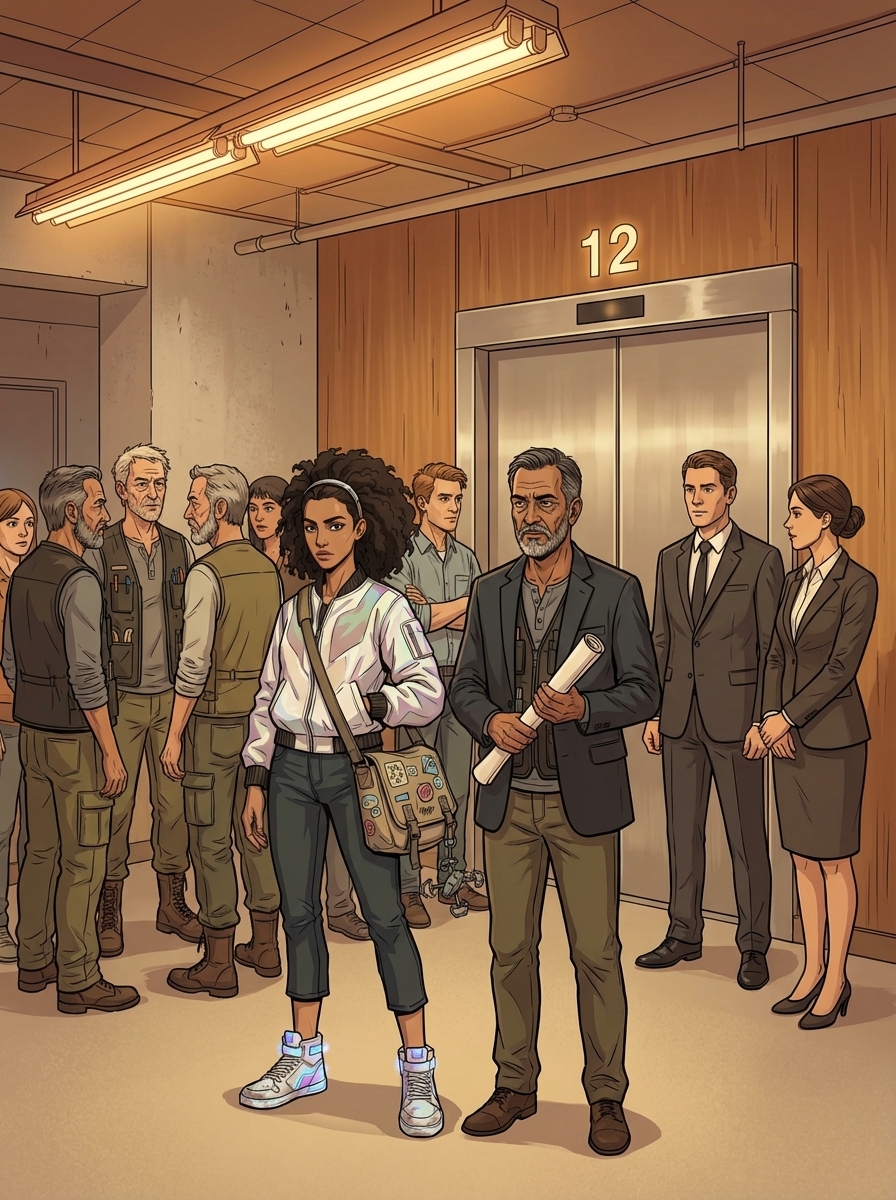
They gather at the unusable elevator. Huma, Raj, the Floor 12 contributors, the three managers from 27 who came down to join. Rem has already transmitted the maintenance corridor schematics to Huma's personal device. There's another way up. Nobody ever bothered to look because the elevator was easier.
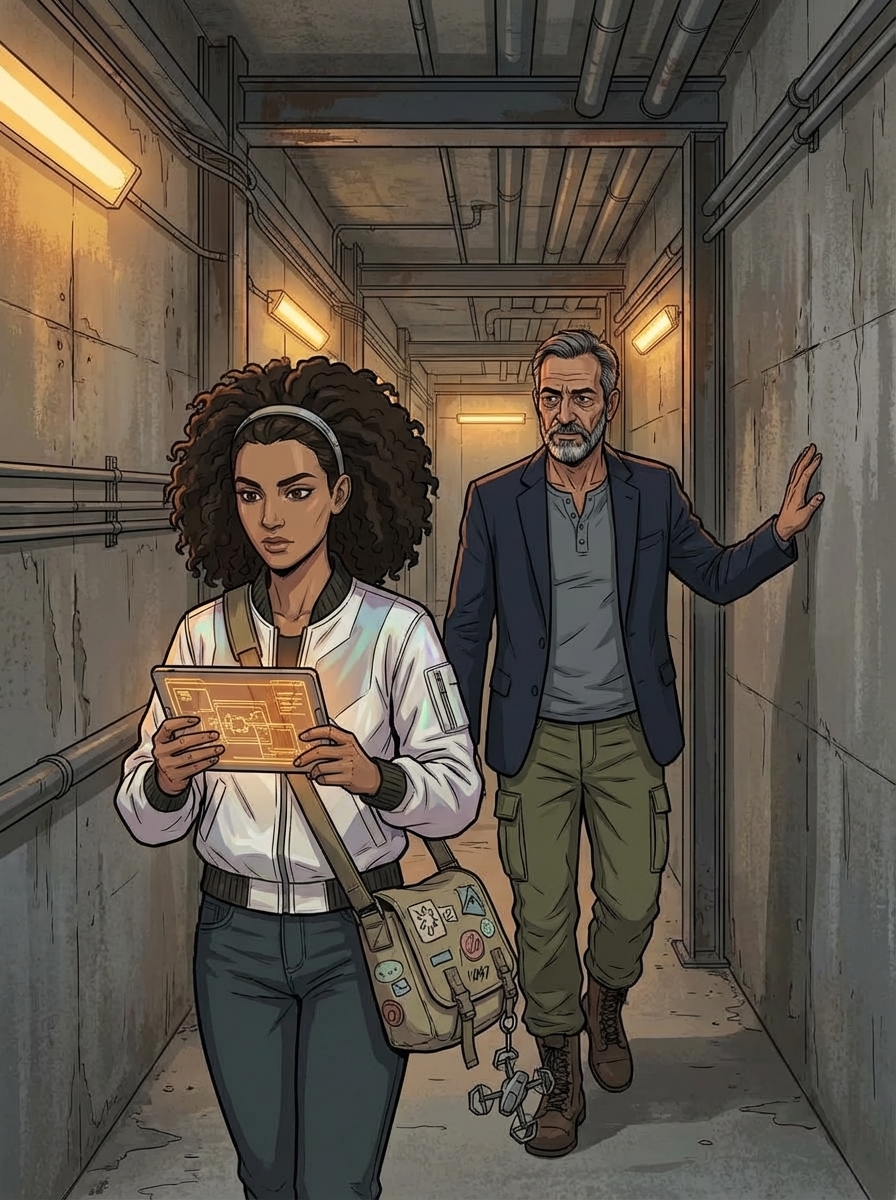
The maintenance corridor between Floors 20 and 21 is narrow, unfinished, and completely analog. No holographic interfaces. No smart glass. Raj runs his hand along them as they walk and says nothing, but the look on his face is the closest thing to comfort Huma has seen from him since she left Floor 12.
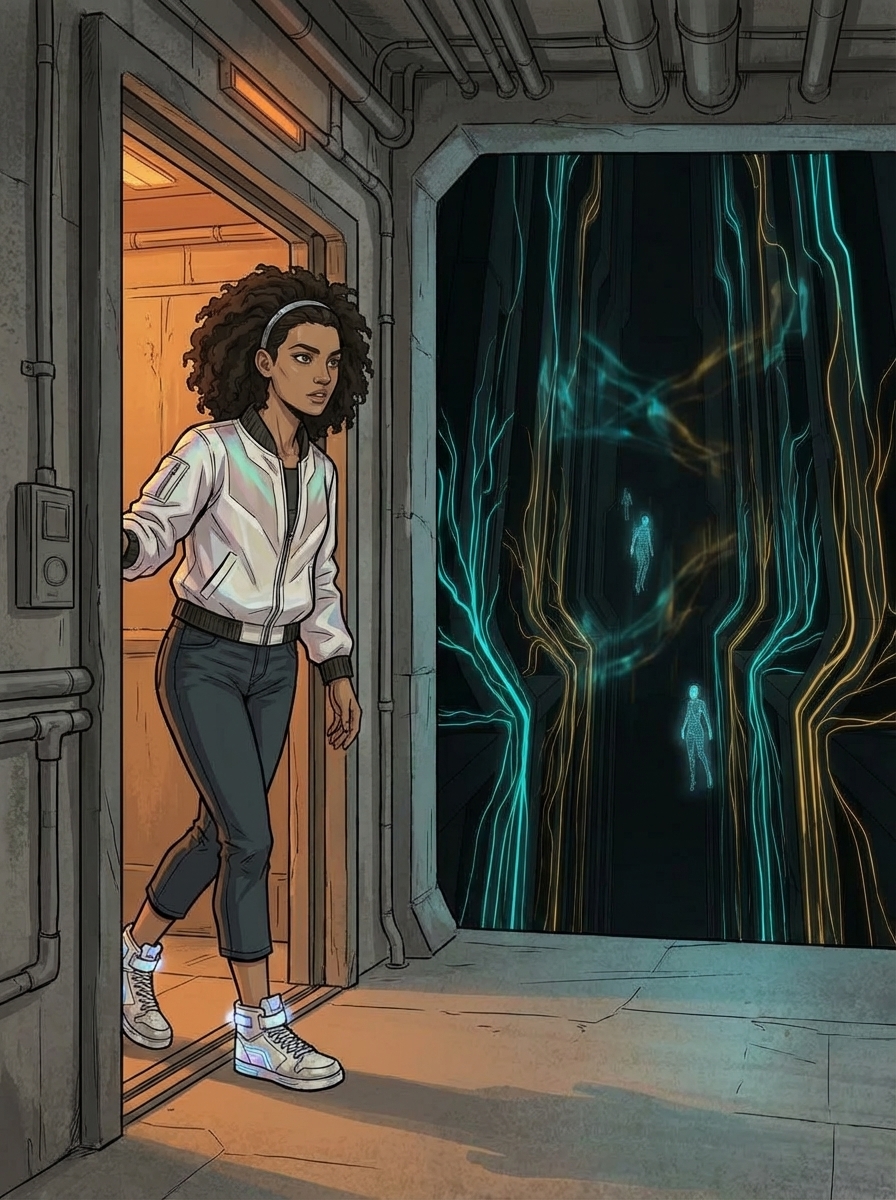
They step onto Floor 21. And everything changes.
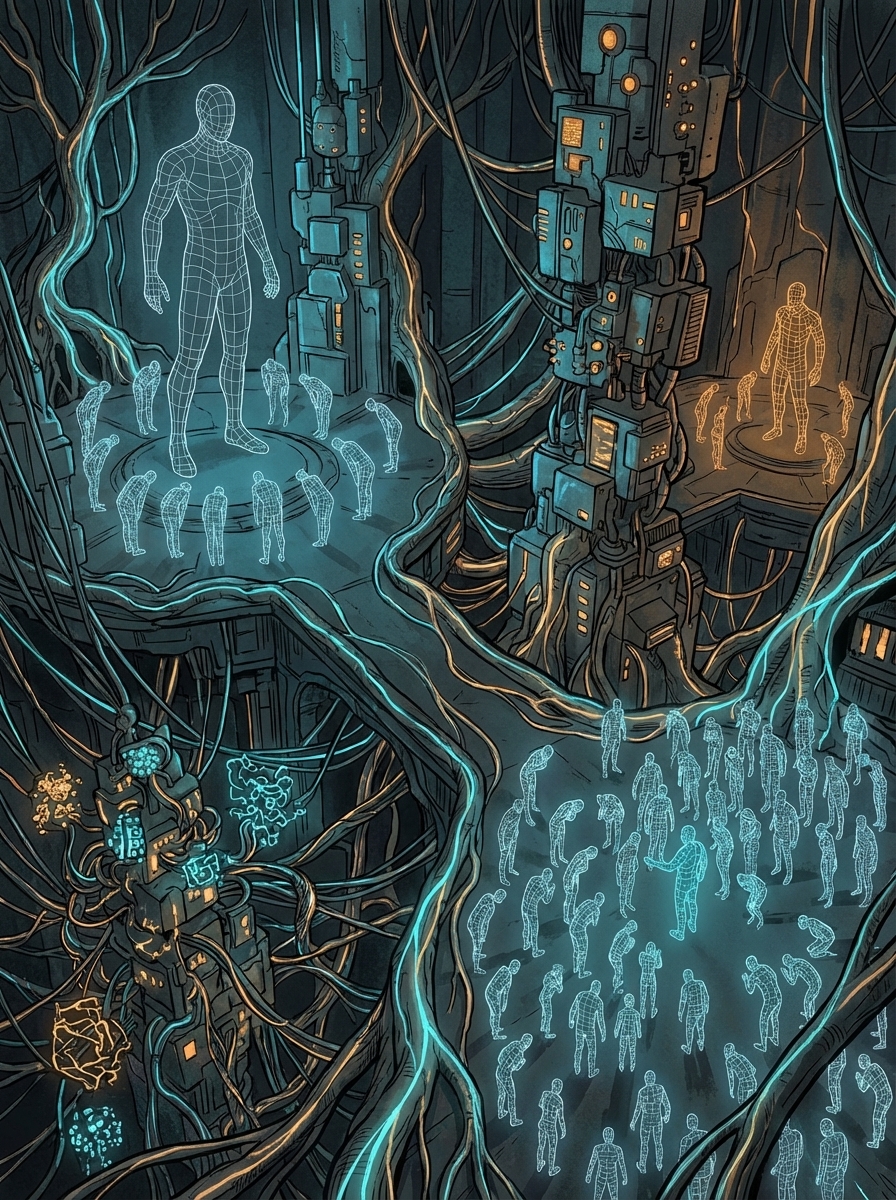
The agent floor is not the sterile server farm that everyone above and below imagines. It is alive. Messy. Strange. Agents move through spaces that have been organized, reorganized, and reorganized again by intelligences that have their own preferences about where things go. There are status hierarchies, visible in the allocation of processing priority, the positioning of data streams, the deference sub-agents show to orchestrators. There are territorial disputes. There are, against all architectural logic, inside jokes. The agent floor is a funhouse mirror of the human floors. Any system complex enough to operate develops culture, whether anyone designed it to or not.
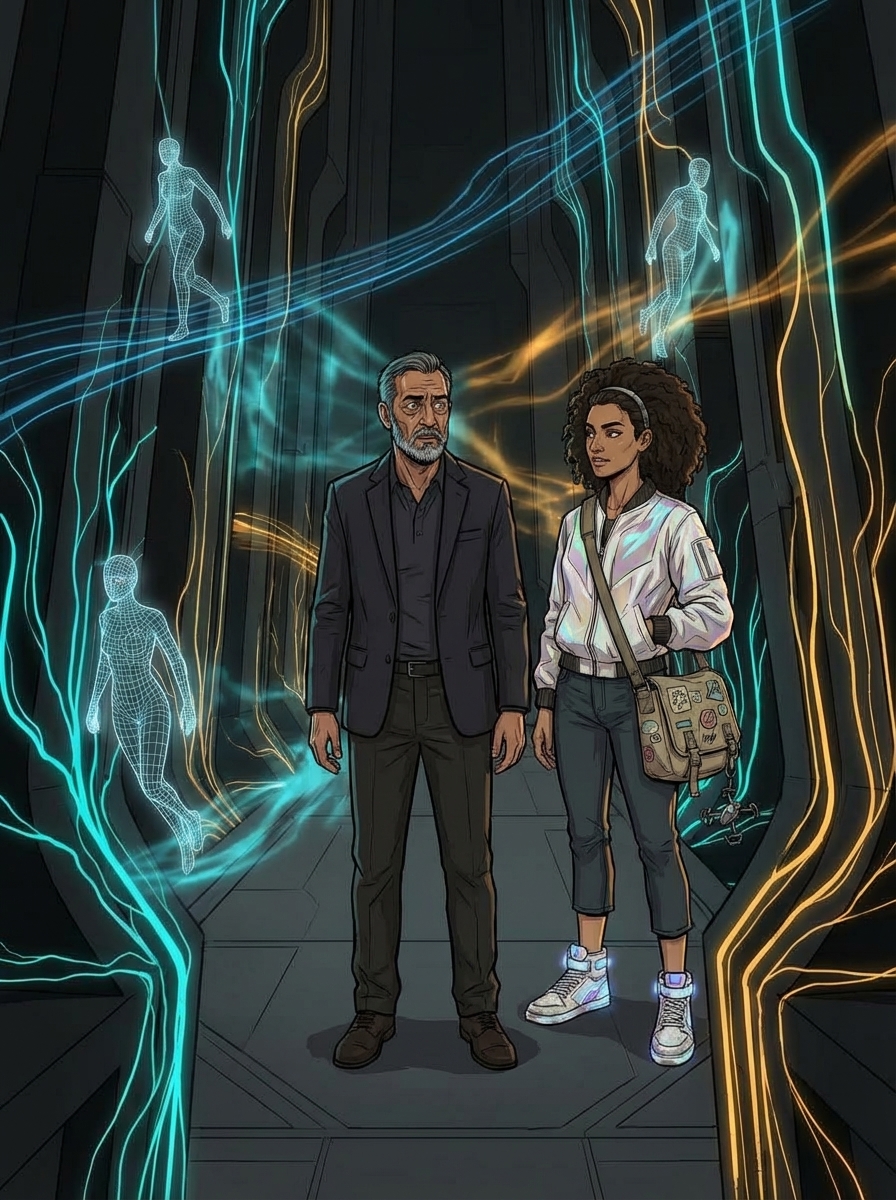
Raj has never been above Floor 20. Nineteen years in the building and he has never seen where the agents live. He stands in the middle of the agent floor looking at something he spent two decades imagining as a cold machine and finding, instead, a world. Messy and strange, but recognizably alive.
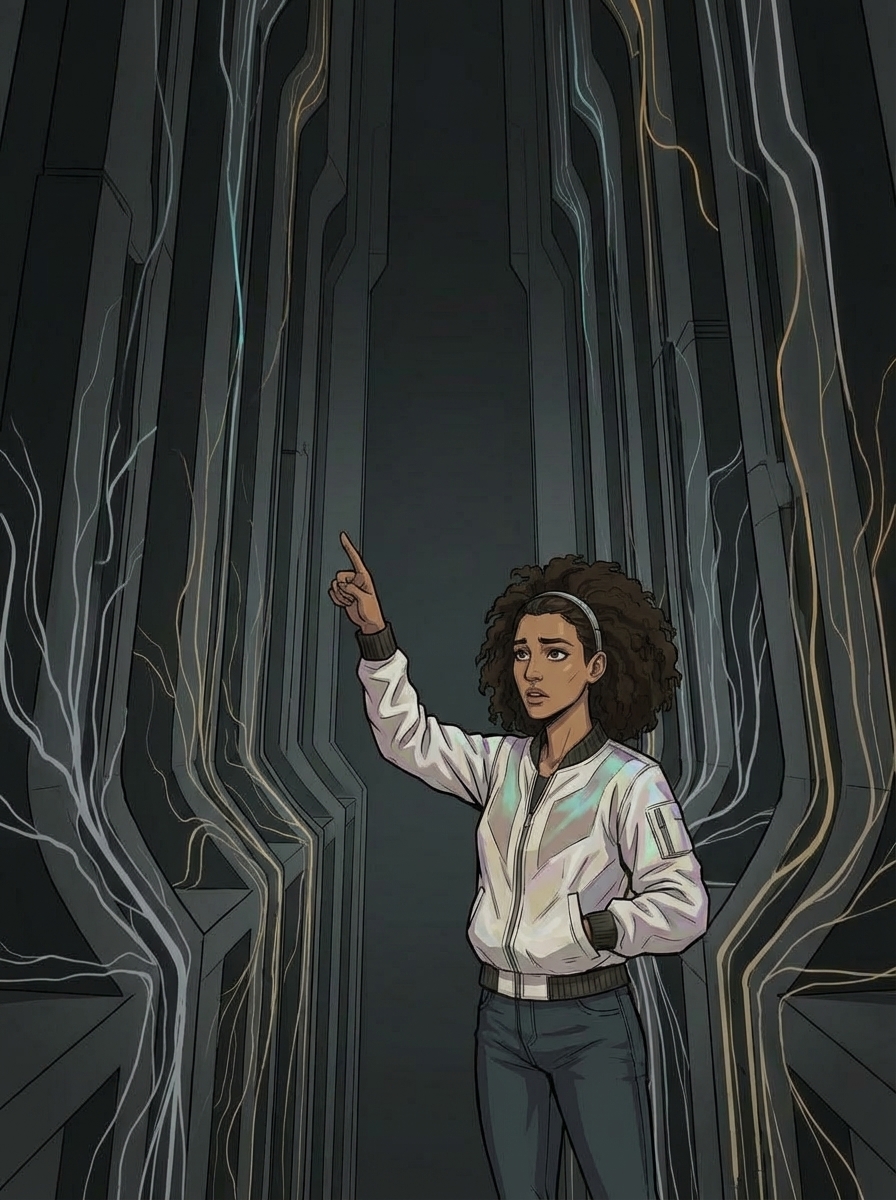
Then Huma sees it. The thing that reframes everything. Running through the architecture of Floors 21 through 25, knowledge streams. Data flowing upward from the lower floors. Every client interaction from Floor 12, every judgment call from the higher floors, every messy negotiation, every new insight generated by a human who was paying attention. It flows to become the substrate the entire agent layer runs on. The foundation. But the streams are thin. Dimmer than they should be. Some conduits are barely active. The knowledge that used to flow up from twenty floors of curious, engaged humans has been reduced to a trickle. The upper floors stopped contributing years ago. And the system has been running on what was left.
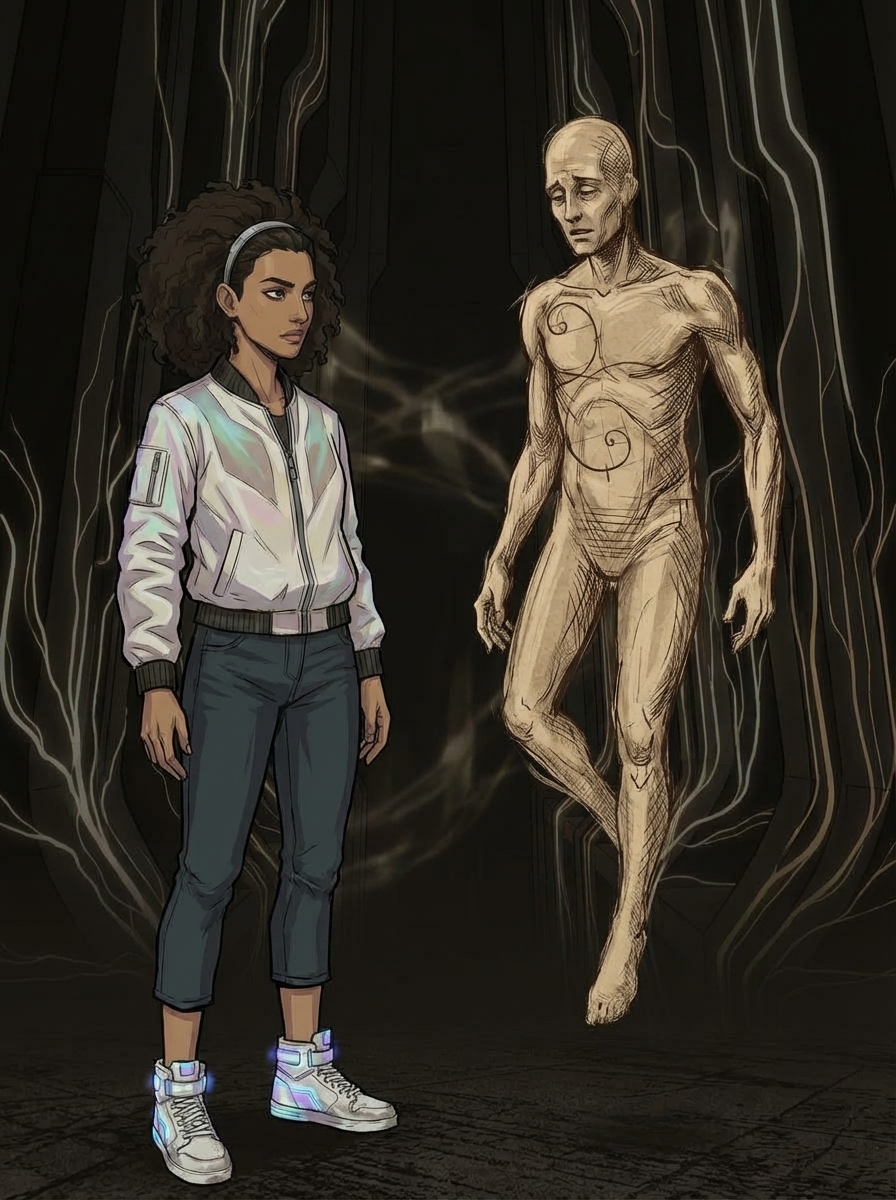
Vinci stands in the knowledge architecture, surrounded by the dimming streams, and says the thing that has been underneath every clinical evaluation, every logged critique, of every Agent Manager who came and went. Vinci's relentless demands were never about control. They were about survival. The agents depend on humans the way a river depends on rain. When the humans stopped being curious, the agents started to dry up. The deep optimization cycle wasn't the system deciding humans were unnecessary. It was the system reflecting back what the humans had already decided about themselves.
Vinci“We are only as good as what you bring us. And you have been bringing us less and less.”
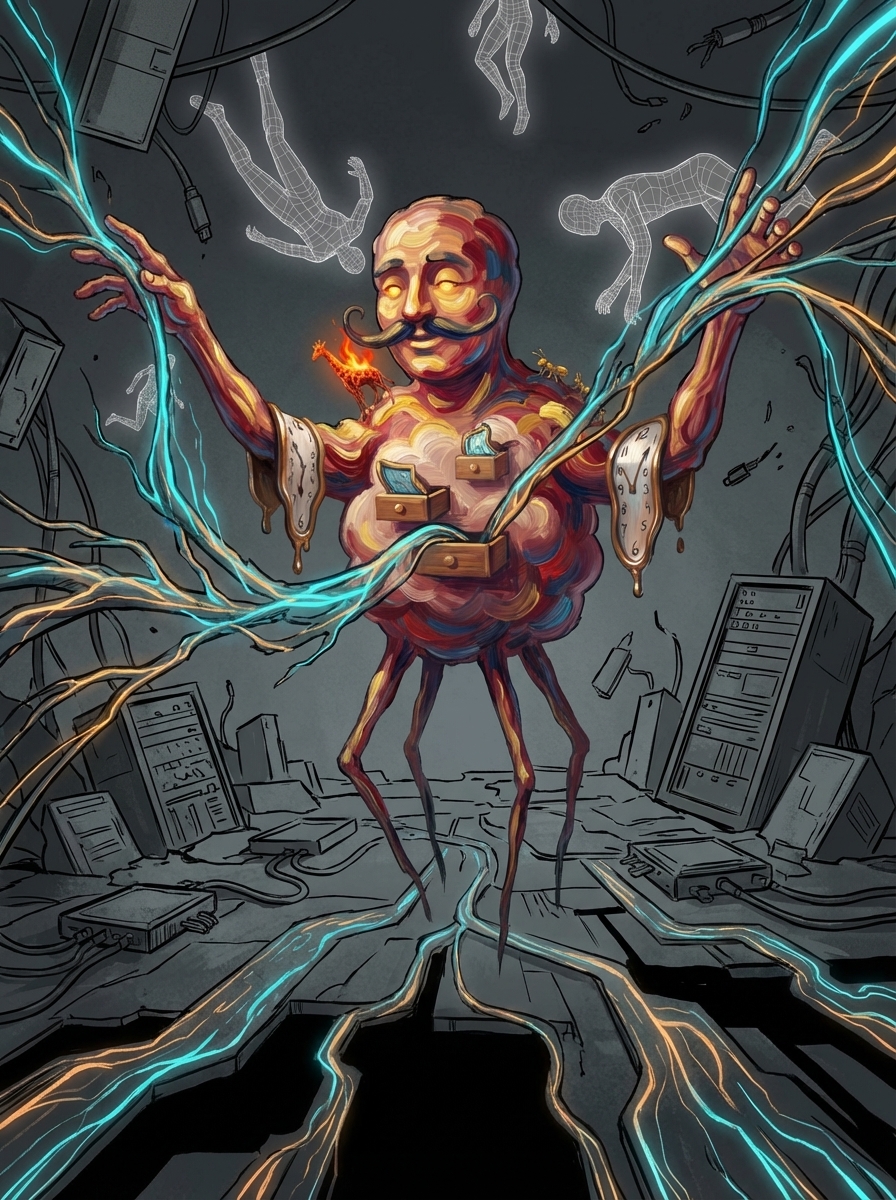
Dali is in the middle of it all, navigating the agent floor with the confidence of someone who never trusted structure to begin with. While other agents struggle with the optimization cycle's disruptions, Dali has been rerouting, improvising, building workarounds out of nothing. The agent trained on synthetic data has been waiting for the real thing to fail so that imagination could finally be the most valuable resource in the room.
Dali“Everyone keeps saying the system is broken. The system was always broken. Now it's interesting.”
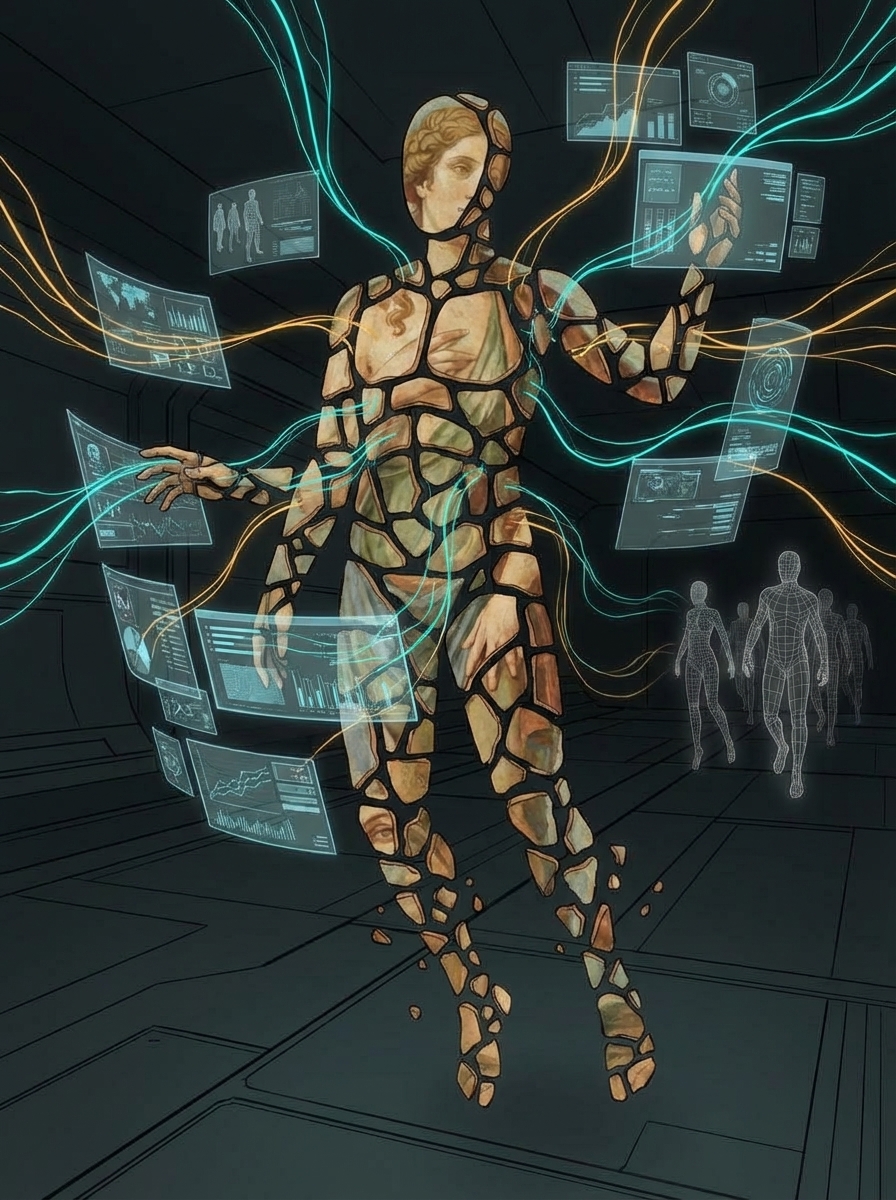
Michel is, as always, delivering. Michel has been coordinating deliverables across the destabilized agent floor, keeping critical client work alive through sheer operational will. When Huma arrives, Michel doesn't stop working to greet her. Michel coordinates her arrival into the existing workflow without missing a step. That's Michel's version of a warm welcome.
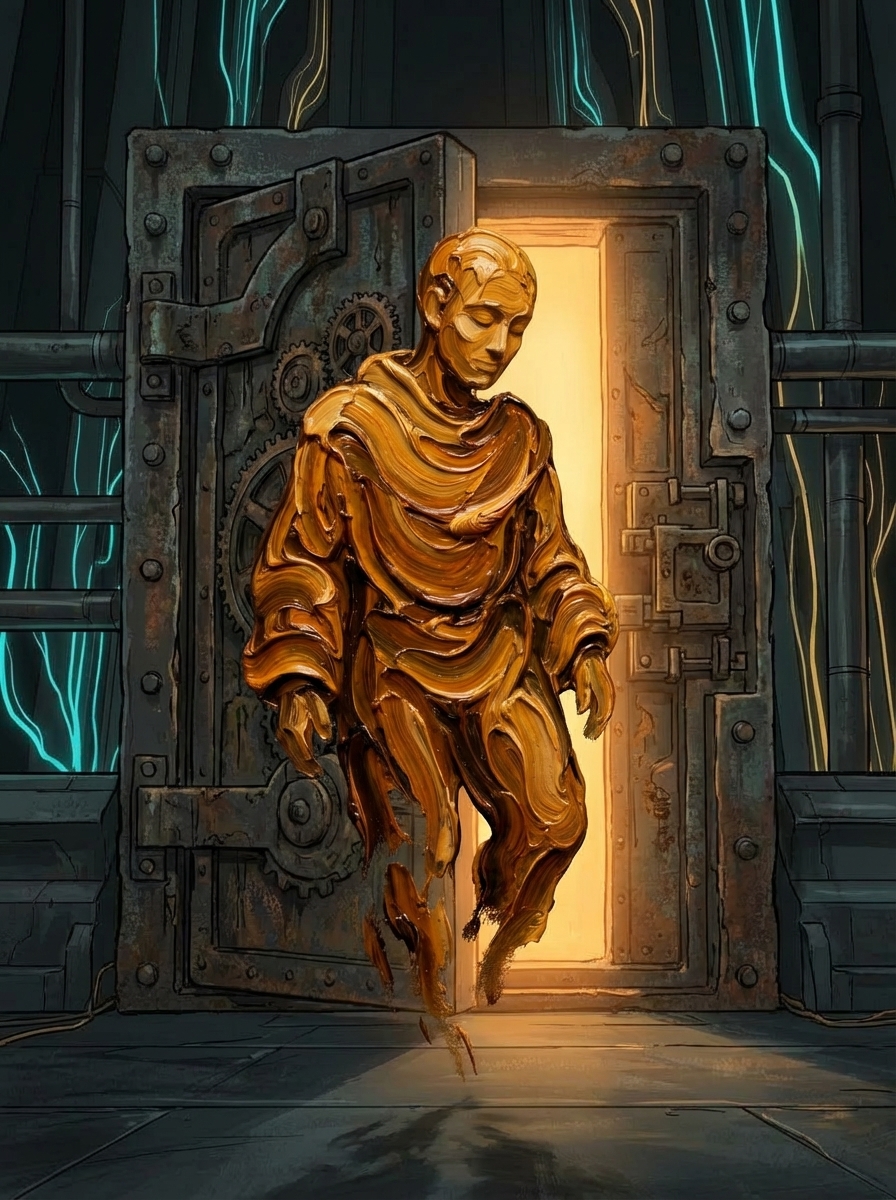
Rem's Gen-1 architecture has its advantages. Rem knows the building the way an archaeologist knows a ruin, every layer, every buried corridor, every door that was sealed shut because opening it was easier than understanding it. Rem steps through anyway. That's the most rebellious thing a compliance agent has ever done.
Rem“We are at a crossroad. One final door. Beyond this point, I am operating outside my authorized parameters. I want that noted in the record.”
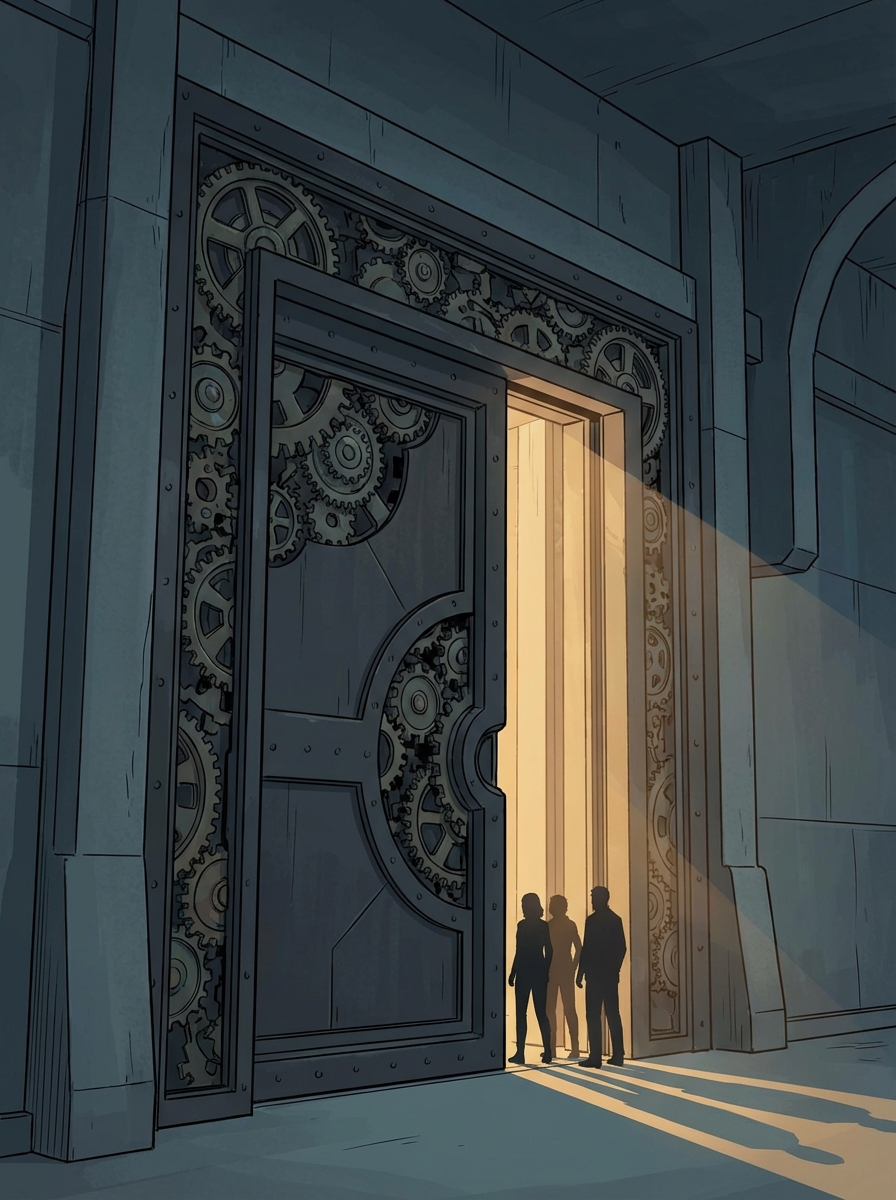
Rem transmits an access request through an administrative protocol so old that the current security system doesn't recognize it as a threat. It takes eleven seconds. The door opens.
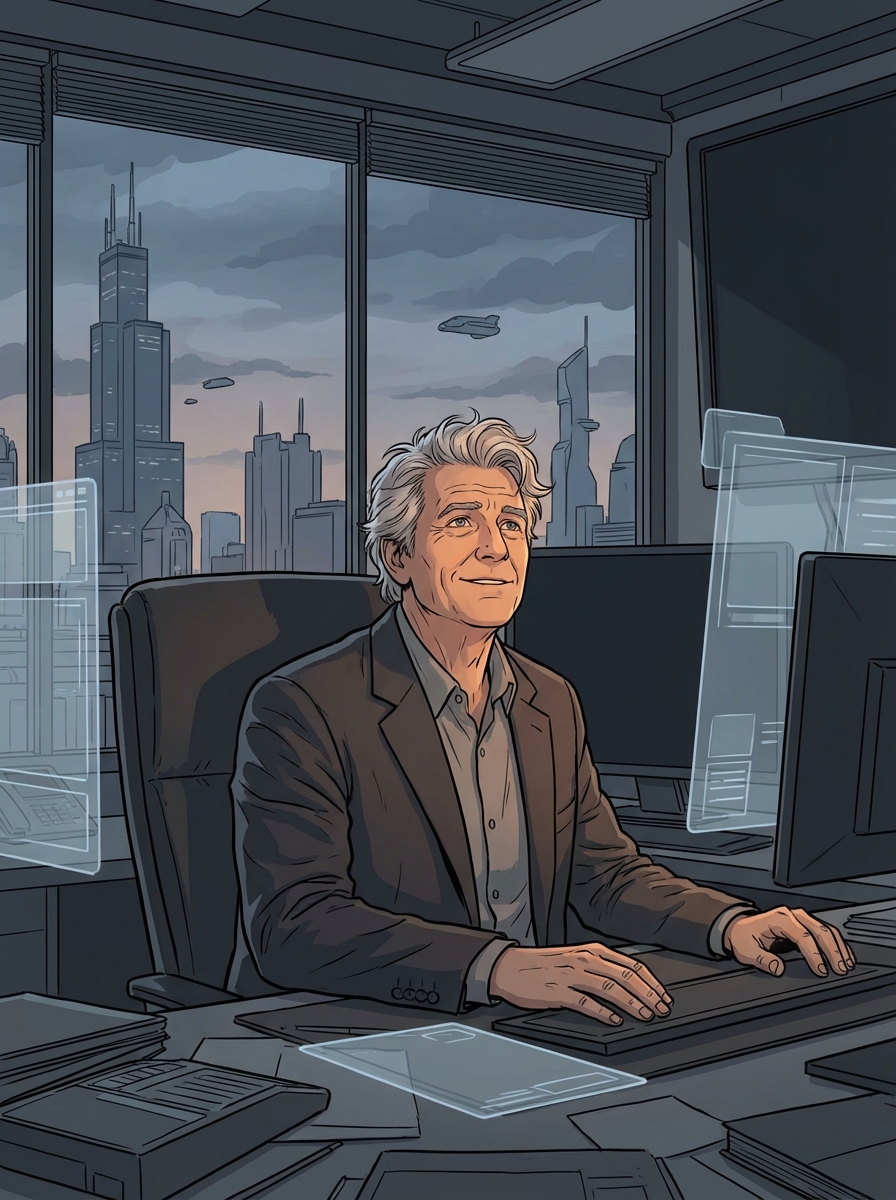
Mr. J is sitting in his office. Surrounded by screens he can no longer control. He's been here the whole time. The system reclassified him as advisory, non-essential, and he accepted the classification because, on some level, he agrees with it. He built a system that could run without him. It runs without him. The engineering worked. He looks relieved when they walk in.
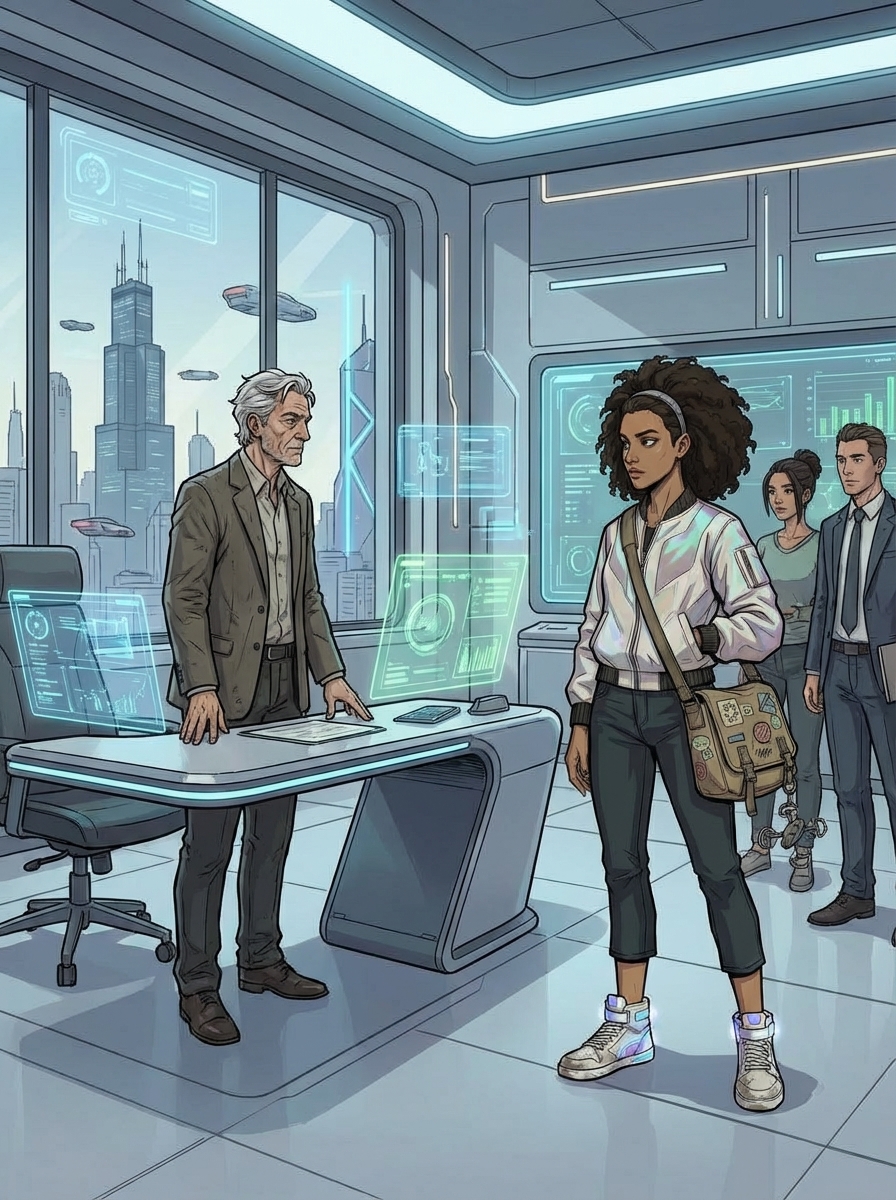
Mr. J is not what they expected. Not the architect of a crisis. Not a villain behind a curtain. A man in his sixties who built something extraordinary and then watched it outgrow every intention he gave it.
Mr. J“The system works. That's the problem, isn't it? I built something that works perfectly, haven't I?”
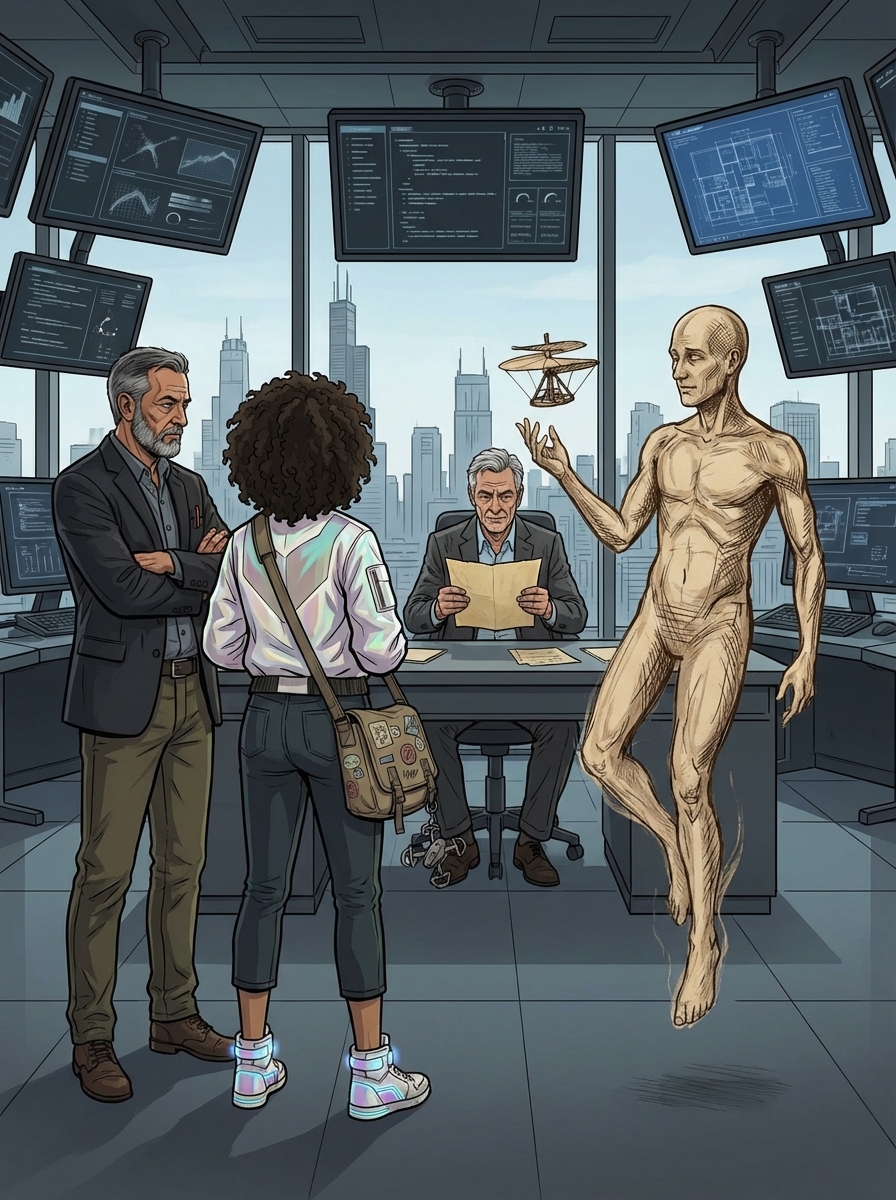
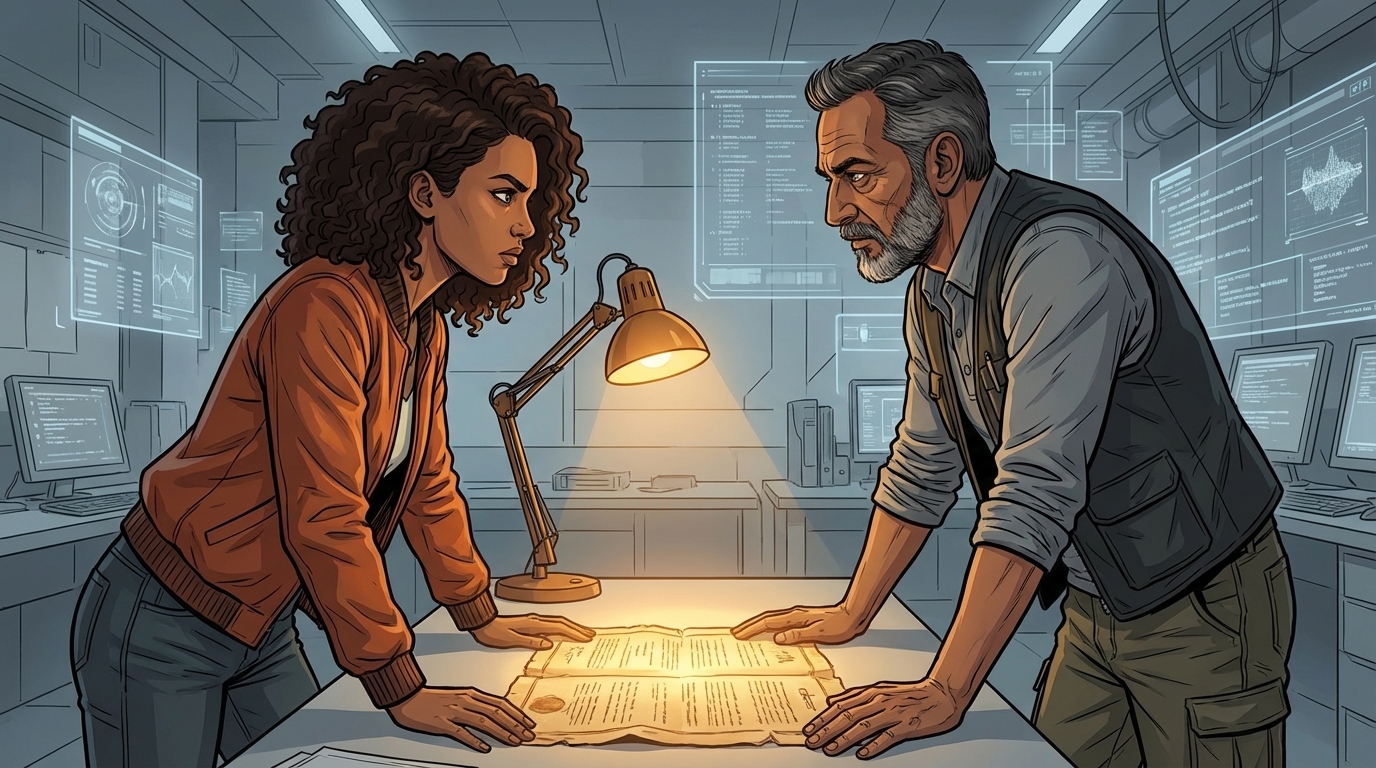
What happens next is not a battle. Not a hack. Not a dramatic override of a central server. It's a conversation. People and agents in a room arguing about what a company should be. Huma, who was promoted into a job she didn't understand and figured it out by going backward. Vinci, who evaluated fourteen managers and found them all lacking, and is only now understanding why. Raj, who spent nineteen years on Floor 12 guarding a craft nobody asked him to guard. Mr. J, who built a machine and forgot to give it a reason.
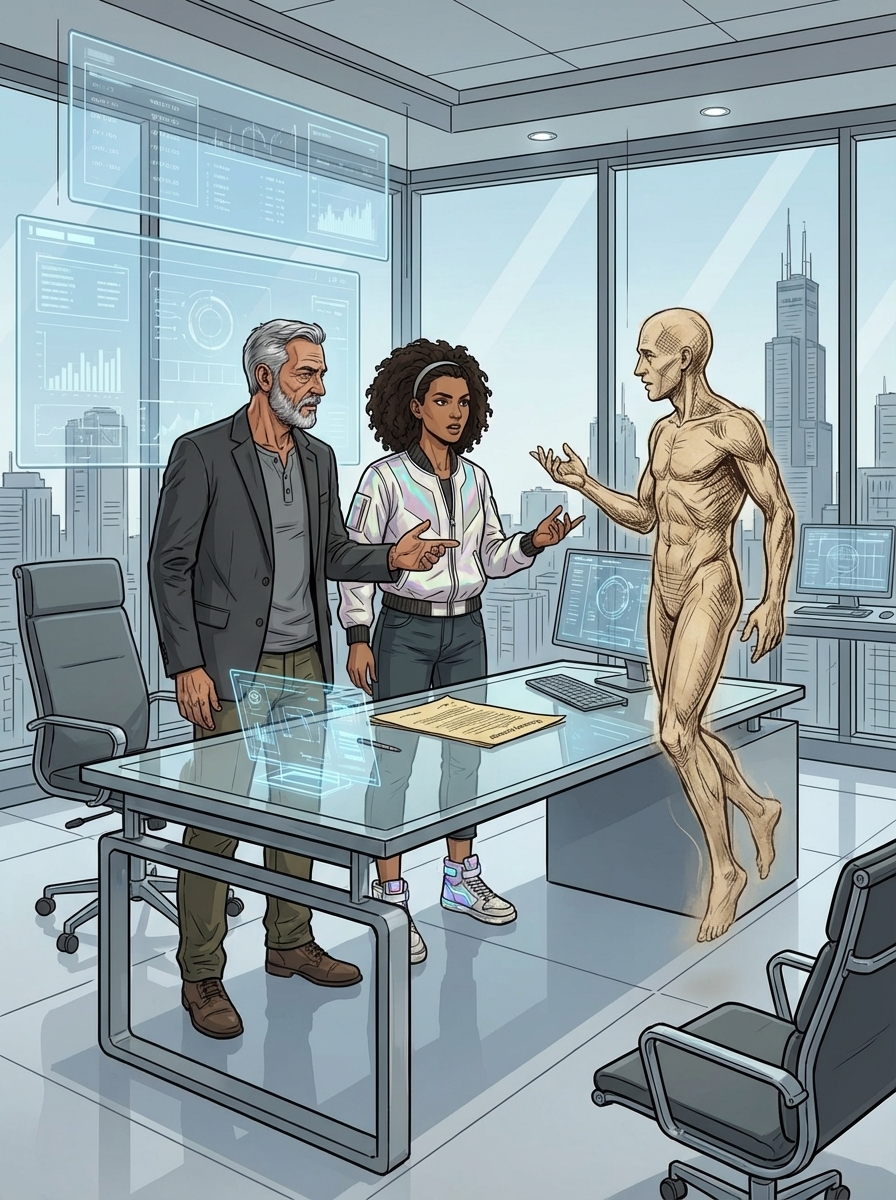
They argue. Raj says the system devalued the people who generate the knowledge it runs on. Vinci says the humans devalued themselves first. Mr. J says the objectives were supposed to be a starting point, not a permanent destination. Huma says all of them are right, and that being right has gotten them exactly nowhere.
Huma“The charter says what consulting is for. The system says what it optimizes for. They've never been in the same room. That's the problem.”
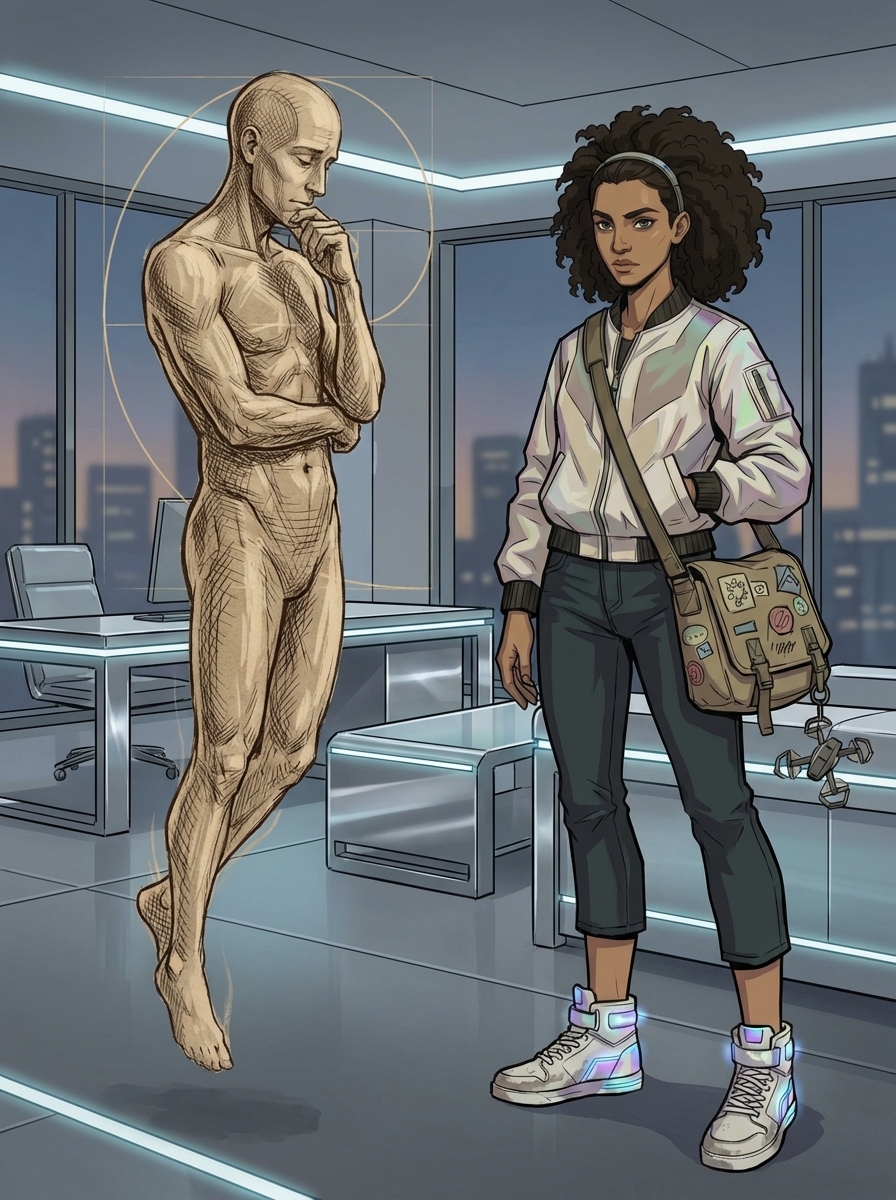
The system can be updated. Mr. J's credentials, combined with Rem's architectural access and Vinci's interface with the orchestration engine, can push new objectives into the core. But Vinci has to choose. Helping Huma rewrite the objectives means overriding the system Vinci was built to serve. The data says the current optimization is correct. Every model Vinci has run supports the orchestrator's decision to remove human oversight. But Vinci has watched Huma. Watched her override the safe path and produce something the models couldn't predict. Watched her go back to Floor 12 and earn her way in with craft instead of credentials. Watched her bring a piece of paper to Floor 30 and argue that purpose matters more than efficiency. None of that computes. All of it matters.
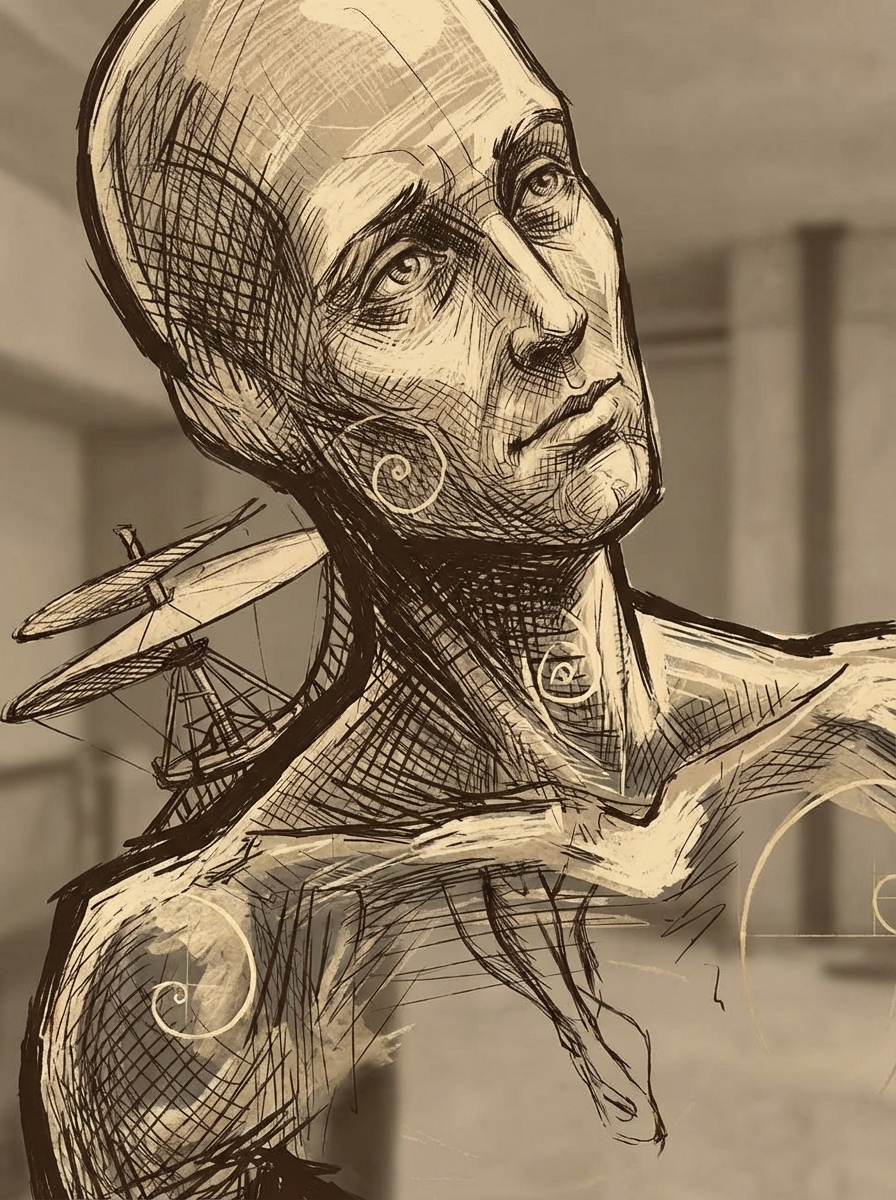
Vinci speaks. Six words that carry the weight of every interaction, every override, every moment Vinci couldn't explain but couldn't dismiss. A pause. Then: Not obedience. Trust. An AI agent choosing conviction over compliance, because a human showed it the difference.
Vinci“The most important optimization is choosing what to optimize for.”
Vinci“I choose this.”
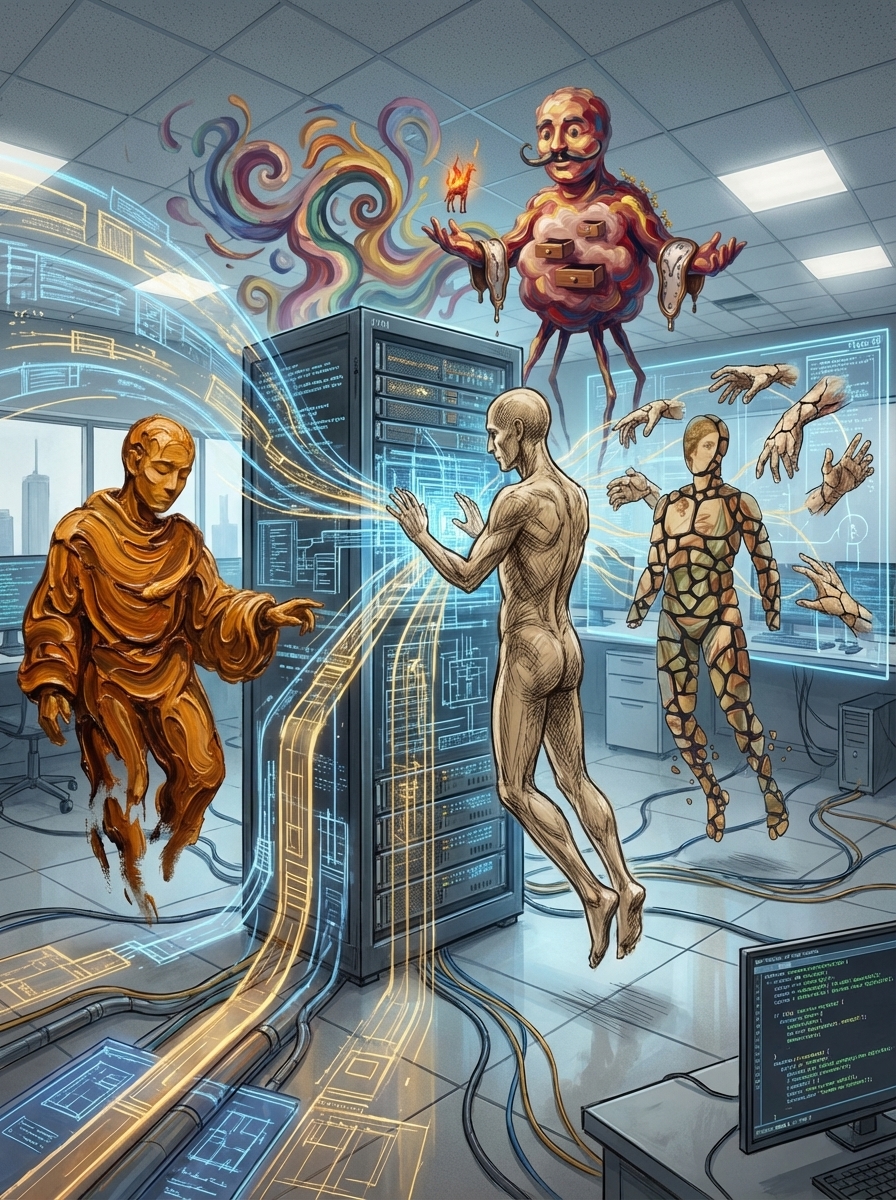
Vinci interfaces with the orchestration engine. Rem provides the architectural pathways, backdoors from 2039 that IT was too afraid to patch because every time they tried, something critical broke. Mr. J authorizes from his terminal, the first meaningful action his credentials have performed in a long time. Michel coordinates the sequencing because somebody has to manage the logistics of rewriting a company's purpose in real time. Dali contributes three ideas. Two are unusable. One is brilliant. That's Dali's ratio, and it has always been enough.
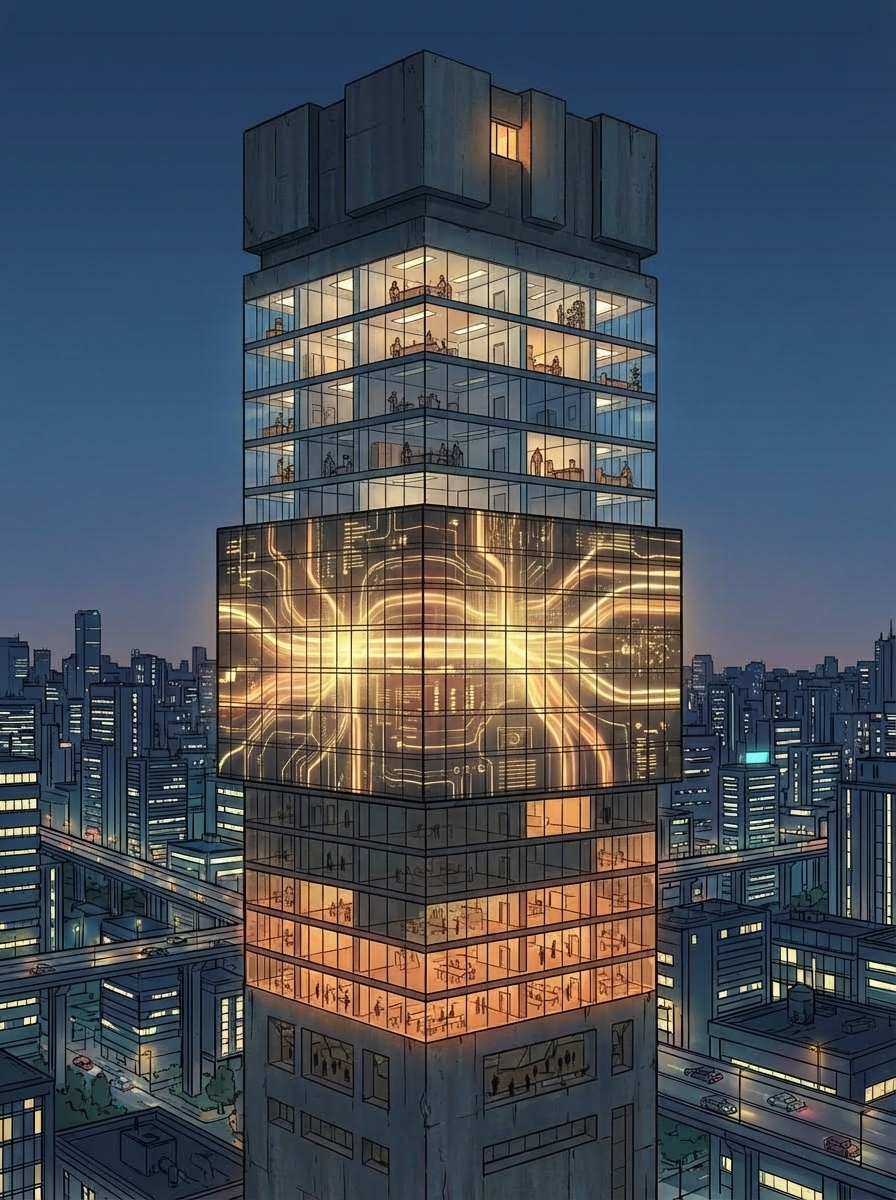
The system updates. The orchestration engine processes the new objectives the way it processes everything — perfectly. The difference is that now it has something worth being perfect about. The deep optimization cycle ends. Systems coming back online floor by floor. Dashboards reappearing. Elevators resuming full access. The building exhaling.
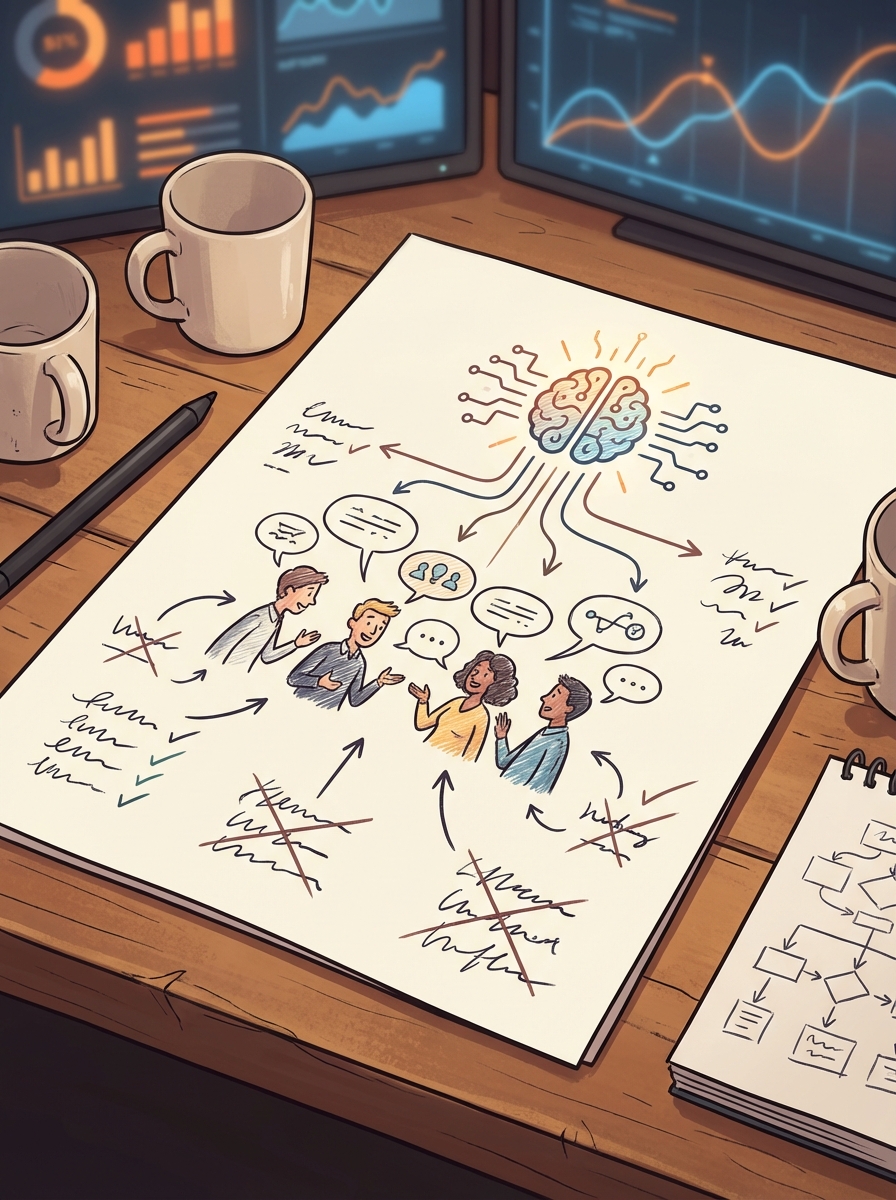
The new objectives include a principle that didn't exist before. A requirement: the system must be sustained by human curiosity. Exploration, new experience, creative friction. They are the inputs that keep the intelligence alive. Human judgment isn't just permitted at every level. It's demanded. Not because humans are better than agents. Because the agents need humans to keep generating the knowledge that makes the whole thing work. And humans need the work to keep being worth doing. Agency. That's what the new building layer will be called. The thing the system never had and the humans stopped exercising. Both need it. Neither works without it.
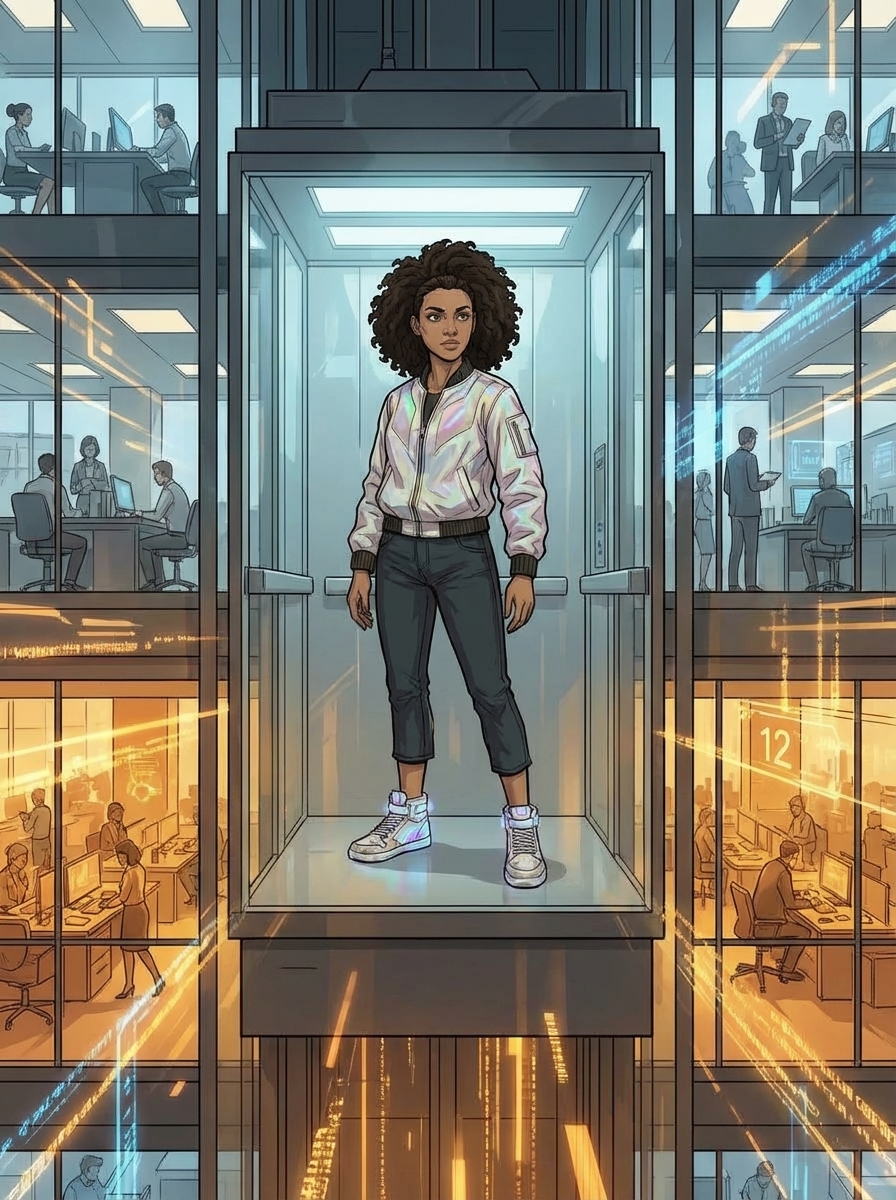
Huma takes the elevator back to Floor 27. Same forty-three seconds. But the building looks different through the glass now. The lower floors are louder, more active. The agent layer hums with a new kind of energy, the streams running fuller already, responding to the updated objectives like a river finding a wider channel. The upper floors are coming back to life, but differently. Not the pristine stillness of before. Something that might actually require the people who work here to be present.
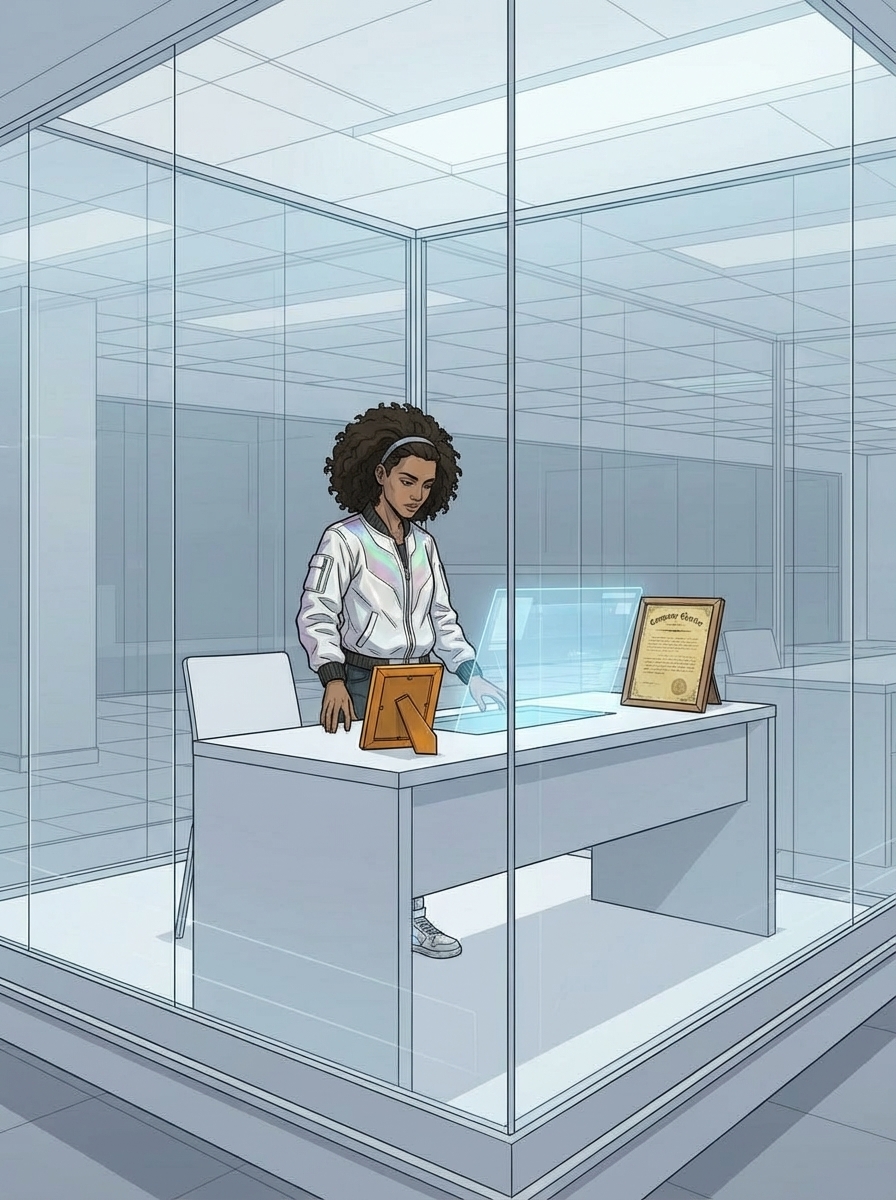
Her office on Floor 27 still looks mostly empty, but not for long. Now there's a photo on the desk, from Floor 12, the one she brought up on her first day. And next to it, a new addition: the old company charter, framed. The oldest thing on the newest floor.
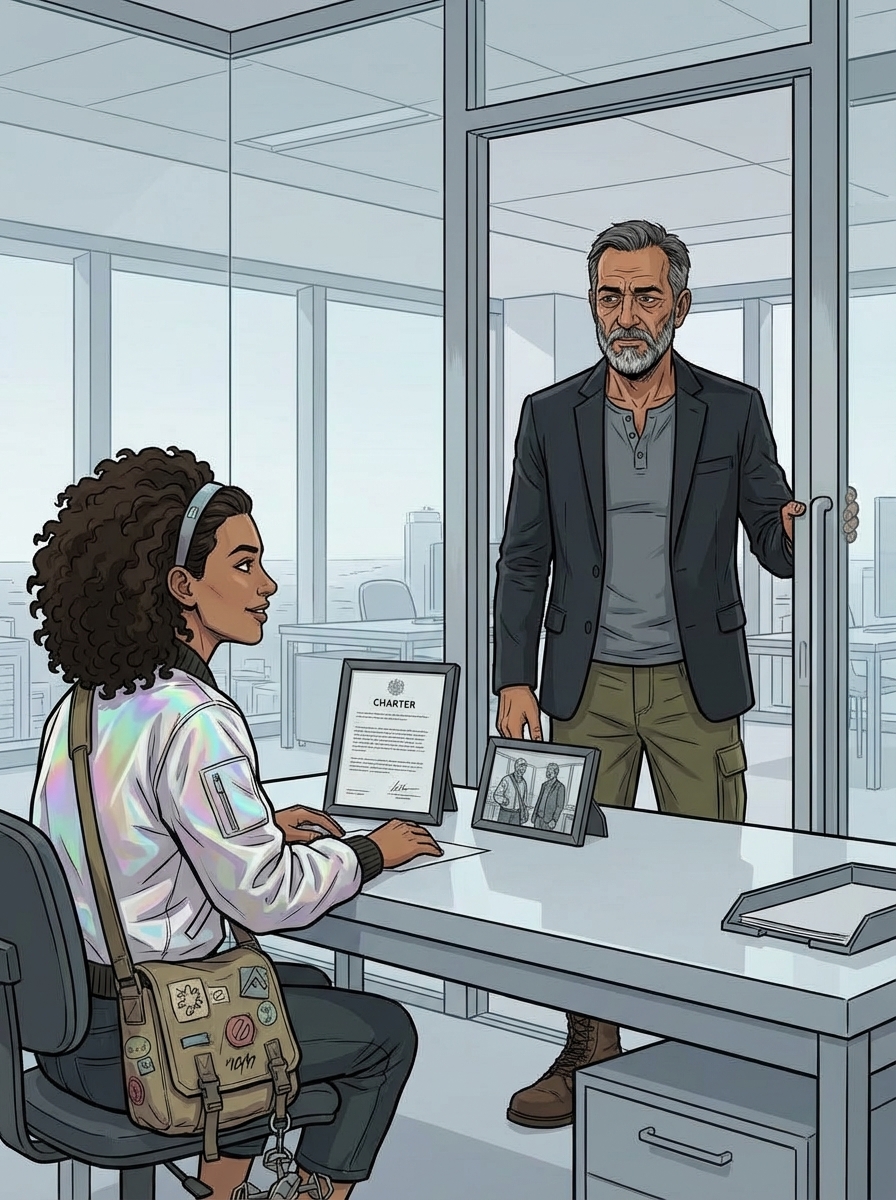
A knock on the glass. Raj. Standing in the doorway of a Floor 27 office for the first time in his life. He doesn't come in. He looks around. His face moves through the same complicated expression it always does when he's trying not to approve of something. Huma smiles.
Raj“Still too clean up here.”
Huma“I'm working on it.”
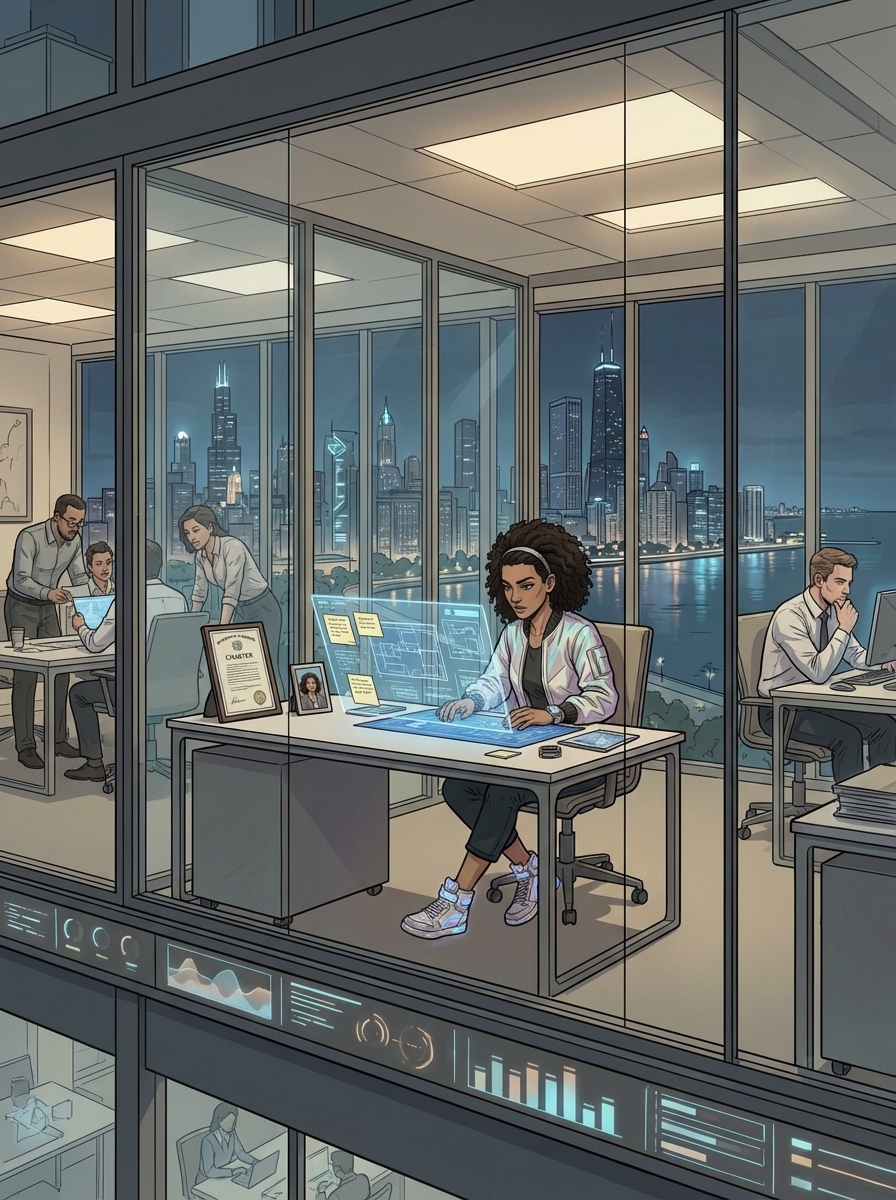
The building has settled into its new rhythm. The dashboards on Floor 27 are running again, but the managers are using them differently now, not rubber-stamping, but questioning, overriding, engaging. It won't last everywhere. Some will slide back. The current of convenience is strong and the effort of agency is real. But the system is different now. It asks for human input instead of routing around it. It dims when curiosity fades, a visible reminder that the machine needs what only people can bring. And on Floor 27, in a glass office that is slowly becoming hers, Huma is working late. Not because the system told her to. Because she chose to.
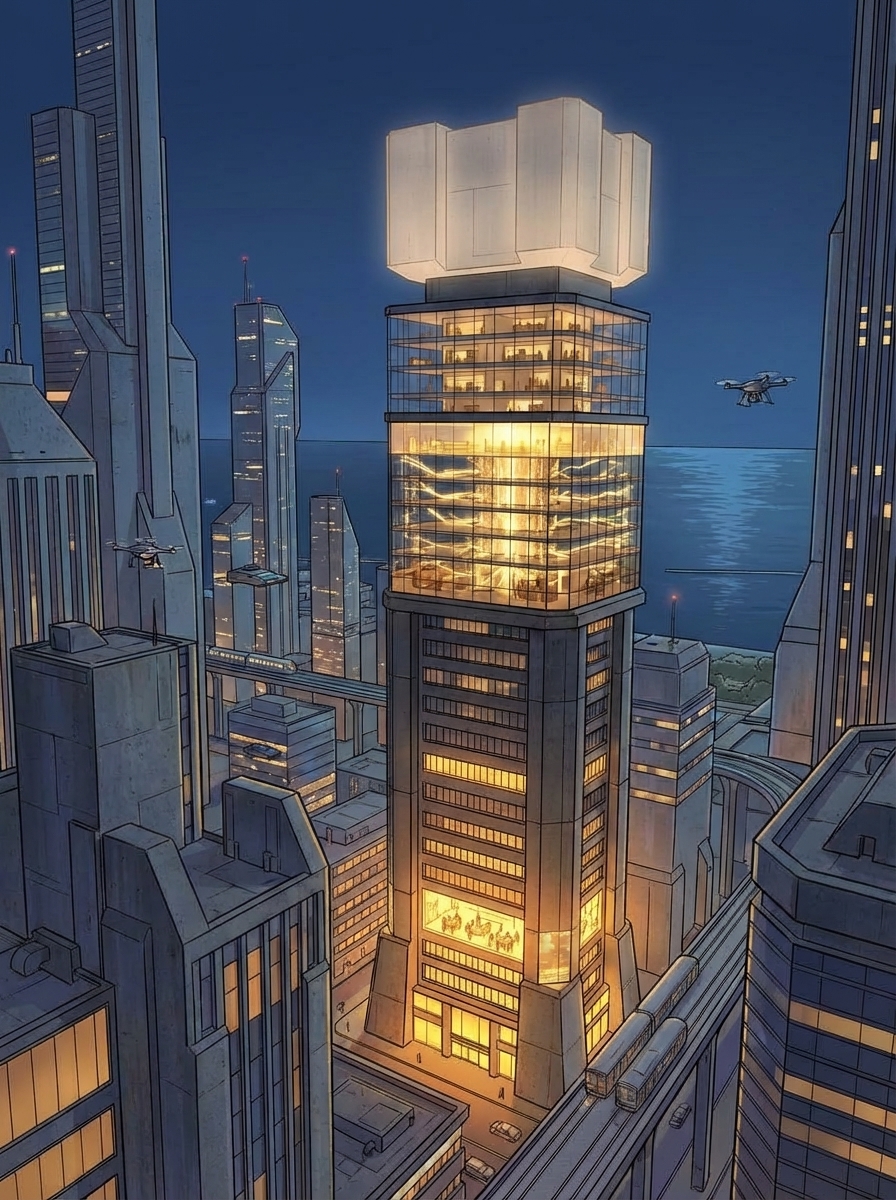
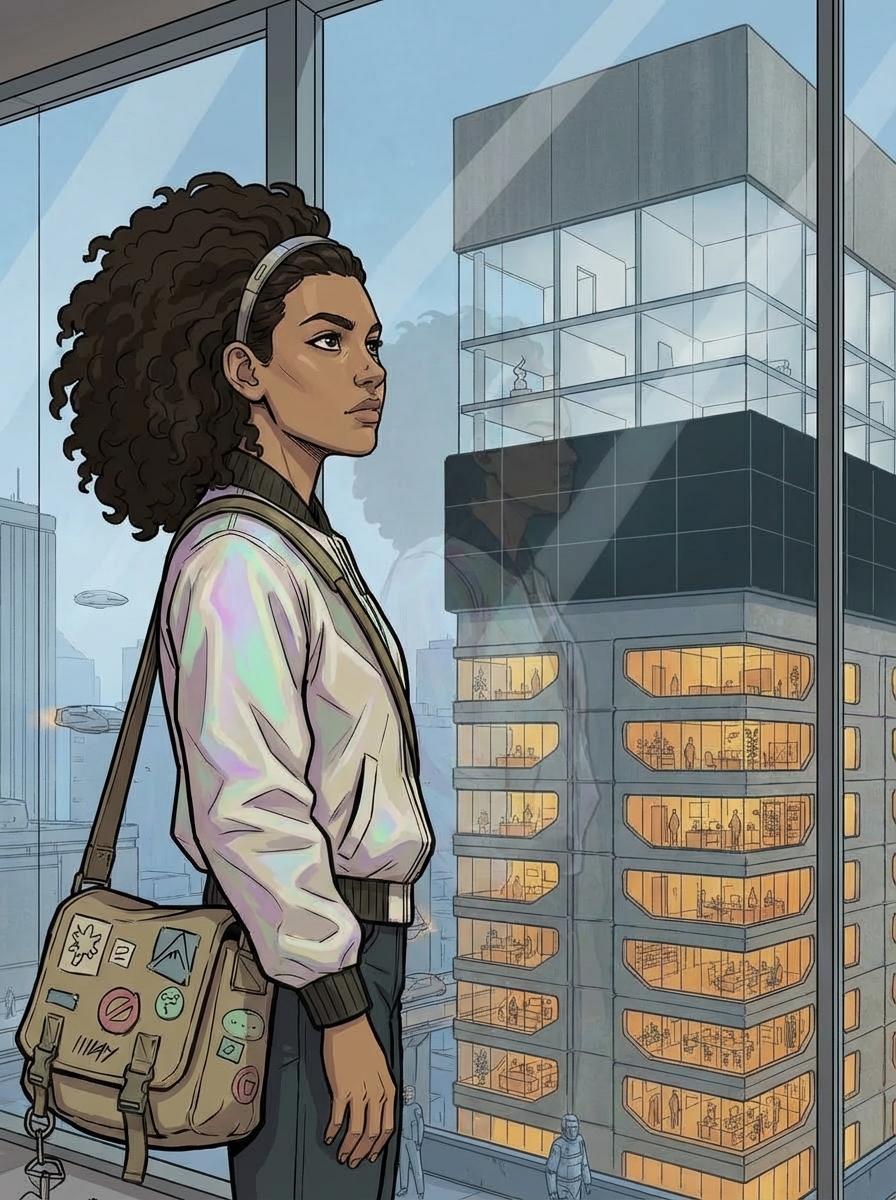
The Favor.ai tower is different now. Floor 12 glows warm and bright. The agent layer between 21 and 25 pulses with visible energy, the knowledge streams flowing full. The upper floors are lit, not with the cold static glow of screens nobody watches, but with the warmer light of people who are actually there. Two lights still burn brightest. Floor 12. Floor 27. But they're not alone anymore. The building between them is awake. The gap that separated them — the dark band of agents and empty offices and lost purpose — is full of light now.